



Second INAE-NAEK Workshop on ‘High Temperature Materials’
INAE has various collaborative activities with other Member Academies of CAETS. One of the collaborative activities with and National Academy of Engineering of Korea (NAEK) was undertaken on ‘High Temperature Materials’. The first joint workshop on High Temperature Materials’ between INAE and NAEK was held on March 16-17, 2017 at IISc Bangalore, India.
As a follow up of the first workshop, it is planned to hold second INAE-NAEK workshop on ‘High Temperature Materials’ on May 14-15, 2018 at Changwon, Korea. Prof. Indranil Manna, Vice-President, INAE and a domain expert in the field was nominated as the Coordinator of the Workshop. Indian Keynote Speakers from Academia, R&D and Industry representing the organizations viz. CSIR, ISRO, DRDO, DAE, IIT, IISc, TATA Steel etc. participated in the event.
The deliberations held in the workshops helped the participating scientists and technologists from either side to converge on suitable approaches for future development and trouble-shooting and probable scope for future scientific cooperation and engineering collaboration. It was deliberated that the future interaction between NAEK and INAE should expand the focus to go beyond material engineering embrace expertise from Mechanical, Aerospace, Electrical, Civil and Industrial Engineering. The focus should be on system engineering and not just designing or developing a few key components.
8th INAE-NAEK Workshop on “Driving Innovation Together: AI and Semiconductors for a Smarter Future held on Aug 12-13, 2025 in hybrid mode
Inaugural Session
Prof. Euijoon Yoon, President, NAEK, opened the workshop by welcoming participants and emphasizing the strategic role of AI and semiconductors in shaping global innovation. He highlighted Korea’s leadership in semiconductor manufacturing and AI deployment, stressing that this workshop should serve as a platform for building long-term India–Korea research partnerships. He reaffirmed NAEK’s commitment to bilateral cooperation through knowledge exchange, joint projects, and talent mobility.
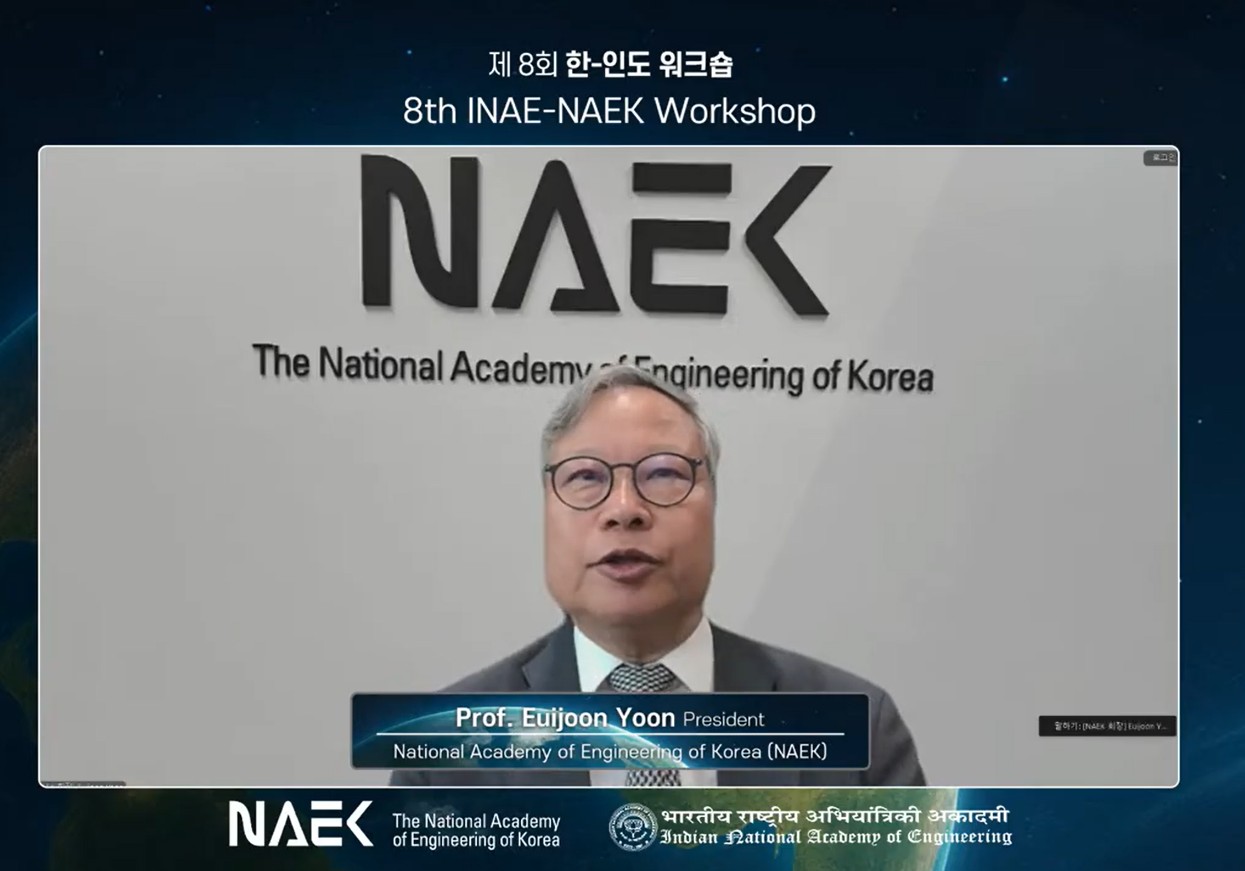 Prof Euijoon Yoon, President, NAEK delivering Opening Remarks
Mr. J. D. Patil, President, INAE, extended his greetings on behalf of the Indian National Academy of Engineering (INAE). He underlined India’s strengths in research talent, design expertise, and AI-driven ecosystems, noting the complementarity between India and Korea — with India excelling in system design and Korea in advanced manufacturing. He called for stronger academic–industry–government linkages and positioned the workshop as an opportunity to lay the foundation for future India–Korea innovation hubs in AI and semiconductors.
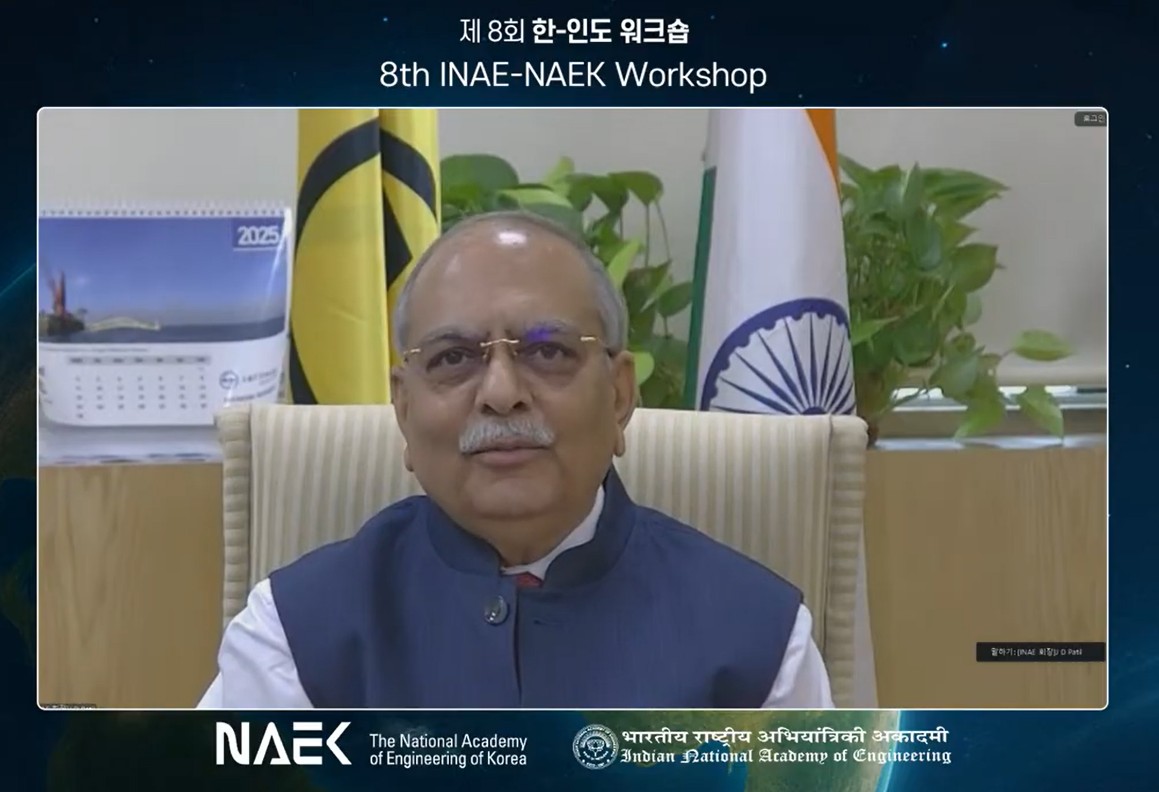 Mr J.D. Patil, President, INAE delivering Address
Day 1 – Technical Session on “Advancing the AI Sector through Smart Manufacturing and Global Collaboration”
Session 1: Smart Manufacturing using AI
Mr. Won-Jae Hwang, Vice President at LG Electronics, presented LG’s journey towards reinventing its smart factories through AX technologies. He showcased how initiatives like Lighthouse Factories have improved productivity and resilience in uncertain global environments. His talk emphasized that smart factories are not merely aspirational but an urgent necessity for survival and global competitiveness.
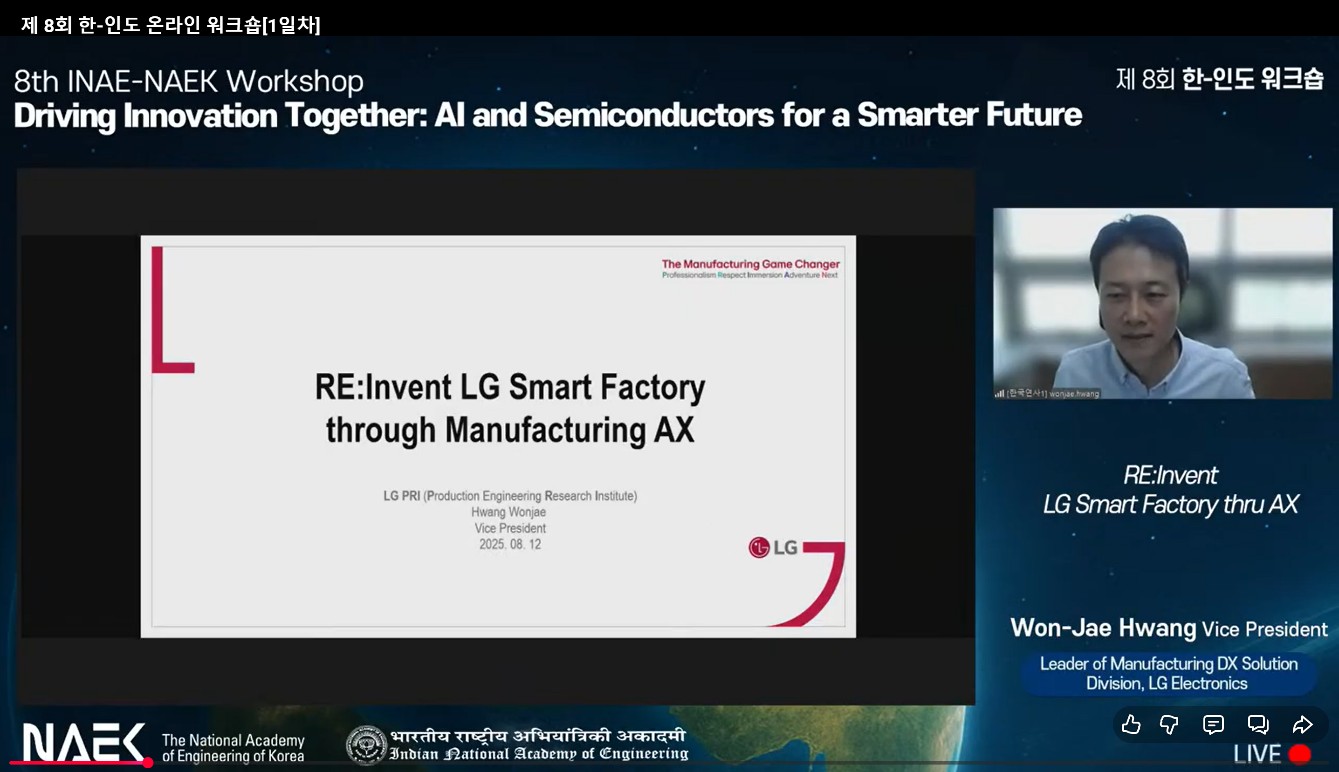 Prof Won-Jae Hwang delivering technical talk.
Prof. Janakarajan Ramkumar of IIT Kanpur elaborated on AI-driven smart manufacturing logistics. Through detailed case studies on the use of automated guided vehicles (AGVs) in warehouses, he illustrated how AI models optimized scheduling, reduced idle time, and improved throughput by nearly three times. His presentation reinforced the transformative role of AI in intralogistics and energy-aware automation.
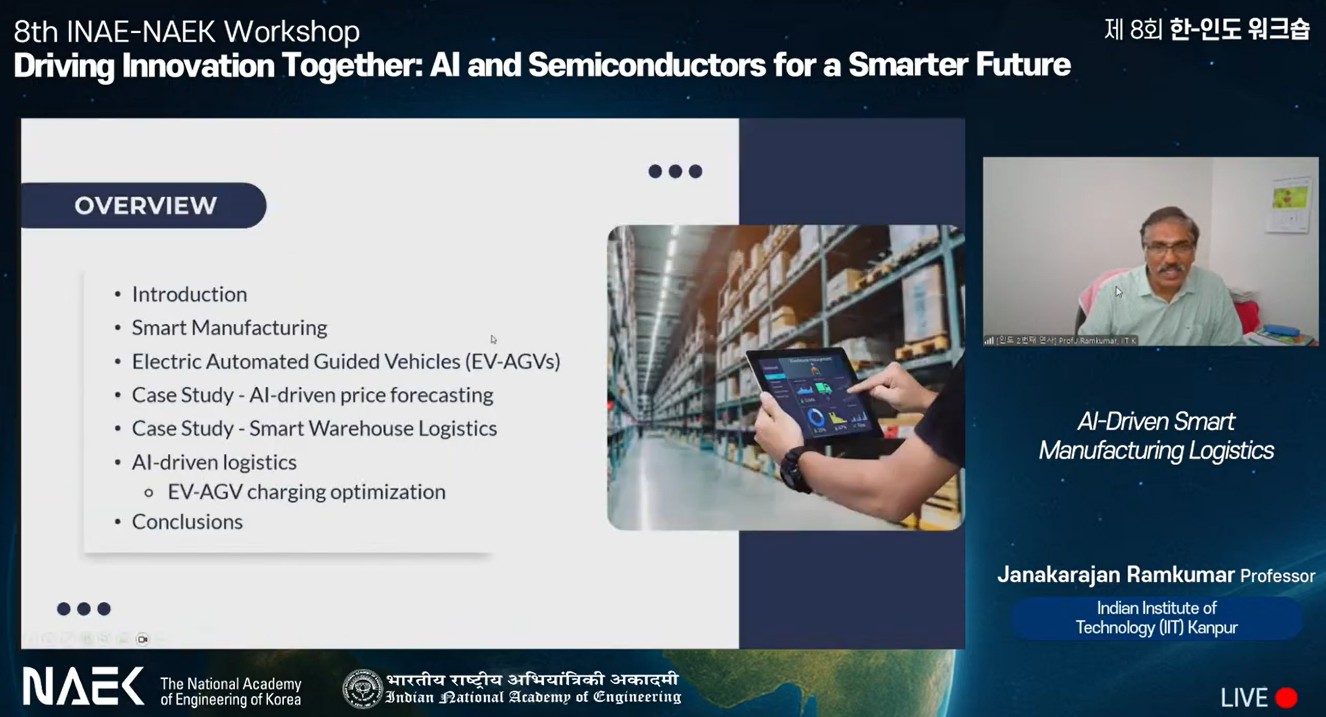 Prof J Ramkumar delivering online talk
Session 2: International Cooperation Opportunities in the AI Sector
Prof. Jaesik Choi of KAIST discussed Korea’s experience in AI-driven manufacturing transformation. He highlighted how predictive analytics and hybrid AI models are being used to enhance industrial processes. His insights reflected Korea’s strong ecosystem that combines academic research with industrial application.
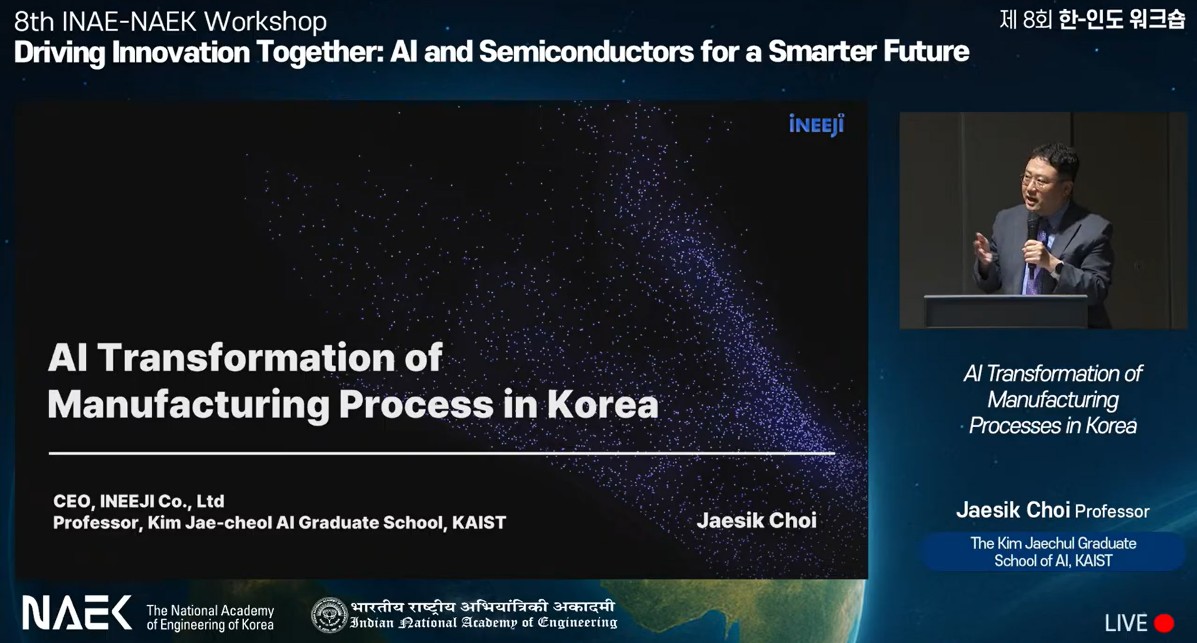 Prof Jaesik Choi delivering lecture
Mr. M. S. Unnikrishnan, CEO of the IITB–Monash Research Academy, spoke about new horizons in Indo-Korean cooperation in AI and semiconductors. Drawing from his industry and academic leadership, he underlined the importance of creating structured research partnerships and bilateral innovation frameworks.
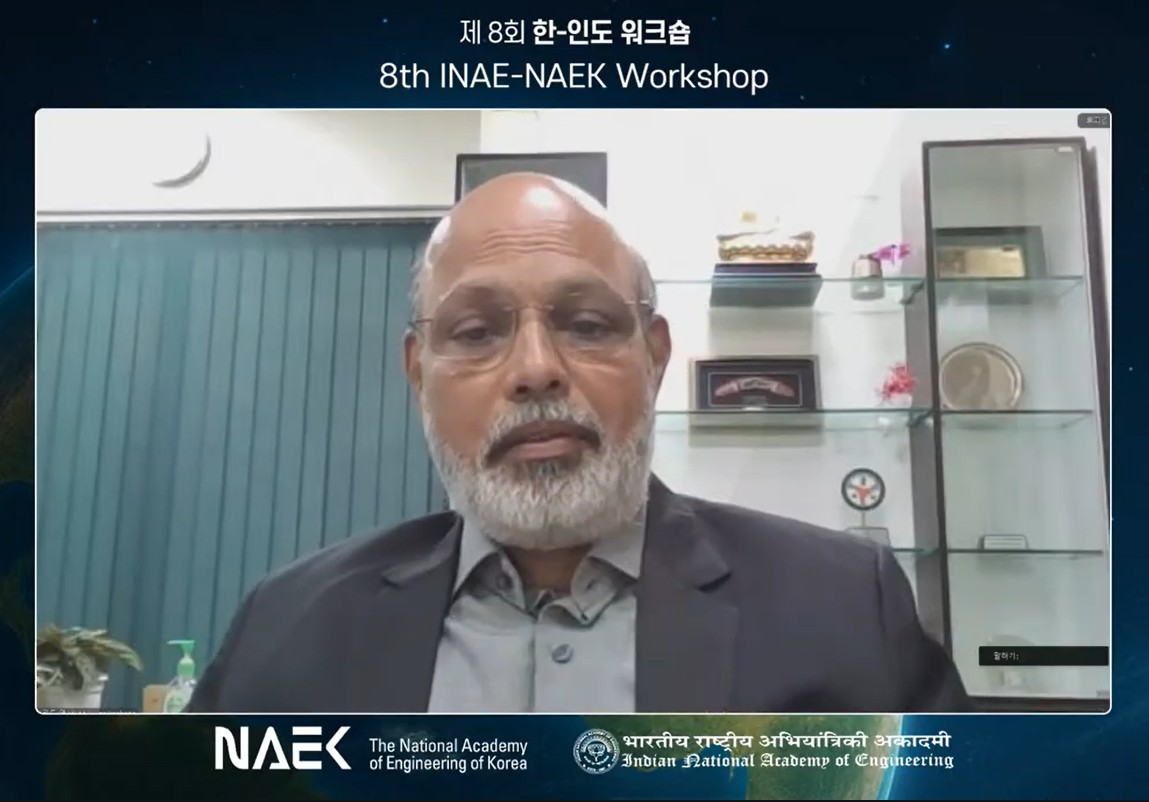 Mr MS Unnikrishnan sharing his view
Round Table Discussion-1: AI for Smart Manufacturing and Korea–India Cooperation
The roundtable brought together Dr. Kyungwon Joo (KISTEP), Prof. Jeonghoon Mo (Yonsei), Prof. Santanu Chaudhury (IIT Delhi), and Prof. P. Rajalakshmi (IIT Hyderabad). The discussion emphasized how India and Korea can leverage their complementary strengths to build joint AI testbeds, collaborative research programs, and policy frameworks. Experts highlighted opportunities in autonomous navigation, intralogistics, and smart manufacturing ecosystems, underscoring the need for applied collaboration rooted in bilateral cooperation.
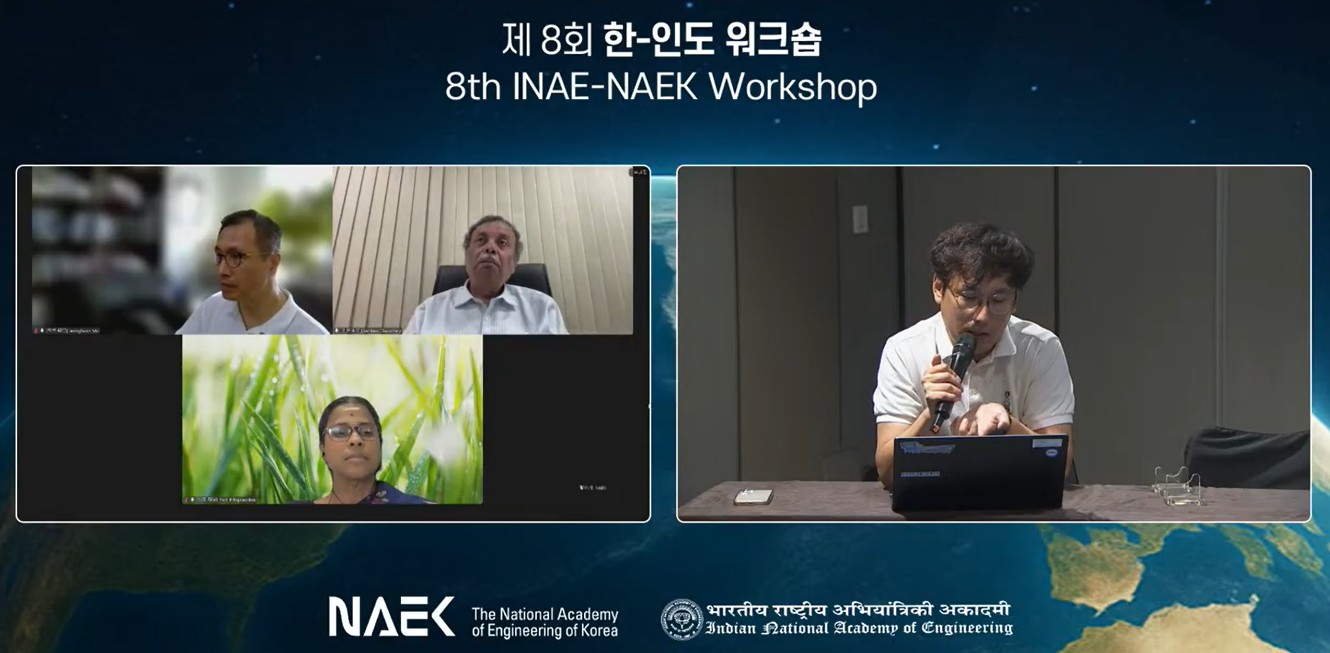
Day 2 – Technical Session on “Semiconductor Manufacturing and Fabrication Collaboration Initiatives”
Session 1: Semiconductor Manufacturing Initiatives
Dr. Taejoong Song, Vice President of Samsung Foundry, presented Samsung’s vision for the future of semiconductors and shared success stories from India, particularly the contributions of Samsung Semiconductor India Research (SSIR). His talk underscored the critical role of AI demand in shaping semiconductor growth and highlighted India as a valuable partner in chip design and innovation.
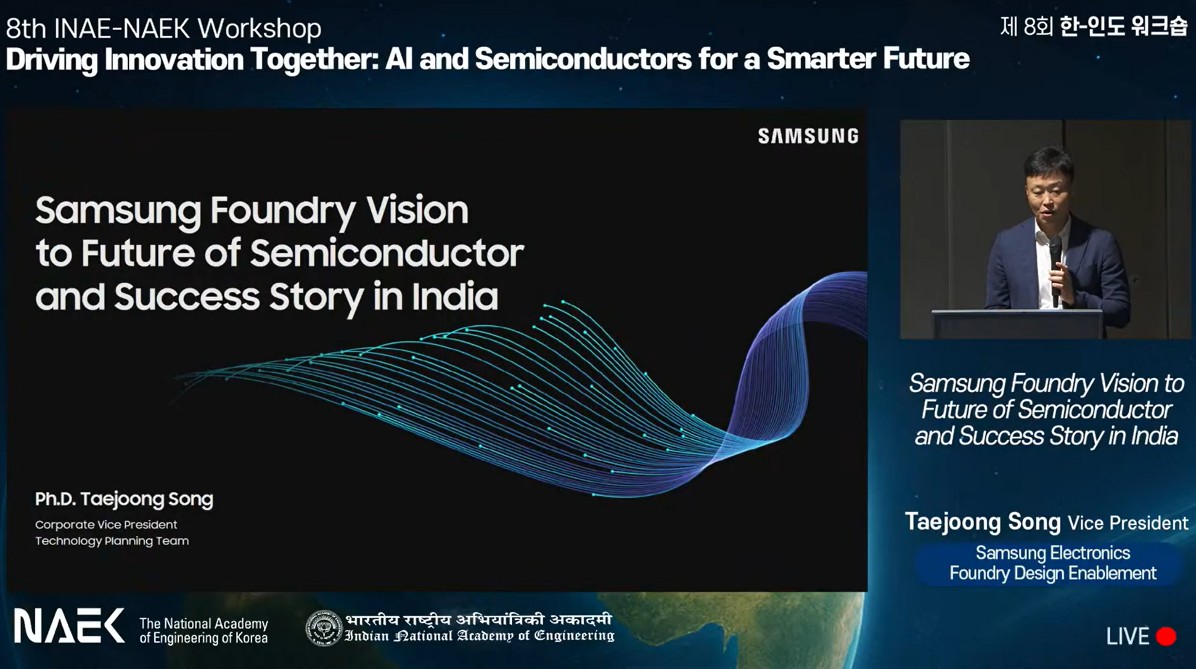
Dr Taejoong Song delivering presentation
Prof. Shiv Govind Singh of IIT Hyderabad introduced pioneering work on low-temperature, low-pressure Cu–Cu bonding technology for 3D IC integration. His breakthrough research demonstrated practical solutions to longstanding challenges in 3D integration, paving the way for advanced packaging and novel device applications.
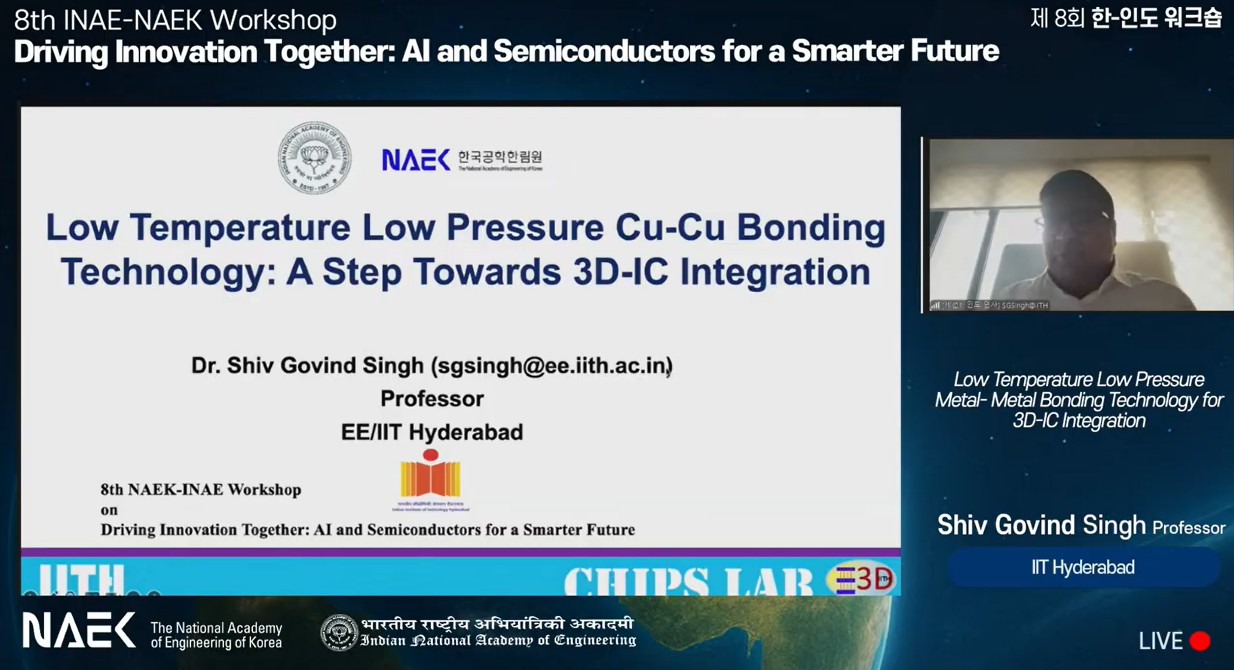 Prof Shiv Govind Singh making presentation online
Session 2: Fabrication Collaboration Opportunities
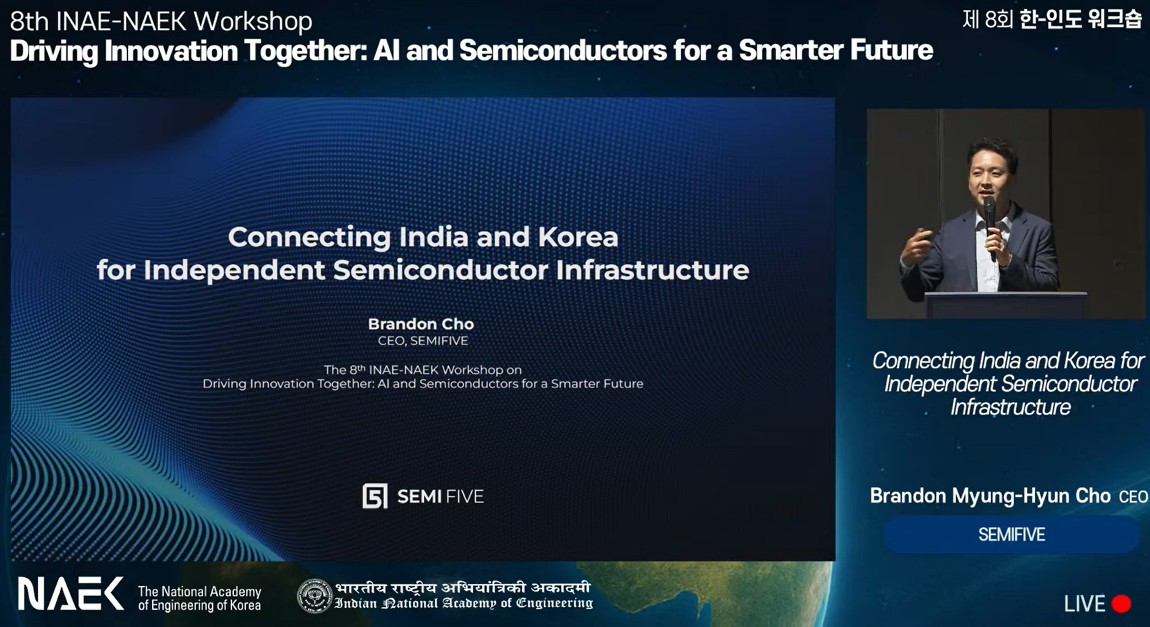
Mr. Brandon Myung-Hyun Cho, CEO of SEMIFIVE, proposed a platform-driven approach to semiconductor design that connects India’s engineering talent with Korea’s manufacturing ecosystem. He argued for the urgent need to establish independent semiconductor infrastructure and sovereignty, positioning India–Korea collaboration as a cornerstone for resilient AI hardware development.
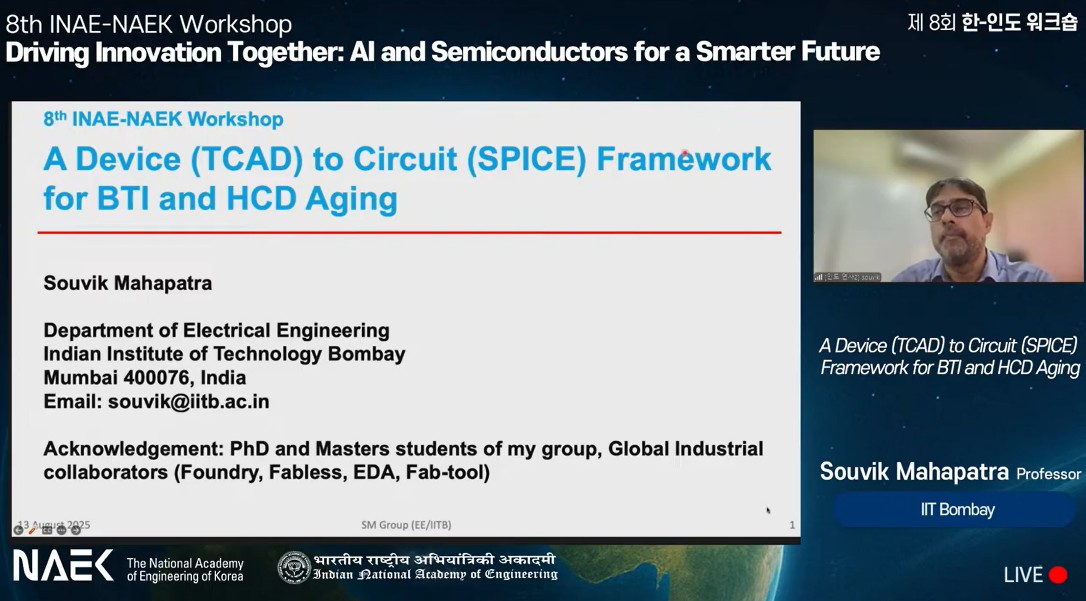
Prof. Souvik Mahapatra of IIT Bombay discussed a comprehensive TCAD-to-SPICE framework for analysing device aging effects like BTI and HCD in CMOS circuits. His talk emphasized the importance of reliability modelling for long-term performance in advanced semiconductor devices, especially under AI-driven workloads.
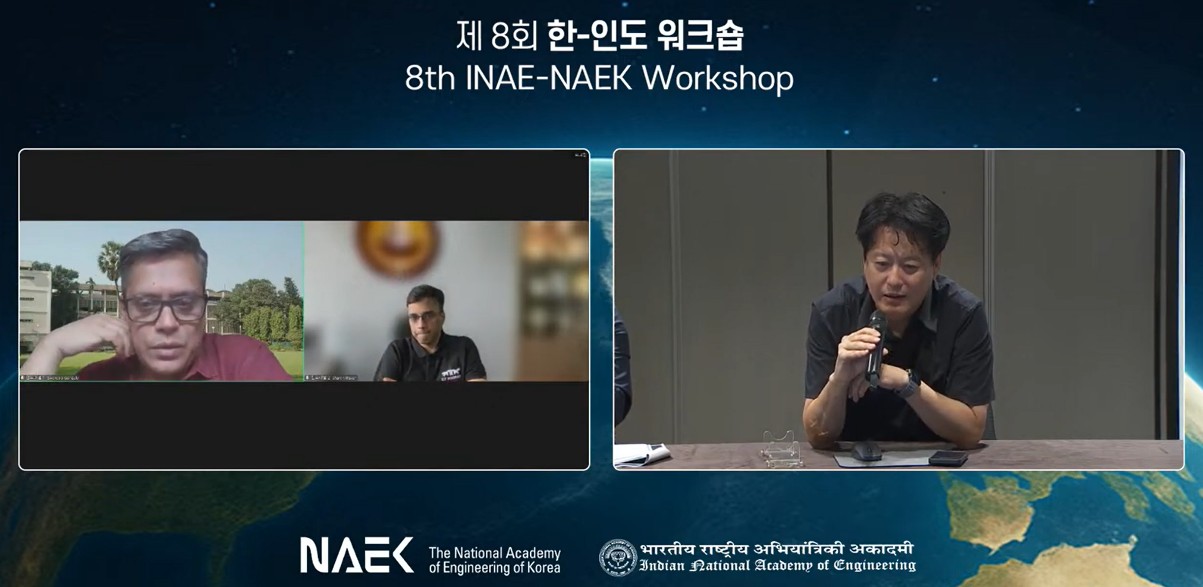
Round Table Discussion -2: Semiconductor Manufacturing and Collaboration Opportunities
The panel included Prof. Rino Choi (Inha University), Prof. Kang-Yoon Lee (SKKU / SKAI Chips), Prof. Swaroop Ganguly (IIT Bombay), and Prof. Shanthi Pavan (IIT Madras). Discussions revolved around building shared fabrication and prototyping facilities, establishing bilateral research consortia in 3D IC and device reliability, and creating skill development pipelines for semiconductor engineers. The experts agreed on the urgency of industry–academia–government partnerships to secure supply chains and accelerate innovation.
Conclusions
Across both days, it was evident that AI and semiconductors form a reinforcing cycle of innovation — with AI fueling chip demand and advanced chips enabling scalable AI deployment. India and Korea, with their complementary strengths, are well-positioned to jointly lead in these domains. The workshop concluded with calls for joint research consortia, pilot fabrication testbeds, bilateral talent exchange, and policy support frameworks. Establishing permanent India–Korea innovation hubs was recognized as a key future direction to ensure sustained leadership in AI and semiconductor technologies.

