



19th Symposium on National Frontiers of Engineering (NatFoE)-2025 and IMP 2025
The 19th Symposium on National Frontiers of Engineering (NatFoE-25) and Innovation in Manufacturing Practices (IMP-25), jointly organized by the Indian National Academy of Engineering (INAE) and SRM University–AP, was held on September 15-16, 2025. The event served as a prestigious platform for engineers, scientists, academicians, and industry leaders to exchange knowledge, discuss research advancements, and explore innovative practices in engineering. The symposium also coincided with the celebration of Engineer’s Day, commemorating the invaluable contributions of engineers to societal development. Organized under the aegis of the School of Engineering and Sciences (SEAS), the two-day event featured plenary lectures, invited talks, start-up sessions, poster presentations, and project competitions. More than 250 young engineers and 150 school students from nearby institutions actively participated, fostering an environment. The two Themes of the Symposium were: Theme 1- From Atmanirbhar to Global Leadership: India’s Semiconductor Roadmap and Theme 2- Quantum Leap: Harnessing the Power of Quantum Technology.
Day 1: 15 September 2025 (Monday)
The first day of the symposium commenced with registration at the APJ Abdul Kalam Auditorium, followed by the Invocation and Lighting of the Lamp, marking the formal inauguration of the event. The Welcome Address was delivered by Prof. C. V. Tomy, Dean, School of Engineering and Sciences (SEAS), followed by a briefing on NatFoE-25 and IMP-25 by Prof. Ramesh Vaddi, Convenor. Mr. J. D. Patil, President, INAE, addressed the gathering by the Presidential Address, highlighting the various initiatives undertaken by INAE and the significance of the National Frontiers of Engineering and Innovation in Manufacturing Practices.
Prof. Ch. Satish Kumar, Vice-Chancellor, SRM University–AP, in his address, emphasized the pivotal role of engineering innovation in driving national development. The Abstract Booklet of NatFoE-25 and IMP-25 was formally released, followed by a briefing on Engineer’s Day Celebrations by Dr. Raviteja, Co-Convenor.
The Engineer’s Day Talk was delivered by Dr. Parthasarathi, Group Chairman and Managing Director, SGES, Bangalore, who spoke on the evolution of Indian engineering capabilities. The inaugural session concluded with a Vote of Thanks by Dr. Sunitha K. A., Head, Department of Electronics and Communication Engineering, followed by a Tea Break.
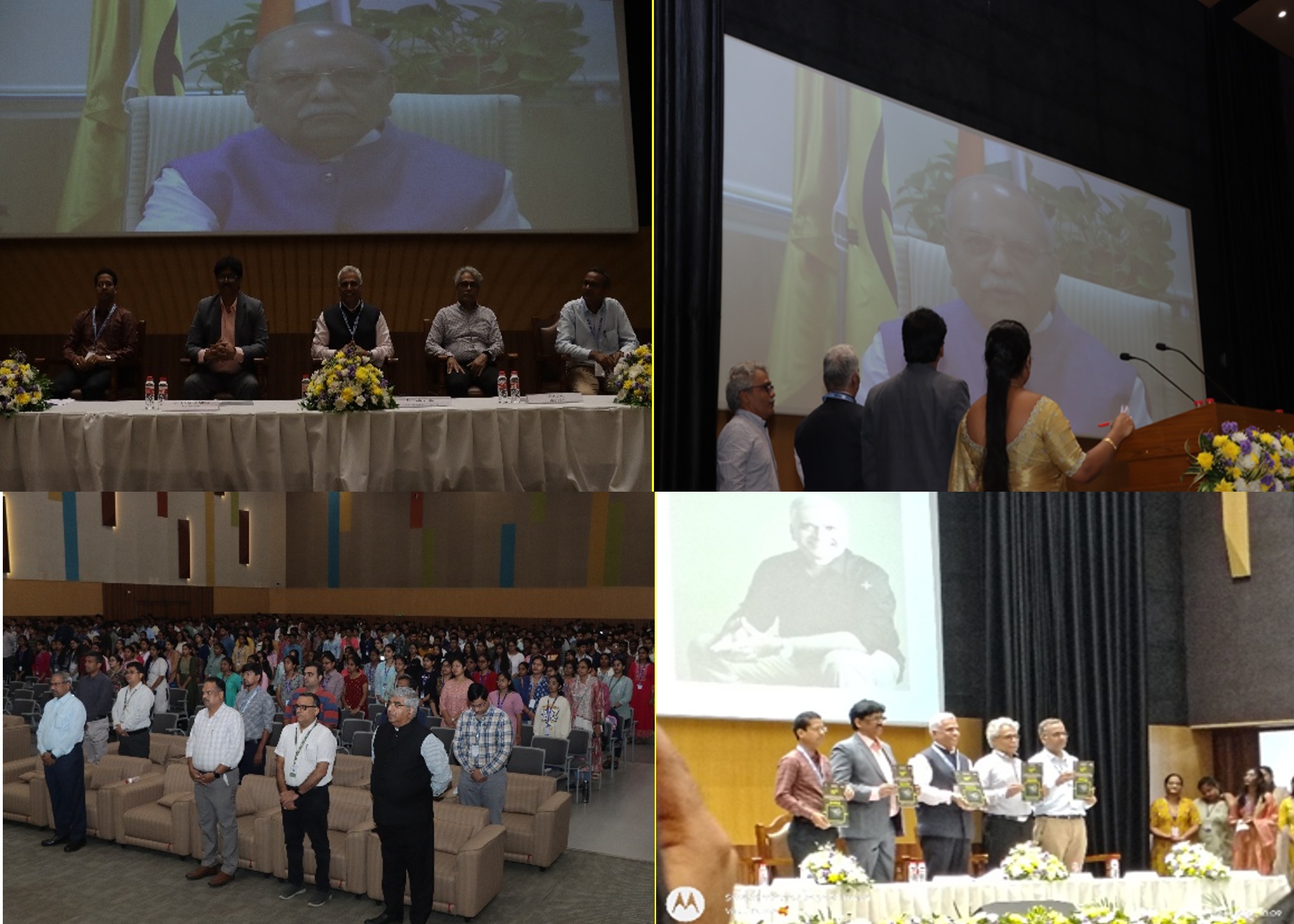 Glimpses of Inaugural Session during Day 1 of the event
Session 1: From Atmanirbhar to Global Leadership – India’s Semiconductor Roadmap
Session Chair: Prof. Ramesh Vaddi
The first technical session focused on India’s emerging leadership in the semiconductor ecosystem, exploring the nation’s transition from Atmanirbhar Bharat (self-reliant India) to a position of global technological leadership. The discussions highlighted the rapidly evolving landscape of semiconductor design, manufacturing, and AI hardware, as well as the challenges and opportunities for young Indian engineers in this strategically vital sector.
The session featured the following invited talks:
- Invited Talk: Dr. Satya Gupta, President, VLSI Society of India, delivered an insightful online presentation on “Making India a Semiconductor Product Nation.” Dr. Gupta’s talk was highly motivational, emphasizing the growing opportunities for young engineers under initiatives such as the Chips to Startup (C2S) Program and the upcoming 1TOPS (One Tapeout per Student) initiative.
- Invited Talk: Dr. Navjeet Bagga, Indian Institute of Technology Bhubaneswar, presented a detailed discussion on “Reliability of Emerging Devices,” focusing on the design and performance aspects influencing long-term device stability in semiconductor technologies.
- Invited Talk: Prof. Santosh Kumar Vishwa Karma, Indian Institute of Technology Indore, concluded the session with an online presentation on “AI Hardware Accelerators.” His talk provided a comprehensive overview of the latest developments in AI accelerator architectures and their potential applications in enhancing computational efficiency.
The session offered an integrated perspective on India’s semiconductor roadmap, covering key technological advancements, research priorities, and the strategic vision for fostering innovation-led growth in this domain.
Following the session, participants proceeded for a Lunch Break, which provided an excellent opportunity for networking and informal discussions among delegates, speakers, and participants, facilitating valuable exchanges of ideas and collaborative prospects.
Session 2: Quantum Leap – Harnessing the Power of Quantum Technology
Session Chair: Dr. Sreenivasulu Tupakula
The second session of the day focused on the transformative potential of quantum technologies, exploring advancements in quantum computing, communication, and cybersecurity. The talks highlighted India’s growing efforts toward establishing a robust quantum ecosystem that integrates academic research, industrial innovation, and start-up-led initiatives.
- Plenary Lecture: Ms. Reena Dayal, Founder & CEO, Quantum Ecosystem and Technology Council of India, delivered an online keynote address titled “Harnessing the Power of Quantum Technology.” Her talk provided an overview of the current global quantum landscape, India’s national mission on quantum technologies, and the collaborative opportunities for researchers and industry professionals.
- Startup Talk: Mr. Sanjay Chittore, Founder & CEO, Quantum AI Global, presented “The Quantum Threat: Cybersecurity in the Y2Q Era.” He discussed the potential risks posed by quantum computing to existing cryptographic systems and emphasized the need for quantum-safe cybersecurity strategies in the coming decade.
Following a brief Tea Break, the session resumed with two engaging start-up presentations:
- Startup Talk: Dr. Rohit, Co-founder & CTO, QOSMIC Satellite Systems, delivered an online talk on “Quantum Communication in Space.” His presentation covered the integration of quantum key distribution (QKD) technologies in satellite communication systems and their potential for secure global connectivity.
- Start-up Talk: Prof. N. Usha Rani, Founder, Vayuveda Innovative Tech, concluded the session with a talk titled “Drones at the Frontiers: Python, AI, and IoT for Next-Gen UAV Applications.” She demonstrated how emerging technologies such as AI, quantum sensing, and the Internet of Things are redefining the capabilities of unmanned aerial systems.
The session effectively showcased the synergy between quantum technologies, artificial intelligence, and advanced communication systems, reflecting India’s expanding footprint in next-generation deep-tech innovations and its commitment to driving global leadership in the quantum era.
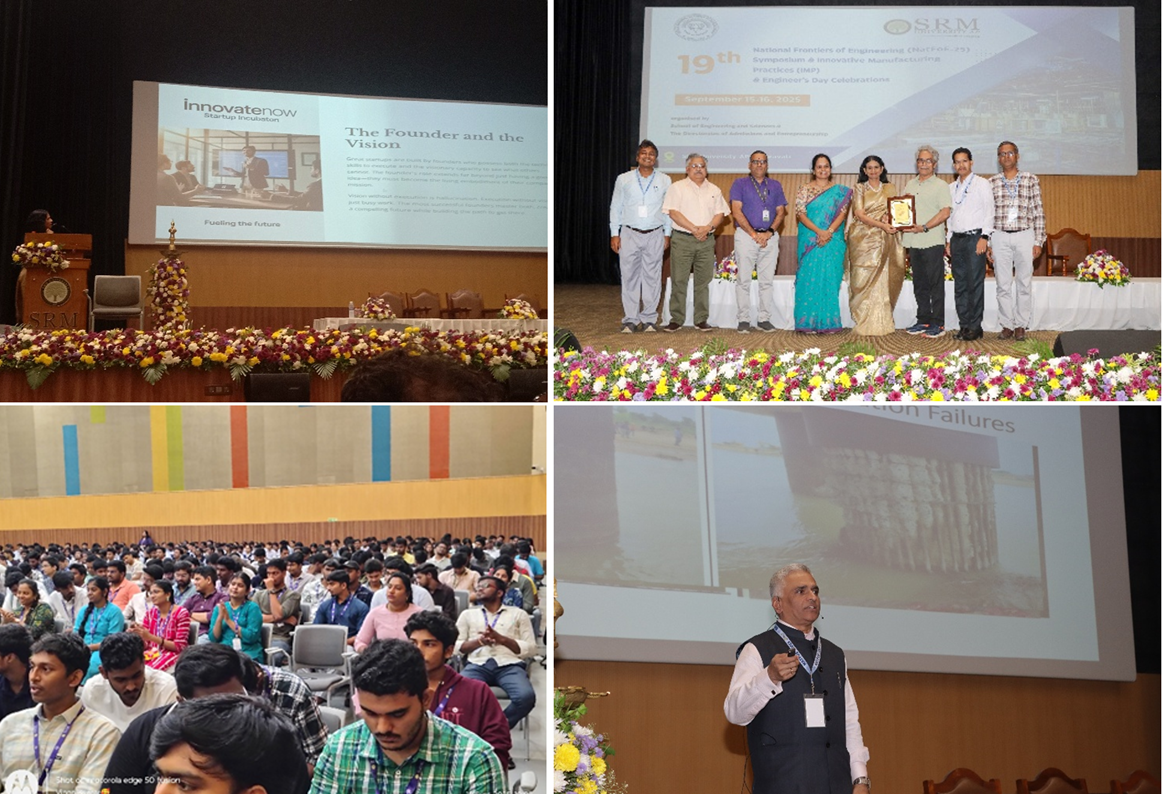 Experts discussed India’s semiconductor roadmap, deep-tech opportunities under Atmanirbhar Bharat during and Quantum Technology Session 1 & Session 2 of Day 1.
Day 2: 16 September 2025 (Tuesday)
Session 3: From Atmanirbhar to Global Leadership – India’s Semiconductor Roadmap
Session Chair: Dr. Durga Prakash
The second day of the symposium commenced with an engaging session dedicated to India’s Semiconductor Roadmap, furthering the discussions from Day 1 and emphasizing the nation’s strategic initiatives toward achieving technological self-reliance and global competitiveness in semiconductor research and manufacturing.
- Plenary Lecture: Prof. Siva Rama Krishna Vanjari, Indian Institute of Technology Hyderabad, delivered a plenary lecture on “Fostering the Fab and Fabless Ecosystem – Challenges and Pathways.” His talk highlighted the critical factors influencing India’s semiconductor manufacturing ecosystem and proposed strategies to strengthen the nation’s fabrication (fab) and design (fabless) capabilities.
- Invited Talk: Dr. Preet Yadav, Head, India Innovation Ecosystem, NXP Semiconductors, discussed emerging innovations and design paradigms shaping the semiconductor industry. He emphasized the importance of academia–industry collaboration to accelerate innovation and build a sustainable talent pipeline.
Following a Tea Break, the session continued with insightful presentations and discussions:
- Invited Talk: Dr. Manasa Devi, Inter-University Centre for Astronomy and Astrophysics (IUCAA), Pune, delivered an online presentation on advanced applications of semiconductor technologies, illustrating their role in precision instrumentation and scientific research.
- Startup Talk: Dr. Srinath Reddy, Founder & CEO, AI School, spoke on AI-driven semiconductor advancements, elaborating on the convergence of artificial intelligence and semiconductor design to enhance system efficiency and performance.
A Panel Discussion moderated by Dr. Preet Yadav followed, featuring Dr. Krishna Kanth Avalur and Prof. Siva Rama Krishna Vanjari, on the theme “India’s Semiconductor Roadmap: From Atmanirbhar to Global Leadership.” The panel deliberated on policy initiatives, industry challenges, capacity building, and the roadmap for India’s emergence as a global semiconductor hub.
- Invited Talk: Dr. Krishna Kanth Avalur, Founder & CTO, MOS Art Labs, delivered a concluding address titled “From Silicon to Skill: Building India’s Deep-Tech Talent for the EV Revolution.” He underscored the importance of developing specialized semiconductor and deep-tech expertise to support India’s rapidly growing electric vehicle (EV) ecosystem.
The session concluded with a Lunch Break, providing participants with an opportunity for informal networking and exchange of ideas among industry professionals, researchers, and young engineers.
Session 4: Quantum Leap – Harnessing the Power of Quantum Technology
Session Chair: Dr. Pradyut Sanki
The concluding session of the symposium was devoted to the rapidly evolving field of quantum communication and cryogenic electronics, highlighting recent breakthroughs and entrepreneurial opportunities in the emerging quantum technology ecosystem.
- Plenary Lecture: Prof. R. P. Singh, Physical Research Laboratory (PRL), Ahmedabad, QuTe Labs, delivered a plenary talk on “Quantum 2.0 and Quantum Communication.” He provided a comprehensive overview of the second quantum revolution, emphasizing India’s growing capabilities in secure communication, quantum key distribution, and experimental quantum networks.
- Invited Talk: Prof. Sudeb Dasgupta, Indian Institute of Technology Roorkee, presented an in-depth lecture on “Cryogenic Electronics for Quantum Computing.” His talk explored the design and performance challenges of cryogenic systems that enable scalable quantum processors and low-noise signal processing at ultra-low temperatures.
- Start-up Talk: Dr. Anuradha Thota, Chief Executive Officer, Blackbucks Engineers, delivered a presentation on “Entrepreneurial Pathways in Quantum Engineering.” She discussed the translational potential of quantum research and the role of start-ups in bridging the gap between laboratory innovations and real-world quantum applications.
Following the technical discussions, participants took a short Tea Break, after which parallel sessions commenced.
Poster, Project, and Startup Mentoring Sessions
Running concurrently with the technical sessions, poster presentations and startup mentoring sessions were organized to promote interaction between young researchers, innovators, and industry mentors. The sessions were evaluated by Dr. Srinath Reddy, Dr. Krishna Kanth Avalur, and Dr. Anuradha Thota, who provided valuable insights and feedback to the participants.The National-Level Project Competition (IMP-2025) on “Innovation in Manufacturing Practices” attracted enthusiastic participation across multiple categories. The competition was conducted through three dedicated pitching sessions, as follows:
- Undergraduate Scholars: 10:00 – 11:00 AM
- Postgraduate Scholars: 11:00 – 12:00 PM
- Young Entrepreneurs, Start-ups, and Ph.D. Scholars: 12:00 – 13:00 PM
These sessions fostered a spirit of innovation, interdisciplinary collaboration, and entrepreneurship, providing a dynamic platform for students and start-ups to showcase their creative ideas and technological prototypes aligned with national priorities in advanced manufacturing and engineering innovation.
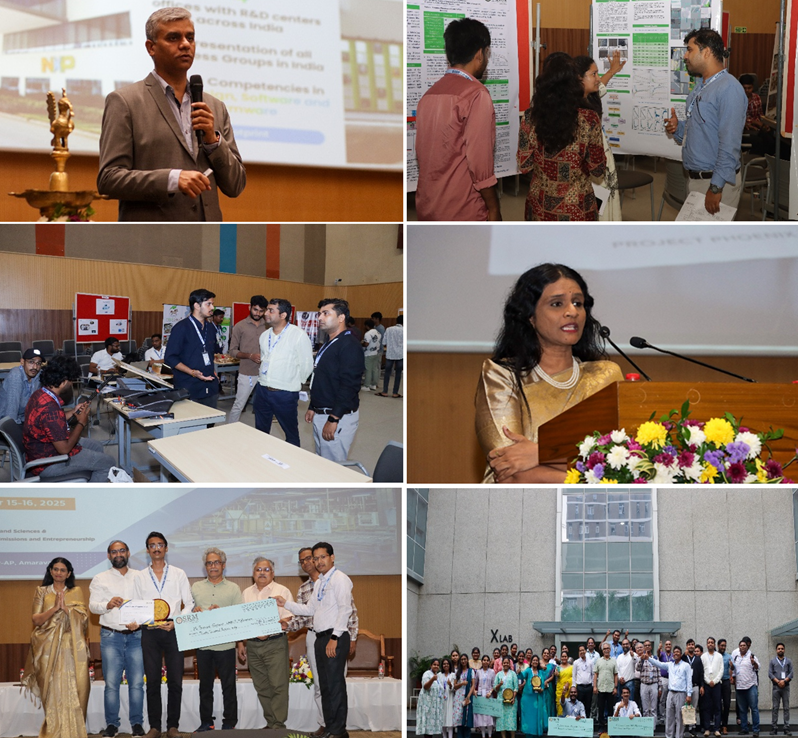 Insightful plenary and start-up talk during Day 2 of the event and Participants exchanging ideas during technical sessions and project competitions
Valedictory Session and Awards
The symposium concluded with the Valedictory Session and Awards Ceremony. The session celebrated the achievements and contributions of participants through the presentation of awards for Best Posters, Innovation in Manufacturing Practices (IMP) Projects, and Startup Pitches. Distinguished guests and organizing committee members acknowledged the enthusiastic participation of young engineers, researchers, and entrepreneurs throughout the two-day event. The valedictory remarks reflected upon the symposium’s success in fostering collaboration between academia, industry, and startups, and in advancing dialogue on the nation’s technological frontiers. The event underscored SRM University–AP’s commitment to nurturing future engineers, promoting innovation-driven research, and strengthening India’s leadership in the semiconductor and quantum technology sectors.
Conclusion
The 19th National Frontiers of Engineering (NatFoE-25) and Innovation in Manufacturing Practices (IMP-25) served as a dynamic and prestigious platform for the exchange of ideas and the dissemination of cutting-edge research. By bringing together experts from academia, industry, research organizations, and startups, the symposium facilitated insightful deliberations on the dual themes—India’s Semiconductor Roadmap and Quantum Leap Technologies. The discussions emphasized the importance of innovation, entrepreneurship, and interdisciplinary collaboration in realizing the vision of Atmanirbhar Bharat. The two-day event not only commemorated Engineer’s Day but also celebrated India’s transformative journey toward global leadership in deep-tech, quantum technologies, and advanced manufacturing.
18th Symposium on National Frontiers of Engineering (NatFoE)-2024 and IMP 2024
The 18th Symposium on National Frontiers of Engineering (NatFoE), a flagship event organized by the Indian National Academy of Engineering (INAE) since 2006, aims to inspire young engineers (aged approximately 27-45) from industries, universities, and R&D labs to present cutting-edge research in various engineering fields. This year, the 18th NatFoE-24 symposium was held on November 15-16, 2024, at the National Institute of Technology Warangal, in collaboration with INAE and under the auspices of the ANRF (SERB) – INAE Conclave on Atmanirbhar Technologies for Engineering a Secured Future.
The symposium attracted a vibrant mix of young researchers and professionals from academic institutions, R&D laboratories, and industries, all engaged in discussing and showcasing innovations that address both national and global challenges. The inaugural function of the symposium took place at the Ambedkar Learning Centre at NIT Warangal, where it was graced by distinguished dignitaries, including Prof. Indranil Manna, President of INAE, Prof. Sivaji Chakravorti, Vice President of INAE, Prof. Bidyadhar Subudhi, Director of NIT Warangal, and Prof. Shirish H Sonawane, Dean of Research and Development at NIT Warangal. Their presence underscored the event’s importance in shaping the future of engineering in India.
Reflecting India’s commitment to self-reliance and technological advancement under the Atmanirbhar initiative, the symposium was centered around four critical themes that are poised to drive transformative change in the engineering landscape:
- Additive Manufacturing and Automation: This theme explored the latest advancements in 3D printing technologies and automation, highlighting their potential to revolutionize manufacturing processes by enabling customization, reducing material waste, and enhancing efficiency.
- Smart Grid: Power Electronic Converters, Control, and Protection: With the growing importance of energy efficiency and sustainability, this theme focused on the evolving field of smart grids, which combine advanced power electronics, renewable energy sources, and sophisticated control systems.
- Green Hydrogen and Storage Technologies: As the world seeks sustainable energy solutions, green hydrogen has emerged as a promising energy carrier. This theme delved into the technologies surrounding hydrogen production, storage, and utilization, with a focus on making them economically viable and scalable.
- Quantum Computing, Artificial Intelligence, and Machine Learning: This theme highlighted the intersection of cutting-edge computing technologies, AI, and machine learning, showcasing how these innovations are transforming industries ranging from healthcare to finance to manufacturing.
Each of these themes is deeply connected to India’s vision of a self-reliant, technologically advanced, and sustainable future. The symposium provided a collaborative environment for young engineers to exchange ideas, discuss the latest trends, and explore opportunities for research and development in these transformative fields. By engaging in such discussions, the participants contribute to shaping India’s technological landscape and advancing the nation’s progress toward a more sustainable and self-reliant future in engineering.
Innovation in Manufacturing Processes (IMP) – 2024
The Innovation in Manufacturing Processes (IMP) – 2024, organized by INAE in collaboration with the National Institute of Technology Warangal under the aegis of the ANRF (SERB) – INAE Conclave on Atmanirbhar Technologies- Engineering Secured Future, took place on November 16, 2024. This event brought together a diverse group of participants, including undergraduate and postgraduate (Master’s students) as well as start-ups, all presenting innovative ideas and projects related to advancements in the manufacturing sector.
A total of 24 teams participated, pitching their cutting-edge ideas and demonstrating how they could revolutionize manufacturing processes. The event highlighted a broad spectrum of topics, from new manufacturing techniques to sustainability innovations, all aimed at driving progress within the industry.
At the conclusion of the event, cash awards were presented by eminent guests in three distinct categories, recognizing the most outstanding projects. In addition, certificates were distributed to the best poster presentations across four themes, further encouraging participants to engage in deep research and innovative thinking. The event not only provided valuable exposure to the participants but also fostered collaborations, ideas exchange, and inspiration, contributing to the larger goal of fostering an Atmanirbhar (self-reliant) manufacturing ecosystem in India.
To view the brief report of NatFoE 2024 & IMP 2024 CLICK HERE
To view the brochure of Innovation in Manufacturing Practices (IMP) -2024 CLICK HERE
To view the brochure of National Frontiers of Engineering’ (NatFOE)-2024 CLICK HERE
Youtube link of Inaugural session of NaTFoE & IMP 2024 : https://youtube.com/live/fnkqyoAt07s
17th National Frontiers of Engineering (NatFoE) Symposium and IMP 2023
The Symposium on National Frontiers of Engineering (NatFOE) is one of the flagship events of INAE since 2006. The main objective of the event is to encourage Young Engineers (ages ~27-45) from industry, universities, and R&D labs to discuss leading-edge research and technical work across a range of engineering fields. The 17th National Frontiers of Engineering (NatFoE-23) symposium was organized by Indian National Academy of Engineering (INAE) in collaboration with Birla Institute of Technology Mesra under the aegis of INAE-SERB conclave on Atmanirbhar Technologies- Engineering Secured Future during June 24-25, 2023. This annual flagship event of INAE was attended by young researchers across various academic institutions, R & D laboratories and industries as speakers and participants.
Innovation in Manufacturing Processes (IMP) – 2023 conducted by INAE and BIT Mesra under the aegis of INAE-SERB conclave on Atmanirbhar Technologies- Engineering Secured Future on June 26, 2023, is a national level project competition open to all engineering students and practitioners with the endeavour to engage with the engineering youth of the country. The Innovation in Manufacturing Processes (IMP) – 2023 was dovetailed with the 17th National Frontiers of Engineering (NatFoE-23) Symposium. In addition to undergraduate and postgraduates (Master’s students) categories, start-ups were also invited scholars to showcase their project work related to innovations in manufacturing sector. The students participated from various eminent institutions such as NIT Rourkela, NIT Patna, NIT Jamshedpur, IIT (ISM), Dhanbad, IIEST Shibpur, IIT Guwahati, RCC Institute of Technology, Kolkata, Rai University, Sido Kanhu Murmu University, Dumka, BIT Polytechnic and BIT Mesra.
To view the brief report of NatFoE 2023 & IMP 2023 CLICK HERE
To view the brochure of Innovation in Manufacturing Practices (IMP) -2023 CLICK HERE
To view the brochure of National Frontiers of Engineering’ (NatFOE)-2023 CLICK HERE
To View the website for NatFoE-23 & IMP-23 : https://youtube.com/live/fnkqyoAt07s
16th National Frontiers of Engineering (NatFoE) Symposium, 2022
The Symposium on National Frontiers of Engineering (NatFOE) is one of the flagship events of INAE since 2006. The main objective of the event is to encourage Young Engineers (ages ~27-45) from industry, universities, and R&D labs to discuss leading-edge research and technical work across a range of engineering fields. The 16th National Frontiers of Engineering (NatFoE) Symposium was organized by the Indian National Academy of Engineering (INAE) jointly with Jadavpur University and in collaboration with IIT Kharagpur on 18th and 19th June 2022. This annual flagship event of INAE was held at the Salt Lake campus of the Jadavpur University and was attended by young researchers across various academic institutions, R & D laboratories and industries as speakers and participants. It was a physical event organized after a long period of lockdown due to COVID pandemic and drew a huge enthusiasm from all quarters – participants, organizers and INAE fellows and office bearers.
The inaugural program was presided over by the INAE President Prof. Indranil Manna. During the inaugural session, Prof. Sivaji Chakravorti, Vice President, INAE, delivered the Welcome address and explained the objectives of the symposium. He emphasized the critical role of the symposium in shaping the course of future research in cutting–edge areas in engineering disciplines by bringing together young, talented and enterprising engineering professionals. Prof. Indranil Manna in his presidential address delved into the activities of INAE in forwarding the engineering education, research and knowledge transfer at various levels. He explained how INAE contributes towards nation building by advancing expertise to various governmental and non-governmental organizations. Prof. Ashutosh Sharma, Chair Professor of IIT Kanpur and former Secretary, Department of Science and Technology, GoI, delivered the inaugural address of the symposium as the Chief Guest. His inspiring speech covered wide areas of research scope overcoming disciplinary barrier. He also stressed upon the presentation of the research results along with the quality of research. Prof. Chiranjib Bhattacharjee, Pro Vice-Chancellor, Jadavpur University, was the Guest of Honour. Prof. Amitava Datta, Coordinator of the Symposium moved the vote of thanks and expressed heartfelt gratitude to INAE for giving Jadavpur University an opportunity to organize the prestigious event.
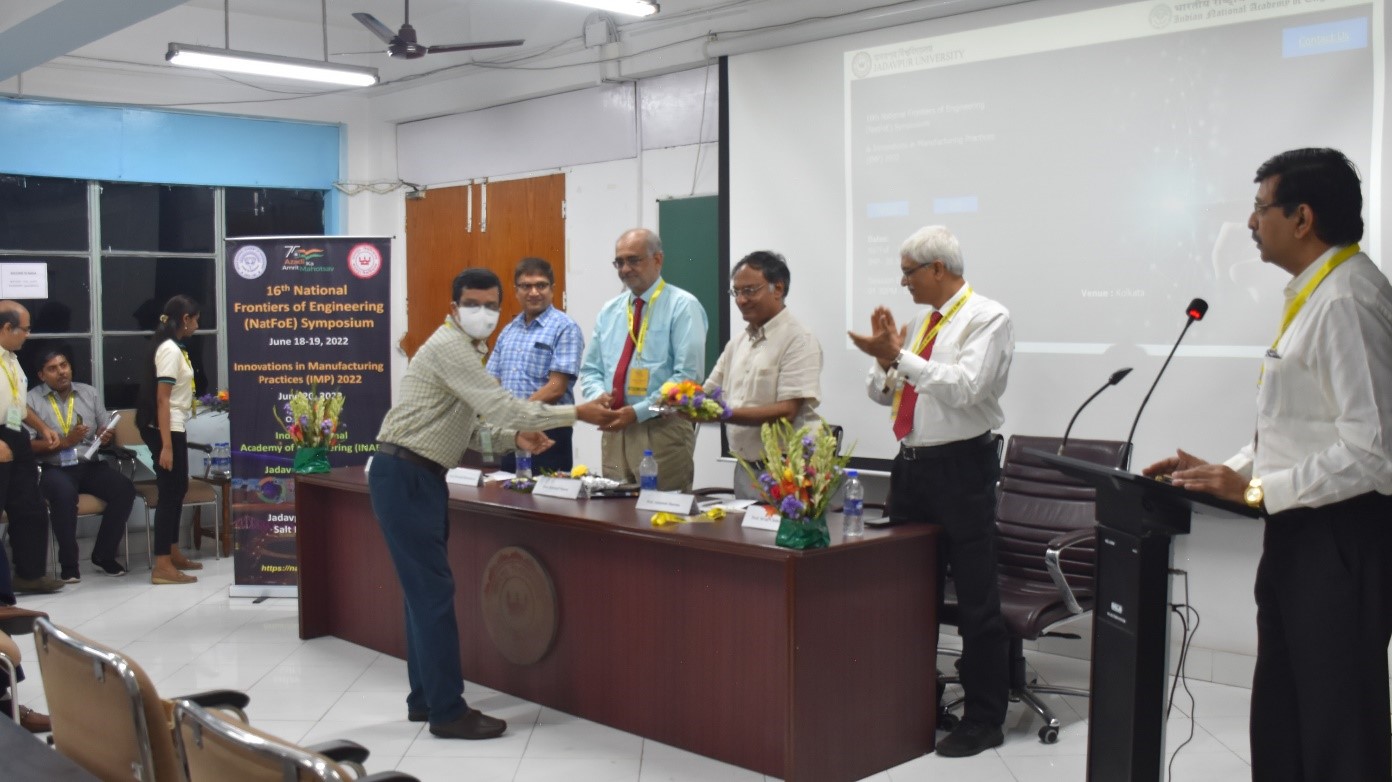
Inaugural program of NatFoE 2022
There were technical sessions on four thematic areas in the symposium and each session had one plenary talk and four invited talks by experts from the relevant disciplines. All the technical sessions were conducted by the respective theme conveners. In addition, a special session on Azadi ka Amrit Mahotsav was organized to commemorate the seventy-fifth year of Indian independence and the achievements of the country during this period. The young participants attending the symposium also presented their research in a poster session separately organized for them. The speakers and participants from different corners of the country have been chosen by the theme conveners, symposium coordinator and Prof. Sivaji Chakravorti as adviser after thorough review of their research activities.
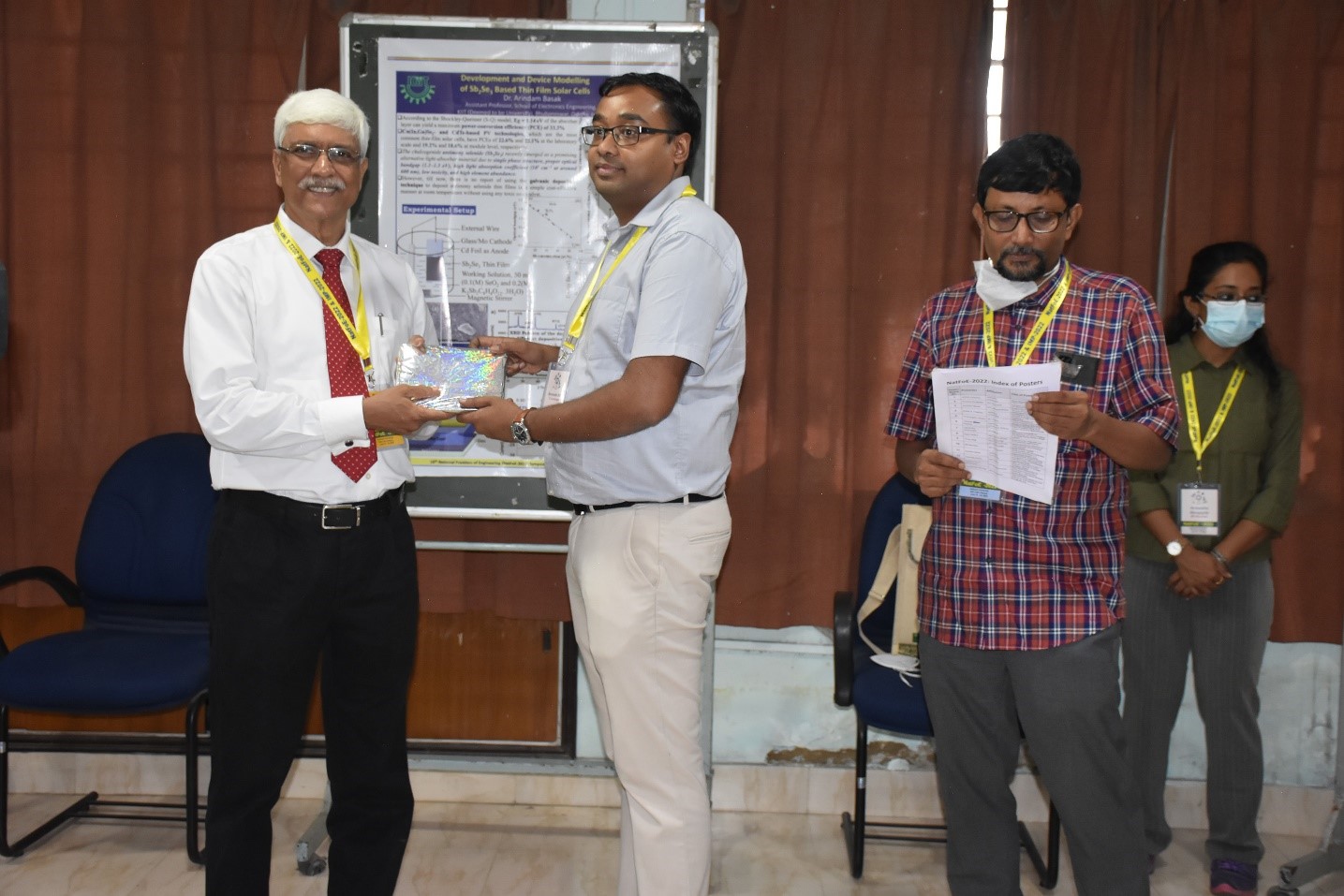
Poster Session
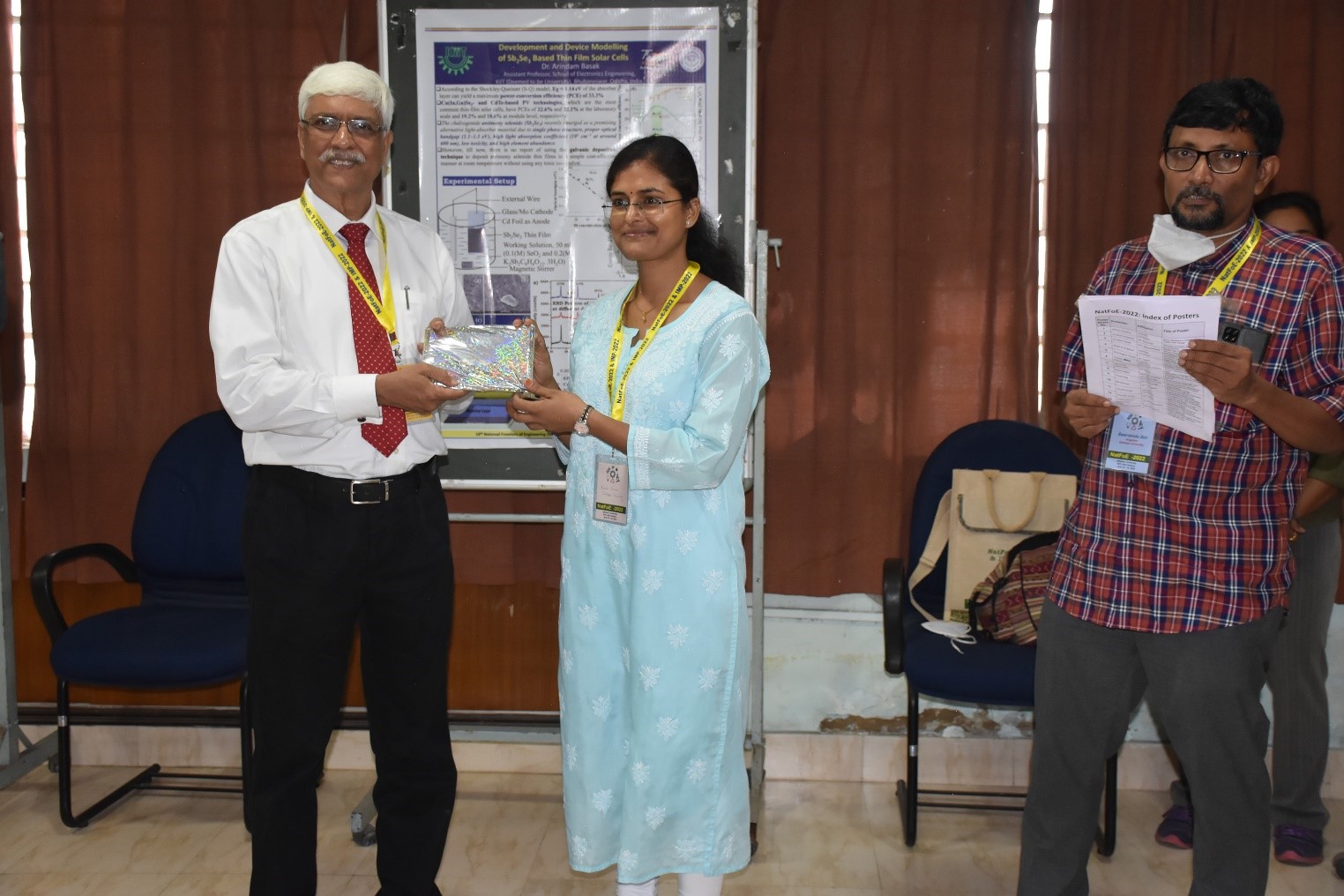
.
The first technical session titled “Field-Deployable Miniaturized Sensors” was conducted by Prof. Ranjan Ganguly of Jadavpur University as the theme convener. Dr. Dhananjaya Dendukuri of Achira Labs Pvt. Ltd was the plenary speaker and Dr. Pallab Sinha Mahapatra (IIT Madras), Dr. Pranab Kumar Mandal (IIT Guwahati), Dr. (Mrs) Shrutidhara Sarma (IIT Jodhpur) and Dr. Dibyendu Das (IIEST Shibpur) were the invited speakers of the session.
The second thematic session on “Waste Valorization and Circular Economy” was chaired by the theme convener Prof. Achintya Mukhopadhyay of Jadavpur University. Prof. M.R.Ravi of IIT Delhi delivered the plenary talk of this session. It was followed by four invited lectures by Dr. R. Vinu (IIT Madras), Dr. Jayakrishna Kandasamy (Vellore Institute of Technology), Dr. (Mrs) Papita Das (Jadavpur University) and Dr. Amit Arora (IIT Bombay).
In the third thematic session titled “Resource-Constrained Translational Technology”, Prof. Rajib Bandyopadhyay of Jadavpur University chaired the session as the theme convener. The plenary talk of the session was delivered by Dr Arpan Pal of TCS Research. After that, Dr. Kumaravel S. (NIT Calicut), Dr. Debangshu Dey (Jadavpur University), Dr. Sri Krishna Kumar (IIT Kharagpur) and Dr. (Mrs) Chirasree Roy Chaudhuri (IIEST Shibpur) delivered the invited talks.
The fourth thematic session in the symposium on “Nanostructured Surfaces for Functional Materials and Systems” was conducted by Prof. Samit K Ray of IIT Kharagpur as the theme convener. The session covered lectures on nanomaterials-based surface engineering, nano-sensors and materials for energy harvesting with one Plenary and three Invited lectures. The Plenary lecture on “Liquid Infused Slippery Surfaces: From Fabrication to Functionalities” was delivered by Prof. Suman Chakraborty of IIT Kharagpur. Following Prof. Chakraborty’s lecture, Dr. Ritesh Kumar (CSIR-CSIO, Chandigarh), Dr. Sayan Bayan (Rajiv Gandhi University, Arunachal Pradesh) and Dr. Gururaj Telasang (ARCI, Hyderabad) delivered the invited talks.
The special session of Azadi ka Amrit Mahotsav had four very distinguished speakers – Prof. Samir Kumar Pal (S.N.Bose Centre for Basic Sciences, Kolkata), Prof. Avinash Kumar Agarwal (IIT Kanpur), Dr. (Mrs) Mahati Chittem (IIT Hyderabad) and Mr. K. Rashid (Genrobotics Innovation, a start-up company). The speakers elaborated different innovative areas, like medical diagnostics, methanol economy, behavioural aspects in medical science and robotic machines to replace manual scavenging, which will lead the country to the next level in science and technology in the coming years.
A plenary talk was delivered by Prof. P.P. Chakrabarti, former Director, IIT Kharagpur, in a special session on 18th June evening. Prof. Chakrabarti in his unparalleled style enthralled the audience with an overview of Artificial Intelligence and Machine Learning and portrayed the future perspectives of the subject.
All the talks of every session led to engaging discussions following the presentations and also beyond the session during the symposium. Strong synergistic areas were identified by the speakers and other participants in these domains, and engaging research collaborations are expected as a future outgrowth. The valedictory address was delivered by Prof. Purnendu Ghosh, Vice President, INAE, where he thanked all the speakers and participants for the rich presentations and high-quality research in their respective fields. He expressed strong conviction that with such excellent work from the young researchers, the country will prosper in the fields of science and technology in the coming years.
A Brochure of IMP 2022 can be viewed by clicking here….
The event can be viewed and the link for viewing the NatFoE and IMP event proceedings held at Jadavpur University are given below.
YouTube channel name: NatFoE-2022
Channel URL :- https://www.youtube.com/channel/UCzMtf1f4MYJl-UkVHsLV7OA
NatFoE-IMP Scheduled :-
NatFoE Day – 1- Jun-18-2022 https://youtu.be/mTN28q-uDkw
NatFoE Day – 2 -Jun -19-2022 https://youtu.be/BhOZuXN-seo
IMP Day – 3 – Jun-20-2022 https://youtu.be/DcAMIiC_SY0
INNOVATIONS IN MANUFACTURING PRACTICES (IMP) 2022
Changes in present day manufacturing reflect advancements in supply chain, markets, customer demands and engineering design. Growth of manufacturing sector of our country can significantly boost the national economy. Keeping this in mind, Indian National Academy of Engineering (INAE) and Jadavpur University, Kolkata (JU) organized a National Competition on Innovation in Manufacturing Practices (IMP 2022) at Jadavpur University, Kolkata on 20th June 2022 subsequent to the National Frontiers of Engineering Symposium 2022 to provide a platform for engineering students and startups to showcase innovations in manufacturing sector. After two years of pandemic, the event was organized in physical mode.
Participation was solicited in three categories – Undergraduate Students, Postgraduate Students and Startups. Total 55 innovations were submitted (22 in UG, 16 in PG and 6 in Startup categories) from different corners of our country. It was a two-round contest. The submitted entries were evaluated in the first round on the basis of their presentation video and submitted write-up.
A jury board was constituted of three members, of whom two are INAE Young Engineer awardees and one is INAE Woman Engineer awardee. The jury board selected total 18 entries (six from each category) in the first round for final physical presentation on 20th June 2022. The final event was organized at UGC-HRDC Lecture Hall of Jadavpur University, Salt Lake Campus, Kolkata.
The event was inaugurated by Prof. Purnendu Ghosh, Vice President, INAE, and the participants were welcomed by Prof. Sivaji Chakravorti, Vice President, INAE. The Inaugural session was followed by three consecutive sessions for three categories. These sessions were chaired by three eminent academicians in the field of engineering & technology. However, the final event was attended by 12 participants (5 in UG, 4 in PG and 3 in Startup categories) out of the selected 18 participating teams, mainly due to the sudden disruption in railway services at that time.
As the contest is a prestigious one, it was decided that only the deserving innovations will be awarded, and it was declared in the inaugural session. The jury members accordingly applied their judgment for conferment of the award. Finally, the jury board did not recommend any entry for the award in PG and Startup categories. The first and the second prizes in the UG category went to two girl participants for their appreciable innovations. The awards were announced by Prof. Sivaji Chakravorti in the Valedictory Session of the event, after distribution of the participation certificates to the participants.
15th National Frontiers of Engineering (NatFoE) Symposium, 2021
Indian National Academy of Engineering organized 15th National Frontiers of Engineering (NatFoE) Symposium jointly with IIT Hyderabad on July 9-10, 2021 on virtual platform bringing together 50 bright young engineers to deliberate on emerging technologies in some key engineering sectors. Prof BS Murty, Director, IIT Hyderabad and Prof Sivaji Chakravorti, Vice-President, INAE were the coordinators of the event. Prof Chandrasekhar Sharma, IIT Hyderabad was the Convener of the event.
NatFoE Symposium is an annual flagship event of INAE aiming towards bringing together young engineers from academic institutes, R&D labs and industry on a single platform to deliberate upon emerging trends of research and cutting-edge technologies. About fifty young engineers discussed, deliberated and brainstormed the state-of-the-art knowledge and development, and highlighted the opportunities and challenges in the four major areas:
(i) Artificial Intelligence and Machine Learning
(ii) Advanced materials and Manufacturing Technologies
(iii) Infrastructure and Unconventional Energy
(iv) Rural Technology and Entrepreneurship.
All the four themes were chosen carefully as key areas to focus towards making India self-reliant in engineering & technology. As a part of seventy-five years of independence celebrations of India, a special session on ‘Azadi Ka Amrit Mahotsava’ was also organized in which speakers talked about various indigenous technologies in the area of female hygiene, mitigating greenhouse effects and developing green routes for hydrogen production as an alternative fuel. Another highlight of this session was the model technology to translate English text into 11 Indian languages that may play a key role in translating engineering text books into Indian languages in line with the new education policy to provide technical education in local languages.
Dr. Tessy Thomas, Director General (Aeronautical Systems), DRDO presented a detailed overview on the advances in aerospace materials and manufacturing technologies and highlighted their importance in the success of India’s space program. Dr. Debashish Bhattacharjee, Vice President (New Materials Business), Tata Steel in another keynote lecture presented some of the breakthrough technologies and innovations in the area of high strength, lightweight materials for automotive sector.
The symposium started with the welcome address by Prof. B. S. Murty, Director IIT, Hyderabad. Conveying the welcome greetings to the dignitaries and the attendees. Prof. Murty said, “despite the organization of the meeting on a virtual platform due to Covid-19 pandemic, organization of NatFoE2021 will achieve its goal in fostering the new collaborations and exchanging new ideas among the brightest minds and the deliberations will help in unveiling new innovations and the strategies for their commercialization paving the way for the country to become a leader in technology innovations ”.
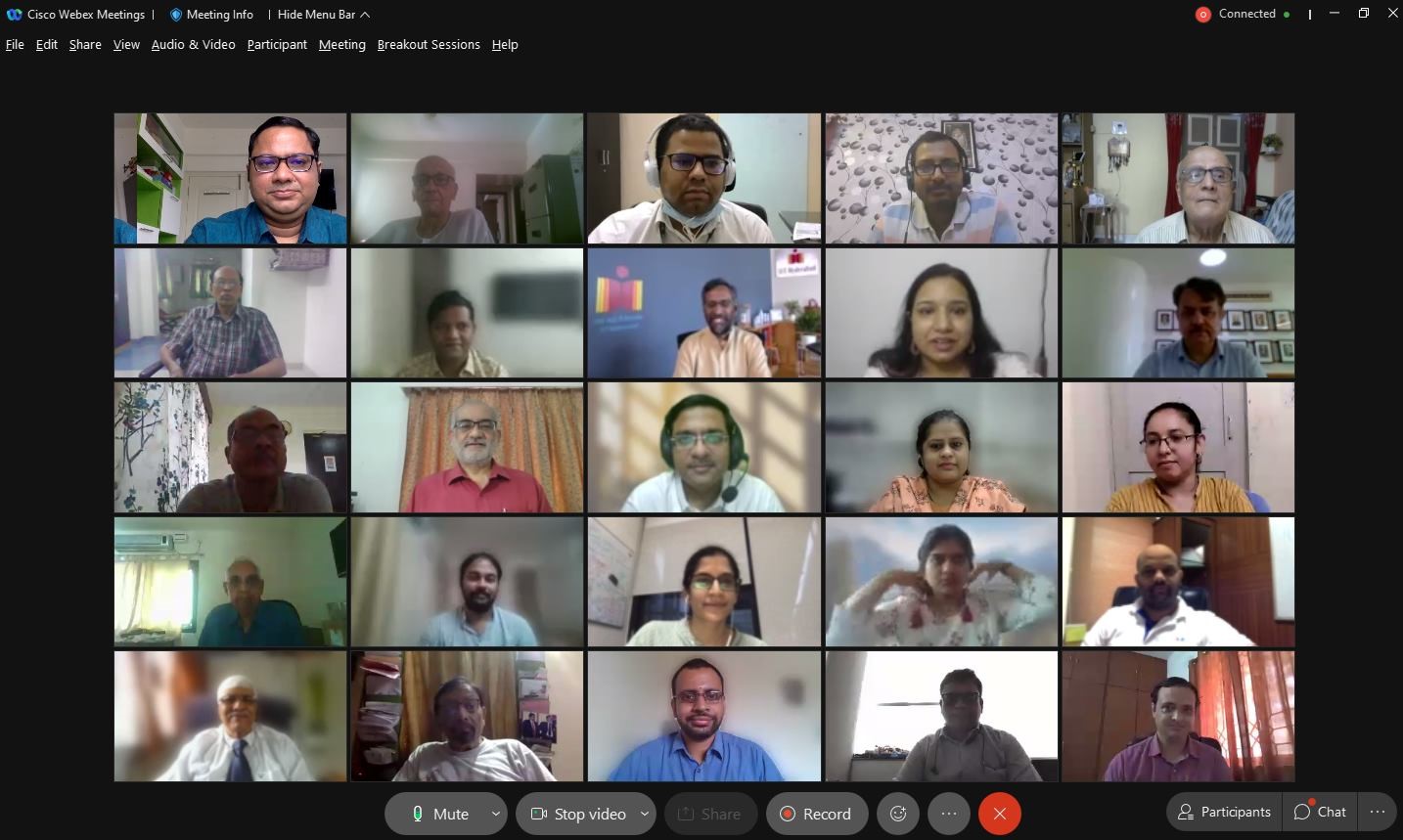
Inaugural Session of the 15th National Frontiers of Engineering Symposium held on July 9, 2021
Congratulating IIT Hyderabad for its efforts in organizing NatFoE, as an online event for the first time, Prof. Indranil Manna, President, INAE said the INAE will take appropriate steps in implementation of the recommendations and action items in the four themed areas as a final outcome of this symposium. As a satellite event of NatFoE 2021, a national design competition event, Innovations in Manufacturing Practices (IMP) was also organized for UG and PG students as well as start-ups. Out of 160 entries, 6 award winners were chosen. Prof. Sivaji Chakravorti, Vice President, INAE declared the award winners in each category and congratulated them for their innovation and extended further support to take them to the next level. Dr. Chandra Shekhar Sharma, Coordinator, NatFoE 2021 extended a vote of thanks to all speakers & participants, INAE Fellows and Young Associates and other guests for their active participation to make the NatFoE 2021 a grand success.
INNOVATIONS IN MANUFACTURING PRACTICES (IMP) 2021
Innovation in Manufacturing Processes (IMP), conducted by INAE and IIT Hyderabad jointly as a satellite event along with 15thNatFoE symposium, is a national level project competition open to all engineering students and practitioners. In addition to undergraduate and postgraduates (Master’s students) categories, start-ups were also included as a new category this year. In the UG and PG category, the eligible branches were Aeronautical, Biomedical, Chemical, Civil, Computer/Information, Design, Electrical, Electronics, Industrial, Instrumentation, Material Science, Mechanical, Power, Production and other allied branches. Entrepreneurs-in-Residence (EiR) and Start-ups with less than two years and incubated at any of the Technology Business Incubators (TBI) in India were eligible in the Start-up category. In each of these categories, the award included a prize of Rs. 40,000 and Rs. 20,000 for first and second place winners, respectively. The event was coordinated by Prof. S. Surya Kumar and INAE Young Associate Dr. Mudrika Khandelwal of IIT Hyderabad.
Entries to this competition were taken in the form of a short video and a small write-up, floated through an online application portal which remained open from 1st April to 15th June. Based on the preliminary screening, out of 150 entries, 24 were selected for the “Virtual Showcasing” where the submitted project videos are hosted on a dedicated webpage (https://www.iith.ac.in/natfoe2021/imp/) as a run-up to the competition.
The winners were selected from these 24 applications by an eminent jury comprising of INAE Young Engineer awardees and chaired by Prof. Sivaji Chakravorti, Vice-President INAE. The jury included Dr. Amartya Mukhopadhyay (IIT Bombay), Dr. Aravind Kumar Rengan (IIT Hyderabad), Dr. Chirasree Roy Chaudhuri (IIEST, Shibpur), Dr. Pooja Devi (CSIR-CSIO) and Dr. Swati Ghosh Acharyya (University of Hyderabad).
On the day-1 of the NaTFoE event (9th July in the 12:00 to 13:00 session), videos of the selected applicants were showcased as part of the event. The final winners were announced on the day-2 of the NaTFoE (by Jury-Chair, Prof. Sivaji Chakravorti.
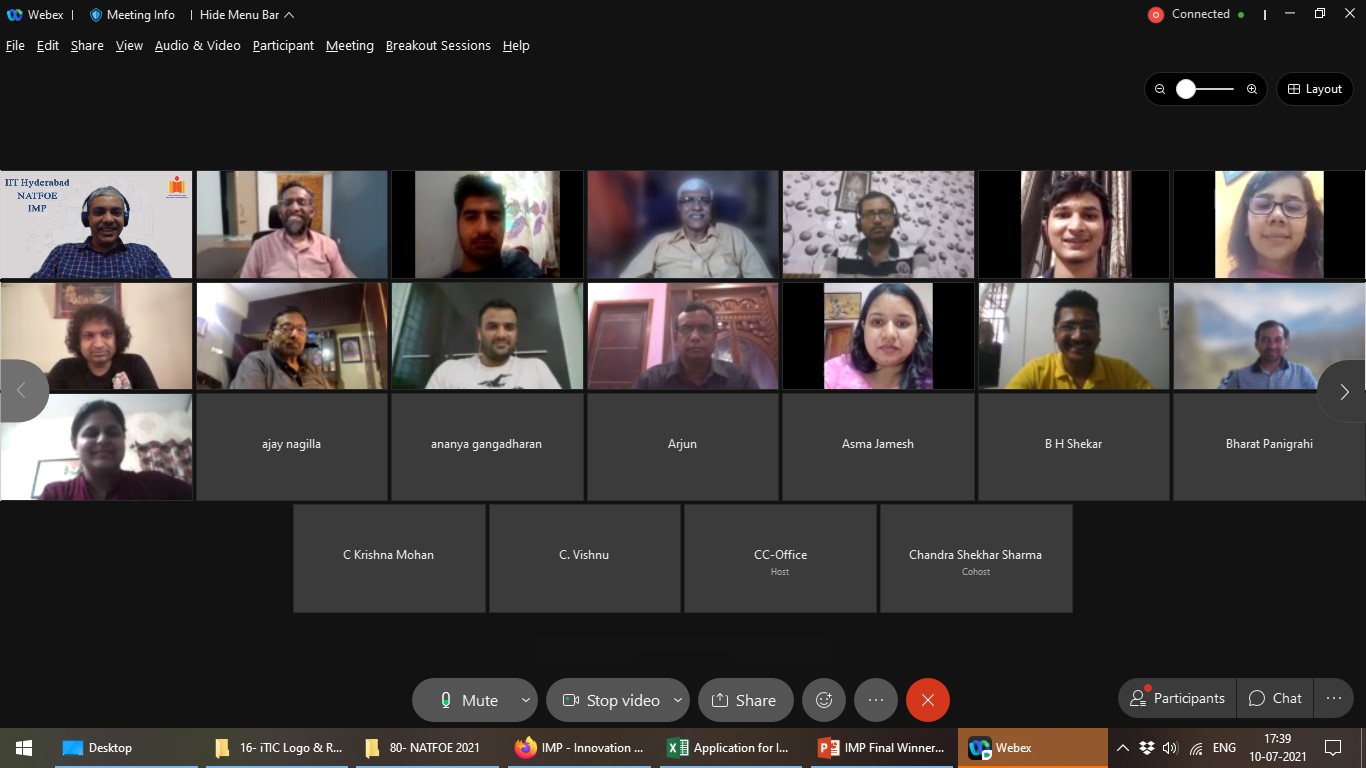
Screenshot of the Final Award event for IMP-2021(July 10, 2021)
14th National Frontiers of Engineering (NatFoE) Symposium, 2020
14th National Frontiers of Engineering (NatFoE) Symposium, 2020 was not held due to Covid-19 Pandemic.
13th National Frontiers of Engineering (NatFoE) Symposium, 2019
The Thirteenth National Frontiers of Engineering (13NatFoE) Symposium was organized by INAE jointly with IIT Bhubaneswar from May 31, 2019 to June 1, 2019 at IIT Bhubaneswar. The Inaugural Session of the two-day 13NatFoE Symposium was held on 31st May 2019 at IIT Bhubaneswar. Dr. Sanak Mishra, President, INAE was the Chief Guest and Prof. R.V. Raja Kumar, Director, IIT Bhubaneswar was the Guest of Honour. Prof. Indranil Manna, Vice -President, INAE and former Director, IIT Kanpur was also present at the Symposium. Prof Swarup Kumar Mahapatra, Dean- Continuing Education, Alumni Affairs and International Relations and Prof. S R Samantaray, Associate Professor, School of Electrical Sciences (SES) were the Coordinators of 13NatFoE Symposium.
The aim of the symposium was to bring together young and outstanding engineering professionals (aged~30-45 years) from the industry, universities, and research organizations to deliberate upon emerging and leading-edge research and development work in the domain of engineering and technology. Convening engineering professionals and technologists from various fields were provided a platform for brainstorming the contemporary and futuristic issues related to frontiers areas cross-disciplinary translational research and innovation. The overall purpose of the symposium was to interact and achieve synergy at distinctive scientific levels through presentations and discussions in the following four thematic areas: – Augmented Reality and Virtual Reality; Smart Grid; Advances in Materials and Manufacturing Technology and Next Generation Transportation Systems.
The speakers in their inaugural talks brought out very interesting points in their respective topics for meeting the pressing needs of the society. Prof. R.V. Rajakumar, Director, IIT Bhubaneswar during his Address emphasized the need for cross-disciplinary research and development to fulfil the needs of Industry. He touched upon the grand Science and Technology challenges facing the nation and the world at large and talked about the importance of the thematic areas of Augmented Reality (AR) and Virtual Reality (VR), Artificial Intelligence (AI), Smart Grid, Next-Gen Grid, Micro & Additive Manufacturing, IOT and 5G Communication for serving the needs of the modern society. He then gave a brief overview of the research activities taking place in IIT Bhubaneswar in these areas. He advised the young engineers to come up with energy efficient systems, which will help in reducing the carbon footprint and pave the way for environment restoration and energy saving. He also informed the audience about the initiative of IIT Bhubaneswar in accurately estimating the pressure and wind-speed in collaboration with IMD before the arrival of the extremely severe cyclone, “FANI”. He also thanked INAE for choosing IIT Bhubaneswar as the host of the 13thNatFoE Symposium. He complimented the Institute for hosting the event despite significant damage to the infrastructure caused by the cyclone, “FANI”.
In the Inaugural Session, Dr. Sanak Mishra, President, INAE delivered an interesting Address with emphasis on Research & Development and the role of INAE in nation building; which was very well received by the audience. He appreciated the choice of the themes, as they were in line with NITI Aayog’s current projection of areas of national interest. The speakers in their technical presentations brought out very interesting points in their respective topics for meeting the pressing needs of the society.
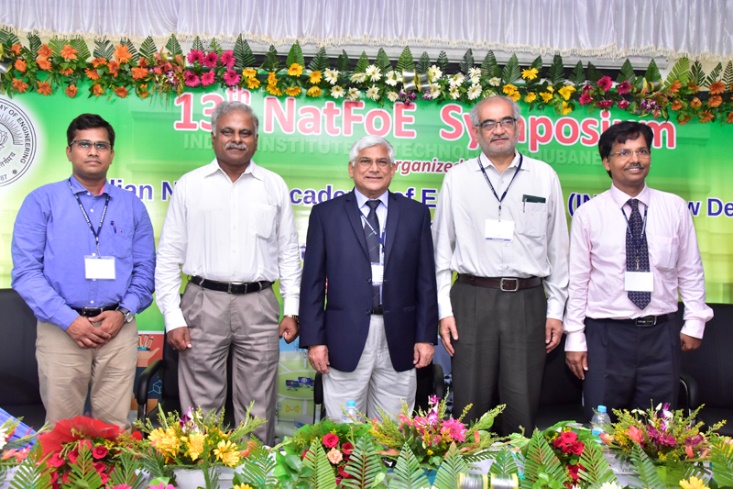
Dignitaries at the Inaugural Session
About 60 professionals from various institutes and R&D labs, industries & start-ups attended the event and shared their contributions. A large number of research scholars and faculty members of IIT Bhubaneswar also attended the symposium and contributed in the organization of the symposium. The cross-functional interactions and networking between the participants from various domains of engineering in the Symposium allowed a larger perspective to the participants, and exposed them to some of the immediate needs of the society and also gave them an overview of research work happening in various parts of India.
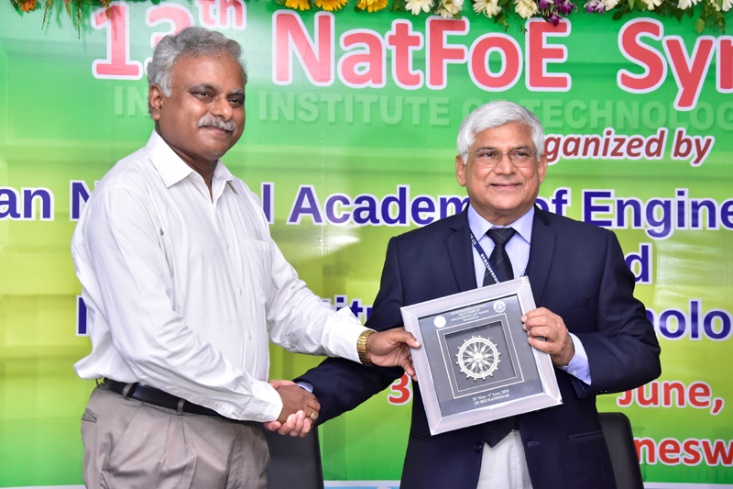
Prof RV Raja Kumar, Director, IIT Bhubaneswar presenting a Memento to Dr Sanak Mishra, President, INAE
The programme of the Symposium included 21 presentations by domain experts in the thematic areas and Plenary Talks by eminent speakers such as Prof. Ashok Jhunjhunwala, FNAE, Institute Professor, IIT Madras; Dr. Manish Gupta, FNAE, Co-founder and CEO, VideoKen; Shri. R.N, Nayak, FNAE, Former Chairman and Managing Director, Power Grid Corporation of India; Prof. Jayanta Mukhopadhyay, FNAE, IIT Kharagpur; Prof. S.A. Soman, FNAE, IIT Bombay; Prof. Rudra Pratap, FNAE, Centre for Nano Science and Engineering, Indian Institute of Science, Bangalore and Prof. M. Parida, Dept. of Civil Engineering, IIT Roorkee. The Symposium provided an excellent opportunity for sharing of novel ideas and for catalysing the start of collaborative research partnerships between brilliant young engineers and researchers from different sectors of the engineering profession.
12th National Frontiers of Engineering (NatFoE) Symposium, 2018
The Twelfth National Frontiers of Engineering (12NatFoE) Symposium was held from September 17-18, 2018 at IIT Guwahati. Prof Gautam Biswas, FNAE, Director, IIT Guwahati had kindly consented to host the 12NatFoE Symposium at IIT Guwahati. Prof Sukumar Nandi, FNAE was the Convenor of 12NatFoE Symposium. The aim of the symposium was to bring together young and outstanding engineering professionals (aged ~30-45 years) from industry, universities, and research organizations to deliberate upon emerging and leading-edge research and development work in the domain of engineering and technology. The objective of the Symposium is the convening of engineering professionals and technologists from various fields and providing a platform for brainstorming the contemporary and futuristic issues related to frontiers areas cross-disciplinary translational research and innovation. The overall purpose of the symposium was to interact and achieve synergy among Civil Engineering, Computer Engineering & Information Technology, Electronics and Communication Engineering, Mechanical Engineering and Biomedical Engineering disciplines at distinctive scientific levels through presentations and discussions in the following four thematic areas:
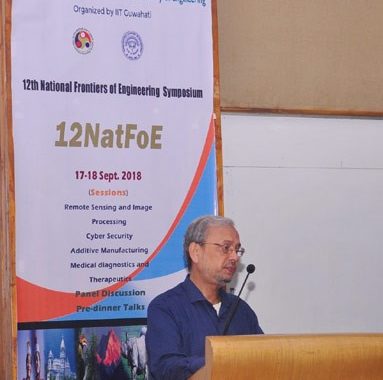
Prof . Gautam Biswas, FNAE, Director IIT Guwahati Delivering Welcome Address
Forty professionals from various institutes and R&D labs, industries & start-ups attended the event and share their contributions. They discussed in respect to these themes for generation of useful new ideas that could culminate in technologies of new generation. Sixteen distinguished scholars presented very stimulating talks and closely interacted in four thematic sessions in two days. Prof. Gautam Biswas, FNAE, Director, IIT Guwahati in his Inaugural Address pointed out the need of cross-disciplinary Research and Development to fulfil the needs of Industry 4.0. A Panel Discussion was held with four overview talks, moderated by Padma Shri Prof. Sankar Pal, FNAE, Distinguish Scientist and Former Director of Indian Statistical Institute, Kolkata. The topic of the Panel Discussion was “Technology as the Bridge Between Science and Society” and the Panel Members chosen were those who have created technology for societal uses and who have successfully created their start-ups to help the society. The response of the audience to the Panel Discussion was very encouraging. Specifically, summarizing of the deliberations by the moderator was well conducted.
The two Pre-Dinner talks were delivered by distinguished personalities, Dr Gulshan Rai, National Cyber Security Coordinator, Prime Minister’s Office, Government of India and Shri V. P. Pathak, Director General Railway Stores, Ministry of Railways, Government of India. The speakers in their talks brought out very interesting points in their respective fields for meeting the pressing need of the society. Prof. Sankar K. Pal delivered an exceptional Valedictory Speech with emphasis on the need for R&D in India and role of INAE in the nation building; which was very well received by the audience. He also ascertained that themes of the Symposium were well chosen as they are in line with NITI Aayog’s current projection of areas of national interest.
A large number of Research Scholars and Faculty Members of IIT Guwahati also attended the Symposium and contributed in the organization of the symposium. The cross-functional interactions and networking between the participants from various domains of engineering in the Symposium allowed a larger perspective to the participants, and exposed them to some of the immediate needs of the society and also gave them an overview of research work happening in various parts of India.
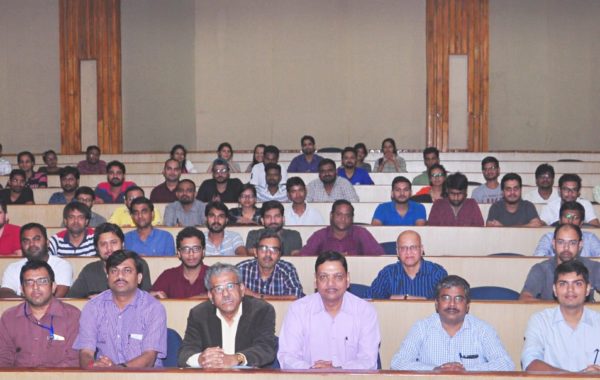
Prof. Sankar Pal, FNAE, Distinguish Scientist, Former Director ISI and Shri V P Pathak, Director General Railway Stores, Ministry of Railways with participants

