








ACADEMY ACTIVITIES
Academy News (Covering period from August 1, 2026 to August 31, 2026)
Events/Programs conducted by INAE from August 1, 2026 to August 31, 2026
20th Symposium on National Frontiers of Engineering (NaTFoE–2026) & Innovation in Manufacturing Practices (IMP–2026) on 8-10 August 2026 at IIT (ISM) Dhanbad
OVERVIEW
The 20th Symposium on National Frontiers of Engineering (NaTFoE–2026), held with IMP–2026 at IIT (ISM) Dhanbad from 8th to 10th August 2026, brought together INAE Fellows, academic leaders, national R&D laboratories, industry, start-ups, venture mentors and young engineers. The programme addressed two national-priority themes: advanced manufacturing, critical metals and process technologies; and manufacturing and integration of antennas, RF structures and radar-cross-section (RCS) control technologies for stealth defence platforms.
Across the three days, the dominant conclusion was that strategic self-reliance depends on integrated design-to-manufacturing-to-test ecosystems—not isolated innovations. Digital engineering, qualification and metrology, resilient supply chains, sustainability and sustained academia–industry–government collaboration emerged as common requirements.
DAY 1 — SATURDAY, 8 AUGUST 2026 | PENMAN AUDITORIUM, IIT(ISM) DHANBAD
Inaugural function | Penman Auditorium | 9:30–10:30 AM
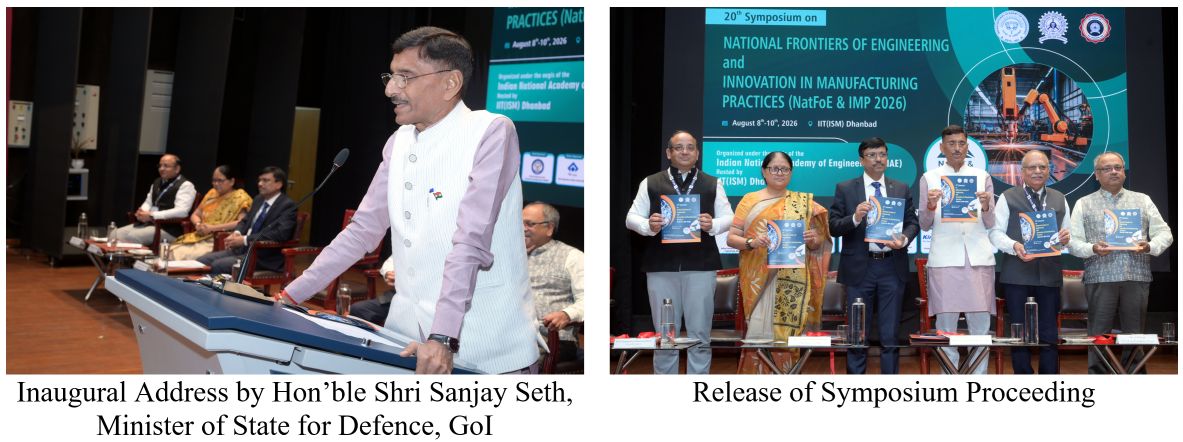
The programme commenced at Penman Auditorium with Hon’ble Shri Sanjay Seth, Minister of State for Defence, Government of India, as Chief Guest. The dignitaries included Mr Ashok Kumar Panda, CMD, SAIL; Mr. J. D. Patil, President, INAE; Prof. Sanghamitra Bandyopadhyay, FNAE, ISI Kolkata; Prof. Sukumar Mishra, FNAE, Director, IIT (ISM) Dhanbad; and Prof. Amit Rai Dixit, Convener. The inaugural function established the event’s focus on strategic technology, indigenous engineering capability and collaboration among academia, industry and government.
Plenary Address Session 1 | 10:45–11:45 AM
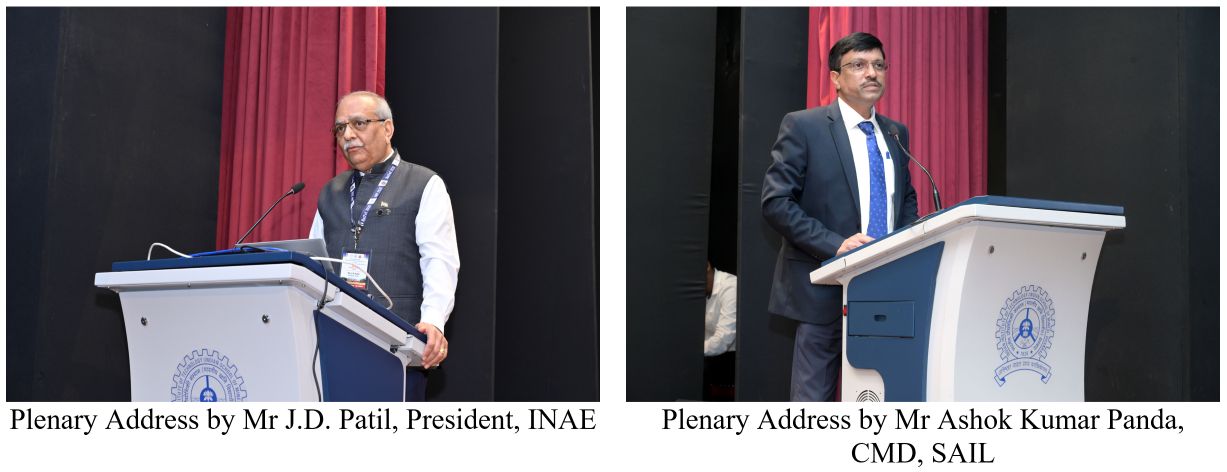
Mr. J. D. Patil, President, INAE and Mr Ashok Kumar Panda, CMD, SAIL delivered the plenary addresses, chaired by Prof. J. Ramkumar, IIT Kanpur and Dr. Anupam Agnihotri, Former Director JNARDDC Nagpur. The session underlined that national engineering capability must connect frontier research with industrial scale-up, quality systems and deployable outcomes.
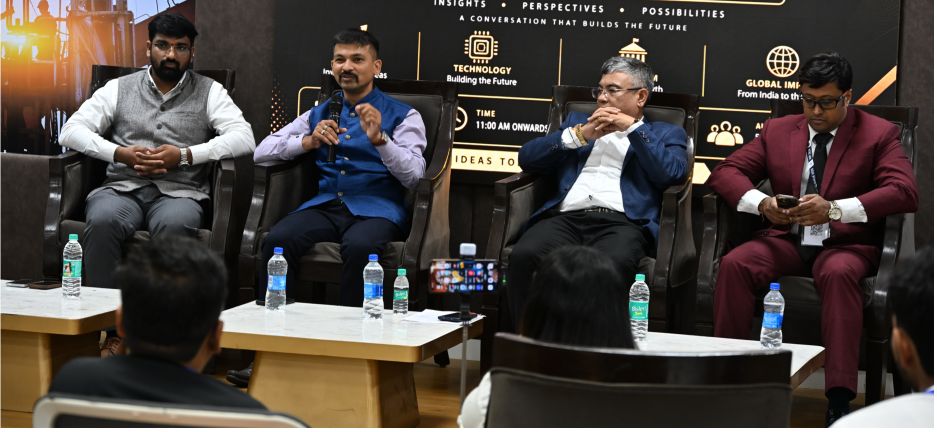
New programme event: Panel Discussion | 11:50 AM–12:30 PM
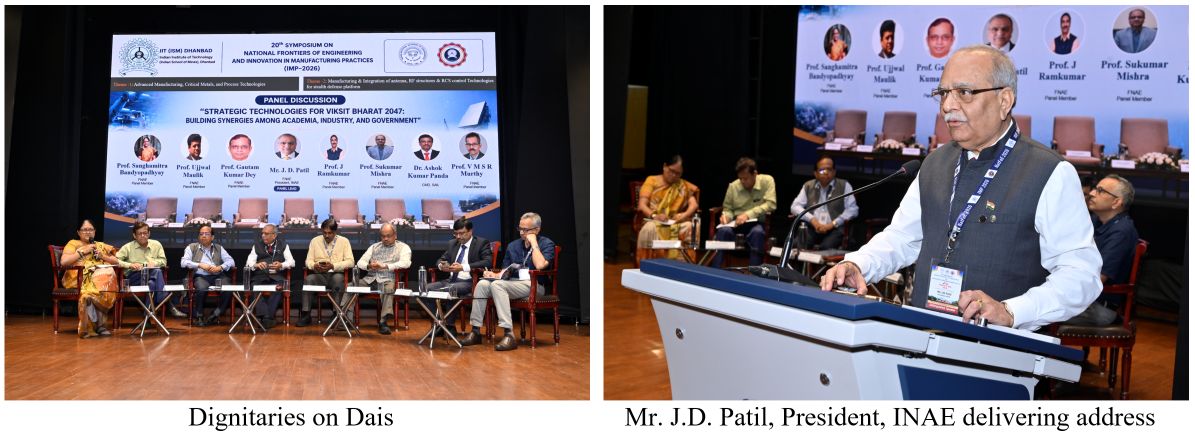
A panel discussion was introduced as an important new feature of the symposium on “Strategic Technologies for Viksit Bharat 2047: Building Synergies among Academia, Industry, and Government.” Senior Fellows of INAE and distinguished leaders including Prof. Sukumar Mishra, Director IIT(ISM) Dhanbad, Prof. Sanghamitra Bandyopadhyay Former Director ISI Kolkata, Ujjwal Maulik Jadavpur University, Prof. V. M. S. R. Murthy Director IIEST Shibpur, Prof. J. Ramkumar IIT Kanpur, and Mr Ashok Kumar Panda CMD SAIL deliberated on India’s strategic technology requirements. Mr. J. D. Patil President INAE was the panel lead and moderated the session.
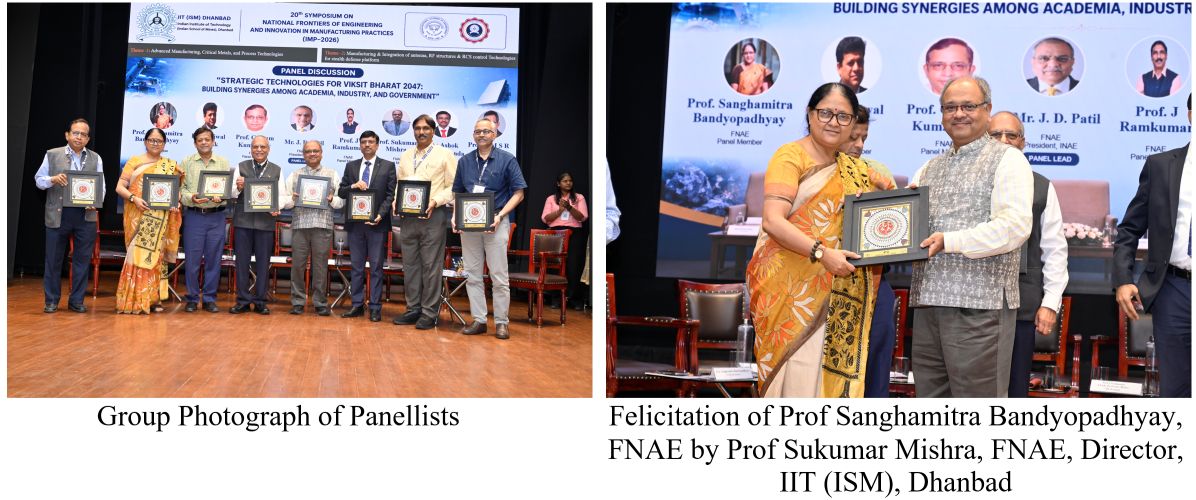
Panel conclusion: India needs mission-oriented partnerships that link academic knowledge, industrial execution, public R&D infrastructure and policy support. Shared facilities, demonstrator projects, common qualification protocols and follow-up mechanisms were identified as practical ways to convert dialogue into national capability.
Session 1 — Theme 1: Advanced Manufacturing, Critical Metals & Process Technologies | 12:30–1:40 PM
The session covered advanced manufacturing, worker protection, aerospace systems engineering, nanostructured steels and advanced coatings through contributions led by Prof. J. Ramkumar IIT Kanpur, Prof. Aparna Singh IIT Mumbai, Ms. Anushri Nag TATA Steel (R&D) Jamshedpur and Dr. Sanghamitra Chatterjee ICT Mumbai.
Keynote Talk- Prof. Janakarajan Ramkumar, IIT Kanpur
Topic: Technological Interventions for Protecting Workers from Air Pollutants in Indian Manufacturing and Work Operations
The talk presented engineering solutions for controlling hazardous airborne emissions directly at manufacturing sources, supplemented by portable clean-air systems and advanced nanofibre filtration. It demonstrated how technology-led interventions can simultaneously improve occupational safety, productivity and environmental sustainability.
Invited Talk -Prof. Aparna Singh, IIT Bombay
Topic: Development of Nano-Structured Steels for Structural Applications
She discussed the development of nanostructured bainitic and pearlitic steels that combine very high strength with improved toughness through controlled microstructural refinement. The work demonstrated that nanoscale microstructure can be achieved using scalable conventional processing routes, offering strong potential for demanding structural applications.
Invited Talk -Ms. Anushri Nag, Tata Steel (R&D), Jamshedpur
Topic: Advanced Metallized Al₂O₃/Graphite Coating for Sink Roll Assemblies in Continuous Galvanizing Lines
She presented an advanced ceramic coating system developed to improve the corrosion and wear resistance of sink rolls exposed to aggressive molten-zinc environments. The work combines materials modelling, laboratory and pilot-scale testing, and industrial validation to enhance component durability and sustainability in continuous galvanizing operations.
Invited Talk -Dr. Sanghamitra Chatterjee, Institute of Chemical Technology (ICT), Mumbai
Topic: Nanomaterial-Engineered Sensors for Theranostics: Advancing Ultrasensitive Detection Technologies
She highlighted the integration of nanomaterials such as carbon nanotubes, fullerenes and graphene with electrochemical sensing for highly sensitive biomedical detection. The developed approaches show potential for rapid diagnostics, therapeutic integration and personalized medicine, with applications extending to bio-imaging, drug analysis and environmental monitoring.
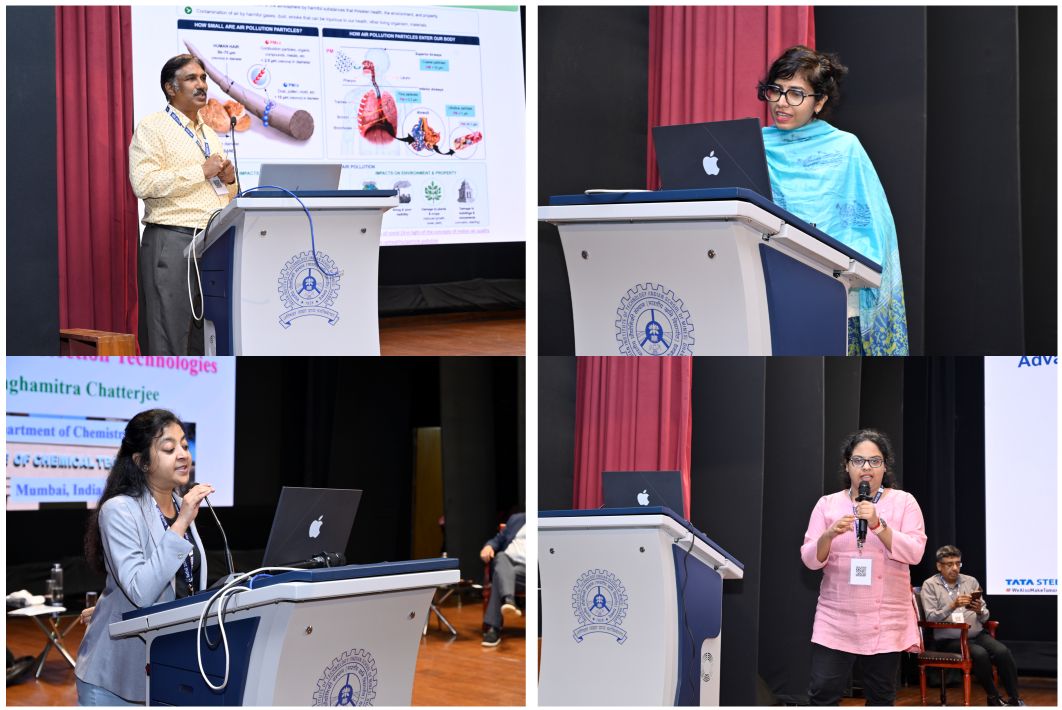 Invited Talks in Progress
The technical conclusion was that scalable manufacturing must combine process-specific safety, microstructure control, advanced joining and machining, modelling, digital twins, in-process monitoring and industrial validation. Aerospace benefits arise when manufacturability and lifecycle requirements enter the design loop from the outset.
Session 2 — Theme 2 | 2:30–3:50 PM
Dr. V. S. Gangwar LRDE Bangalore, Dr. Raghvendra Kumar Chaudhary IIT Kanpur, Mr. Mahesh Chand Kala CEO, JV Micronics, Ms. Mamta Kumari LRDE Bangalore and Dr Neeraj Kumar Accordyne Pvt. Ltd. addressed next-generation arrays, stealth antennas, RF structures and low-observable platform integration.
Keynote Talk-Dr. V. S. Gangwar, LRDE, DRDO, Bengaluru
Topic: Technology Challenges in Next-Generation Panel-Based Active Array Antennas
He discussed the evolution of active phased-array radar antennas toward SWaP-C optimized panel-based architectures for airborne and naval platforms. The modular and scalable approach offers lower profile and weight, simplified assembly and maintenance, improved manufacturability, and reduced lifecycle cost for radar, SATCOM, EW and next-generation communication systems.
Invited Talk -Dr. Raghvendra Kumar Chaudhary, IIT Kanpur
Topic: Stealth Antennas and Meta-structures: Manufacturing & RCS Control
He presented recent developments in conformal antennas, frequency-selective surfaces, metasurfaces, electromagnetic absorbers and radomes for reducing radar cross-section while maintaining communication and radar functionality. The talk emphasized the integration of electromagnetic design, manufacturing, measurement and testing for practical low-observable defence systems.
Invited Talk -Mr. Mahesh Chand Kala, CEO, JV Micronics
Topic: Indigenous RF Absorbers, Anechoic Chambers and EMI/EMC Technologies
His presentation highlighted indigenous capability in the design and manufacturing of RF absorbers and anechoic chambers for antenna and EMI/EMC measurements. The deliberation emphasized strengthening domestic RF test infrastructure, industry–academia interaction and capacity building for advanced antenna and electromagnetic compatibility technologies.
Invited Talk -Ms. Mamta Kumari, Scientist-F, LRDE, DRDO, Bengaluru
Topic: Engineering Realization of Stealth/Low-Observable Defence Platforms
He explained how reduced radar detectability requires the integrated use of optimized platform geometry, advanced materials, antennas and RF structures, radar-absorbing materials, precision manufacturing and system integration. She emphasized that electromagnetic performance must be considered from the initial design stage through manufacturing, assembly, testing and maintenance of low-observable platforms.
Invited Talk -Dr. Neeraj Kumar, Founder Director, Accordyne Pvt. Ltd.
Topic: Communication Systems for SWARM UAVs
The talk presented resilient mesh-network architectures for UAV swarms, addressing intra-swarm interference, jamming and scalable multi-UAV communication. Distributed beamforming, MIMO, cognitive radio, SDRs and AI-enabled multi-agent control were highlighted as key technologies for robust and autonomous swarm operations.
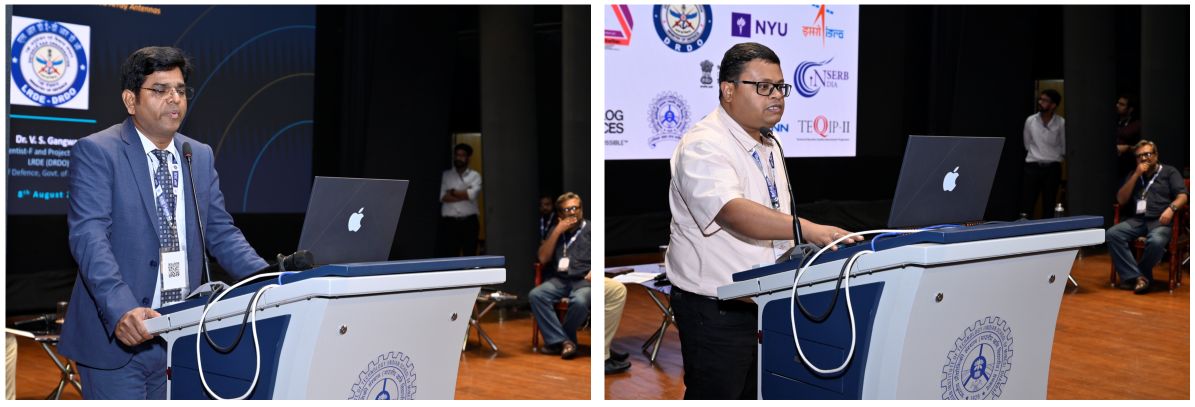
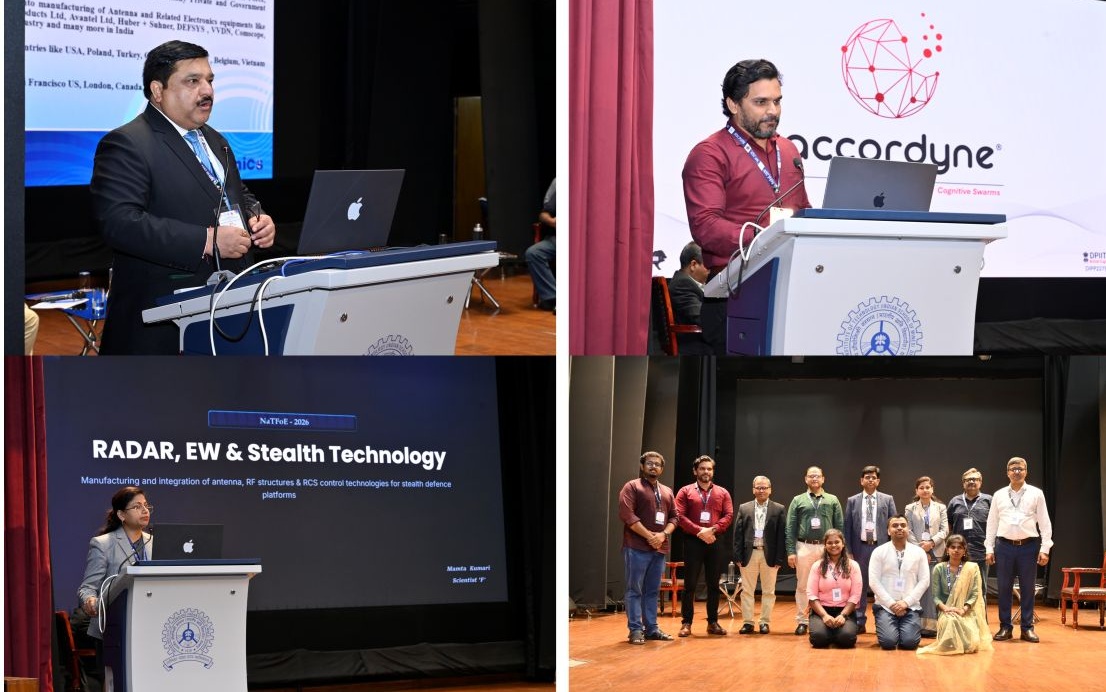 Invited Speakers Making Presentations
The speakers’ combined conclusion was that electromagnetic, structural, thermal, packaging and manufacturing requirements must be co-optimized. Stealth cannot be added at the end; it must be engineered from platform concept through fabrication, calibration, testing and maintenance.
Cultural Function and Gala Dinner | 7:00 PM onwards
The technical deliberations were complemented by a vibrant cultural programme presented by a student troupe from Banaras Hindu University (BHU), Varanasi. the programme beautifully showcased the rich cultural heritage and artistic traditions of Varanasi, with a graceful kathak performance as one of its major highlights.
The cultural programme was followed by a gala dinner, which provided an informal and congenial setting for interaction among INAE Fellows, distinguished speakers, delegates, young engineers, researchers and industry participants.
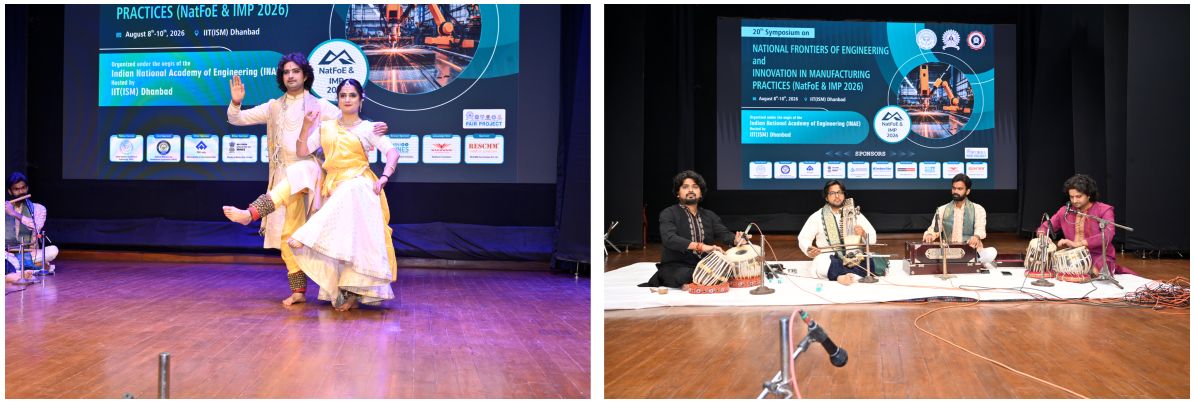 Cultural Program
DAY 2 — SUNDAY, 9 AUGUST 2026 | PENMAN AUDITORIUM, IIT(ISM) DHANBAD
IMP–2026 Inaugural Function | Penman Auditorium | 9:30–10:30 AM
The second day opened with the inaugural session of IMP–2026. Prof. S. S. Joshi, Director, IIT Indore, was the Chief Guest. Guests of Honour included Dr. Ankathi Raju, Director, DRDL Hyderabad; Prof. V. M. S. R. Murthy, FNAE, Director, IIEST Shibpur; Prof. Sukumar Mishra, Director, IIT (ISM) Dhanbad; and Prof. Alok Kumar Das, Coordinator, IMP–2026. The function positioned IMP as a platform for young engineers, innovators, start-ups and MSMEs to connect ideas with mentoring, evaluation and implementation pathways.
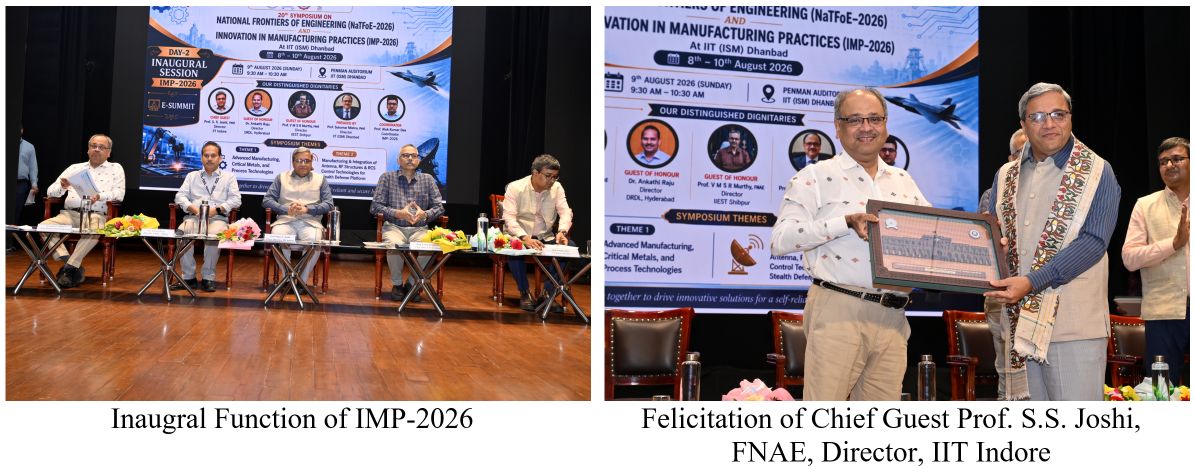
Plenary Address Session 2 | 10:45–11:45 AM
Addresses by Prof. S. S. Joshi, and Dr. Ankathi Raju emphasized advanced manufacturing, indigenous defence systems and the need for credible development, test and validation capacity. Their collective conclusion was that self-reliance requires indigenous design and indigenous evaluation to mature together.
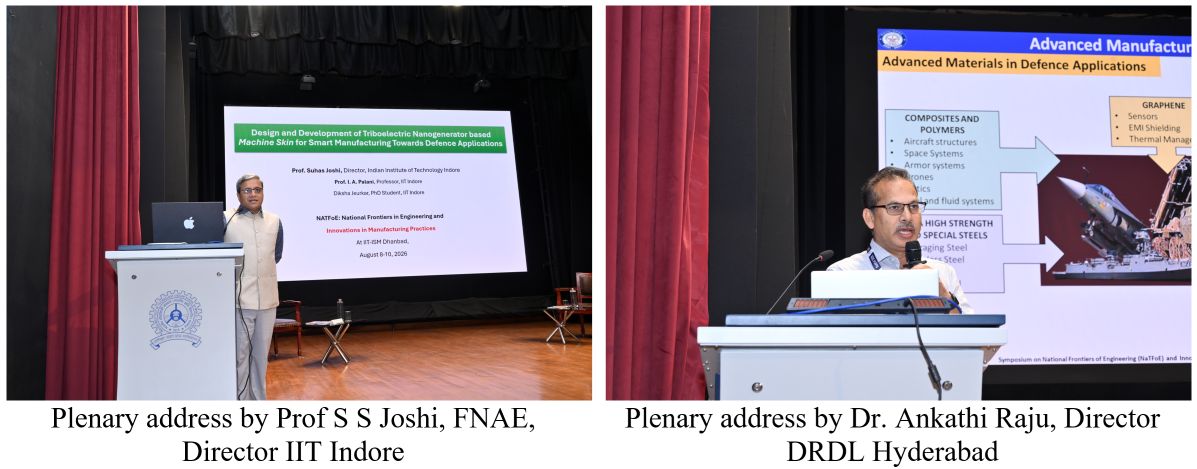
Session 4 — Theme 2 | 11:45 AM–1:15 PM
Prof. Debatosh Guha, Dr. Pravakar Mallick, Mr. S. V. Madhu Sudhan Reddy, Dr. Preeti Kumari and Mr Chintan Mishra addressed antenna manufacturability, defence-system evaluation, RF/RCS measurement and microwave dielectric ceramics.
Keynote Talk-Prof. Debatosh Guha, University of Calcutta — Keynote Lecture
Topic: Challenges in Antenna Engineering: Science to Manufacturing
He discussed the evolving challenges in antenna engineering, particularly the transition from fundamental electromagnetic design to practical manufacturing. The lecture emphasized the need to balance antenna performance with manufacturability, production constraints and realization of reliable RF systems.
Invited Talk –Dr. Pravakar Mallick, ITR, DRDO
Topic: Test & Evaluation of DRDO Developed Systems towards Atmanirbhar Bharat
He highlighted the critical role of rigorous test and evaluation in validating indigenous defence technologies before their induction into the Armed Forces. Accurate instrumentation and reliable test data were emphasized as essential for system maturation, qualification and strengthening India’s self-reliance in defence technology.
Invited Talk –Mr. S. V. Madhu Sudhan Reddy, Rohde & Schwarz India
Topic: Radio Frequency Test and Measurement Aspects of Radar Cross Section
He discussed RF test and measurement techniques for accurate characterization of Radar Cross Section (RCS), a key parameter governing radar detectability and stealth performance. The presentation highlighted advanced instrumentation such as vector network analyzers, signal generators and receivers extending to millimetre-wave frequencies.
Invited Talk -Dr. Preeti Kumari, CSIR–National Physical Laboratory, New Delhi
Topic: Microwave Dielectric Ceramics: From Material Development to Microwave Device Integration
She discussed the development of microwave dielectric ceramics and their integration into high-frequency RF and microwave devices. The presentation connected material composition, processing and dielectric properties with applications in resonators, filters, antennas and other advanced microwave components.
Invited Talk -Mr. Chintan Mishra, Founder & CEO, Rebhu Computing
Topic: Indigenous Manufacturing & Integration of RF Data-Link Systems for Unmanned Defence Platforms
The talk addressed practical challenges in integrating indigenous RF data links into unmanned defence platforms, including antenna placement, link-budget constraints, EMI management and payload integration. It stressed indigenous processors, field-hardened electronics and disciplined system integration as essential for developing robust, stealth-ready unmanned platforms.
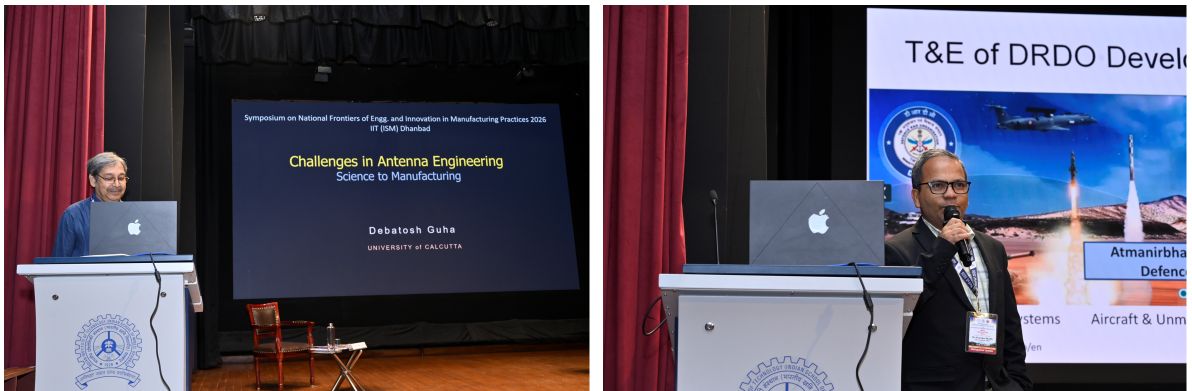 Prof Debatosh Guha, FNAE Delivering Talk
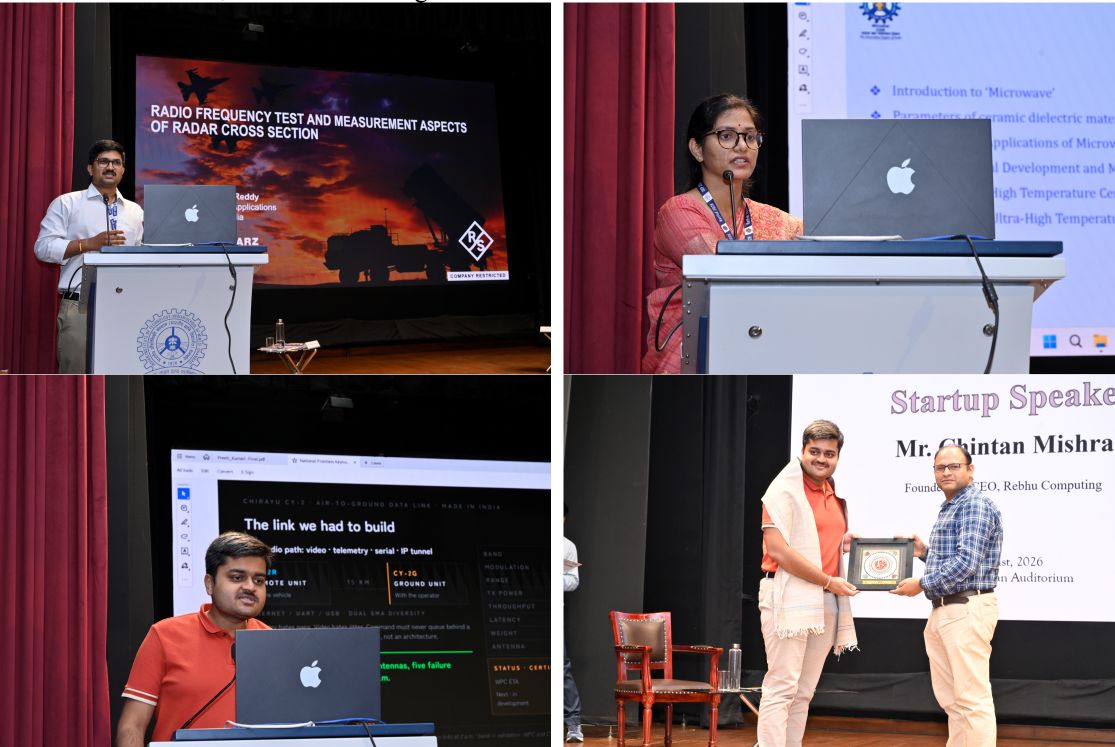 Invites Talks by Distinguished Speakers
The session concluded that reproducibility, tolerances, calibration, dynamic range, controlled test geometry, material compatibility and packaging are as decisive as ideal electromagnetic design. High-performance RF hardware therefore needs a closed design–fabrication–metrology loop.
Session 5 — Theme 1 | 2:15–4:00 PM
Prof. V. M. S. R. Murthy, Dr. Ankur Gupta, Dr. Pratik Swarup Dash and Mr. Ayush Dhoot discussed mining/manufacturing practice, functional hybrid scaffolds, net-zero steel and indigenous rare-earth/permanent-magnet value chains.
Keynote Talk-Prof. V. M. S. R. Murthy, IIT (ISM) Dhanbad
Topic: Advanced Manufacturing, Critical Metals, and Process Technologies
He highlighted the significance of Theme 1 topic in strengthening India’s manufacturing capabilities. He illustrated the concept of incremental innovation by sharing examples of industrial machines developed with his students, demonstrating how continuous improvements to existing technologies can lead to practical, cost-effective, and industry-relevant engineering solutions.
Invited Talk -Dr. Ankur Gupta, IIT Jodhpur
Topic: Hybrid Scaffolds for Sensing and Remediation Technologies
He presented advanced manufacturing approaches for developing functional microsystems and hybrid scaffold-based platforms for sensing and environmental remediation. The work emphasized low-cost and scalable fabrication, integrating advanced manufacturing with microsystem design for deployable healthcare, environmental-monitoring and engineering applications.
Invited Talk -Dr. Pratik Swarup Dash, Tata Steel R&D, Jamshedpur
Topic: Towards Net-Zero Steel: Technology Pathways for Industrial Decarbonisation
He discussed emerging pathways for decarbonising steel production, including hydrogen-based reduction, syngas-assisted ironmaking, electric smelting, biomass utilization and CCUS. The presentation emphasized integrating process innovation, circular resource utilization and low-carbon technologies to enable India’s transition towards sustainable and competitive steelmaking.
Invited Talk -Mr. Ayush Dhoot, Ashvini Magnets Pvt. Ltd. / Ashvini Rare Earth Pvt. Ltd.
Topic: From Rare Earth Oxides to Advanced Magnet Applications: Building an Indigenous Rare Earth and Permanent Magnet Value Chain
He highlighted the strategic importance of rare-earth permanent magnets for electric mobility, renewable energy, robotics, drones, aerospace and defence. The talk emphasized developing an indigenous end-to-end value chain, from separated rare-earth oxides to metals, magnetic alloys, permanent magnets and application-ready components, thereby reducing strategic supply-chain vulnerabilities.
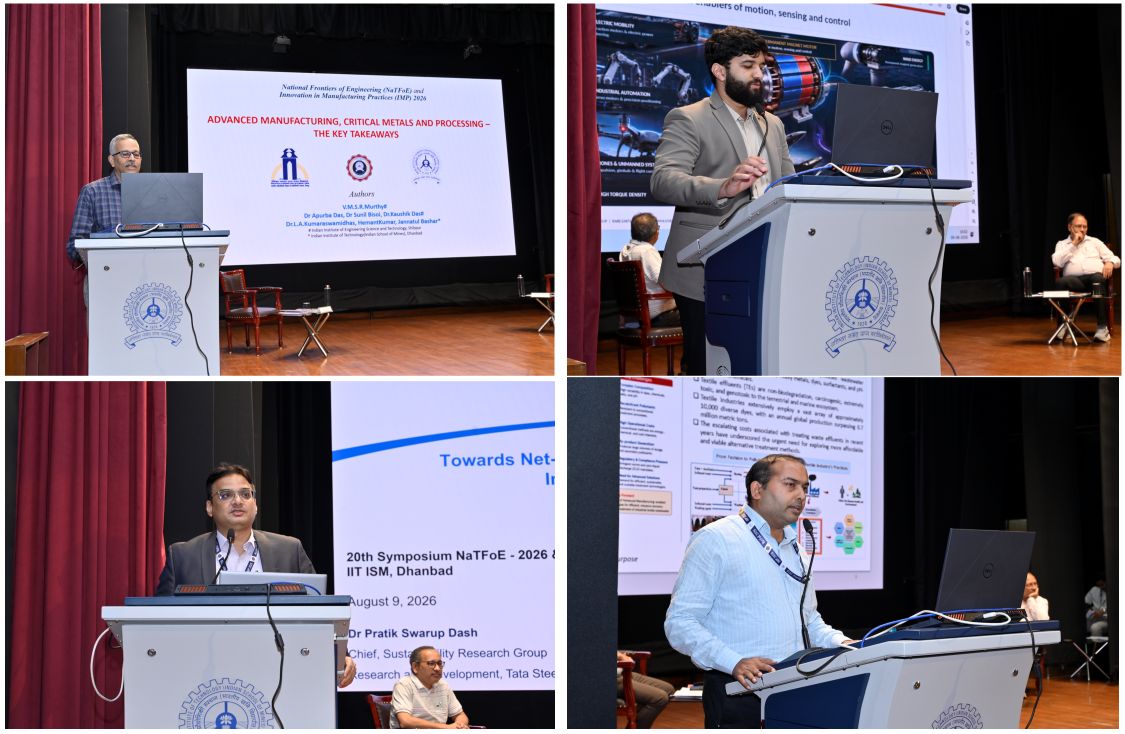 Techncial Sessions in progress
The technical conclusion was that critical-material security must span feedstock, separation or conversion, functional-material production, component manufacture, quality assurance and recycling. Low-carbon steel similarly requires combined process pathways, circular inputs and digital optimisation rather than a single technological route.
Parallel Technical Session: Sub-Theme Critical Minerals and Materials | I2H Building
A parallel technical session on “Critical Minerals and Materials” was organized as part of the 20th Symposium on National Frontiers of Engineering (NatFoE) & Innovation in Manufacturing Practices (IMP) 2026 on 09 August 2026 at IIT (ISM) Dhanbad. The session focused on the growing importance of critical and strategic minerals in the context of energy security, technological advancement, national security and the development of indigenous mineral and materials value chains.
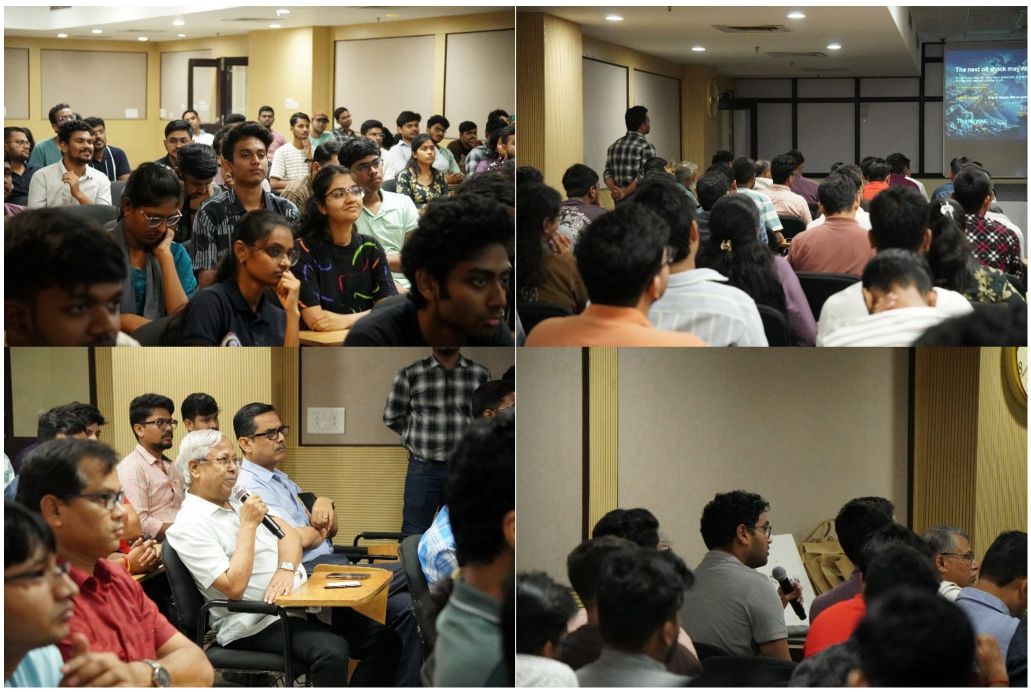
The session brought together five distinguished experts who shared their perspectives on the exploration, extraction, processing, conversion and technological development associated with critical minerals and materials. The session was attended by around 120 participants, comprising faculty members, research scholars, postgraduate students and undergraduate students. The presentations and subsequent interactions provided an opportunity for participants to understand the technological challenges and emerging opportunities associated with establishing a robust domestic critical-minerals ecosystem.
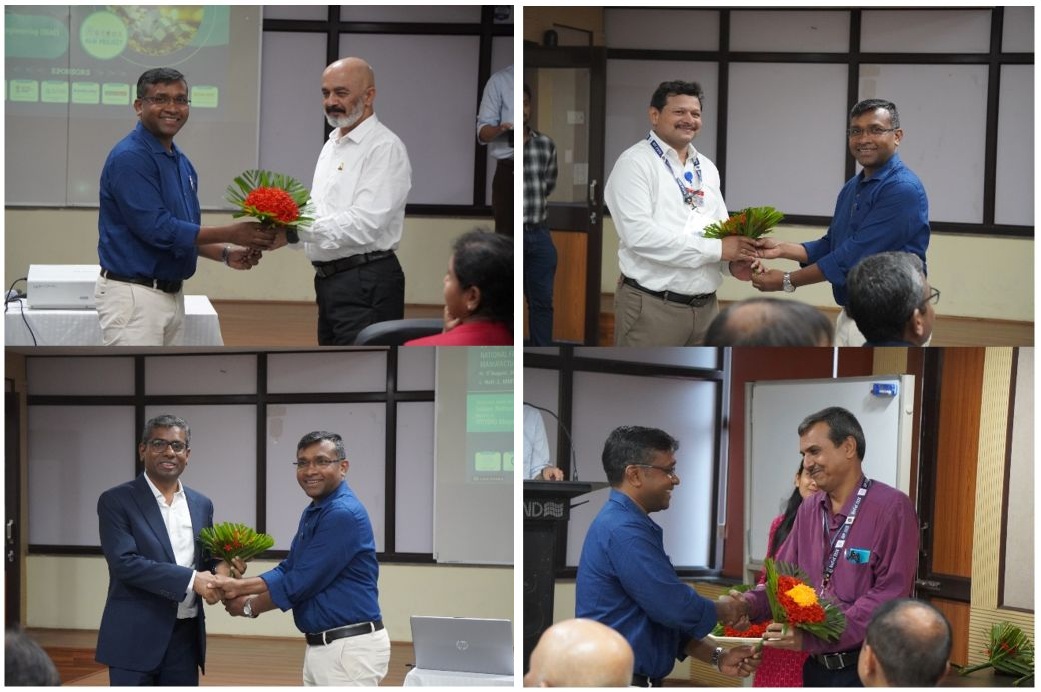
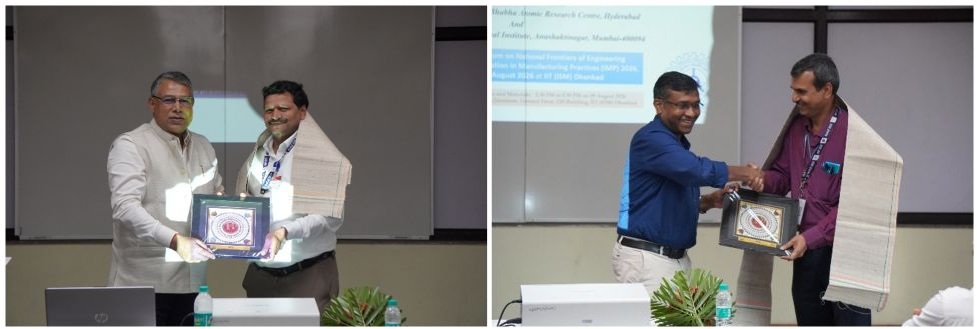
Inaugural Proceedings: Prof. Avanish Kumar, Assistant Professor, FMME, IIT (ISM) Dhanbad, formally welcomed the distinguished speakers and participants. The speakers were felicitated with floral bouquets as a gesture of welcome by Prof. S. Soren, Head, FMME, IIT (ISM) Dhanbad. Prof. Avanish Kumar along with Prof. S. Soren chaired the technical session and facilitated the presentations and interactions with the speakers.
Prof. S. Soren, HoD FMME IIT(ISM) Dhanbad welcoming the distinguished speakers:
Technical Presentations: The session comprised five technical presentations covering different aspects of critical minerals, including their strategic importance, extraction and conversion, pyrometallurgical processing, mineral processing and the development of indigenous technologies.
The details are given below:
| Distinguished Speakers | Title of Talk |
|---|---|
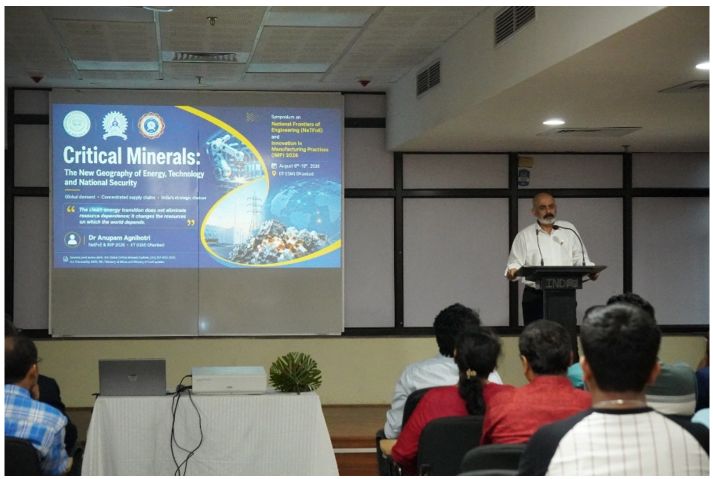
| Dr. Anupam Agnihotri, Advisory Director (Technical) at MaxelS Tekventures Pvt. Ltd, Former-Director of JNARDDC, Ministry of Mines, GoI |
Critical Minerals: The New Geography of Energy, Technology and National Security |
| Dr. S K Satpati, OS & Head, UED, MG/BARC, DAE, GoI |
Challenges in Extraction and Conversion of Critical Material |
| Dr. Sujit Chowdhury, OS & Head, MRS, UED, BARC, DAE, GoI |
Technical discussions on pyrometallurgical processes |
| Dr. T. S. R. C. Murthy, Head, Mineral Processing Division, BARC, DAE, GoI |
Resource to Concentrate Strategies for Critical and Strategic Minerals: Process Flowsheet Development and Technology Demonstration |
| Dr. D K Sahoo, Scientific Officer G, BARC, DAE, GoI |
Indigenous Technologies for the establishment of critical elements value chain in the country |
The technical presentations were followed by interaction between the speakers and participants. The interaction was particularly relevant for young faculty members and researchers, as it provided exposure to current technological challenges and opportunities in an area of growing national importance.
Concluding Remarks: The technical session on “Critical Minerals and Materials” successfully brought together experts to discuss the strategic and technological dimensions of critical minerals. The session concluded with remarks by Dr. D. K. Singh, Visiting Professor, FMME and former Head, Hydrometallurgy & Rare Earth Development Section, Materials Group, BARC, who provided the concluding observations.
Overall Assessment: The parallel session served as an effective technical forum for discussing the strategic importance, technological challenges and indigenous development pathways associated with critical minerals and materials. The participation of approximately 120 faculty members, researchers and students, along with distinguished experts contributed to meaningful technical exchange and knowledge dissemination. The session reinforced the importance of continued research, technology development, process innovation and industry–academia–government collaboration for achieving greater self-reliance in critical minerals and materials and for supporting India’s future energy, manufacturing and technological needs.
Photographs:
Dr. Anupam Agnihotri delivering his presentation on critical minerals and national security:
 Felicitation of the distinguished speakers during the parallel session:
 Participants and Interaction between the participants and distinguished speakers:
 Group photograph of distinguished speakers, session chair and organizers of the parallel session:
Innovation in Manufacturing Practices-2026 | Parallel programme at I2H Building
The Innovation in Manufacturing Practices (IMP 2026) competition was organized as a national-level platform to encourage students, researchers, innovators, MSMEs and startups to present innovative engineering solutions, prototypes and manufacturing technologies. The competition was conducted alongside the 20th Symposium on National Frontiers of Engineering (NatFoE 2026) at IIT (ISM) Dhanbad. The official IMP 2026 framework invited participation across Undergraduate, Postgraduate, PhD, and MSME/Startup categories and emphasized working prototypes/research models, demonstration videos, and concise innovation descriptions.
A total of 51 submitted entries were received through the registration process, including entries from UG students, PG students, PhD researchers, and Startups/MSMEs. Following screening and evaluation, selected innovations were invited for mentoring and the final showcase.
The expert panel comprised distinguished professionals from government, academia, entrepreneurship, and the venture capital ecosystem. The panel included Mr. Mahip Singh, CEO, Innovation Hub UP; Dr. Balakrishna, Joint Director/Scientist, MeitY; Mr. Rohit Kale, Venture Capitalist, Westratys Venture; Prof. Arun Dayal Udai, Associate Professor, IIT (ISM) Dhanbad; Mr. Arijit Bhattacharya, Venture Capitalist, Coinnoovate Ventures; and Mr. Ranjit Mayengbam, Founder, 3CIT Solutions. Their diverse expertise provided valuable perspectives on innovation, technology development, entrepreneurship, commercialization, and venture funding.
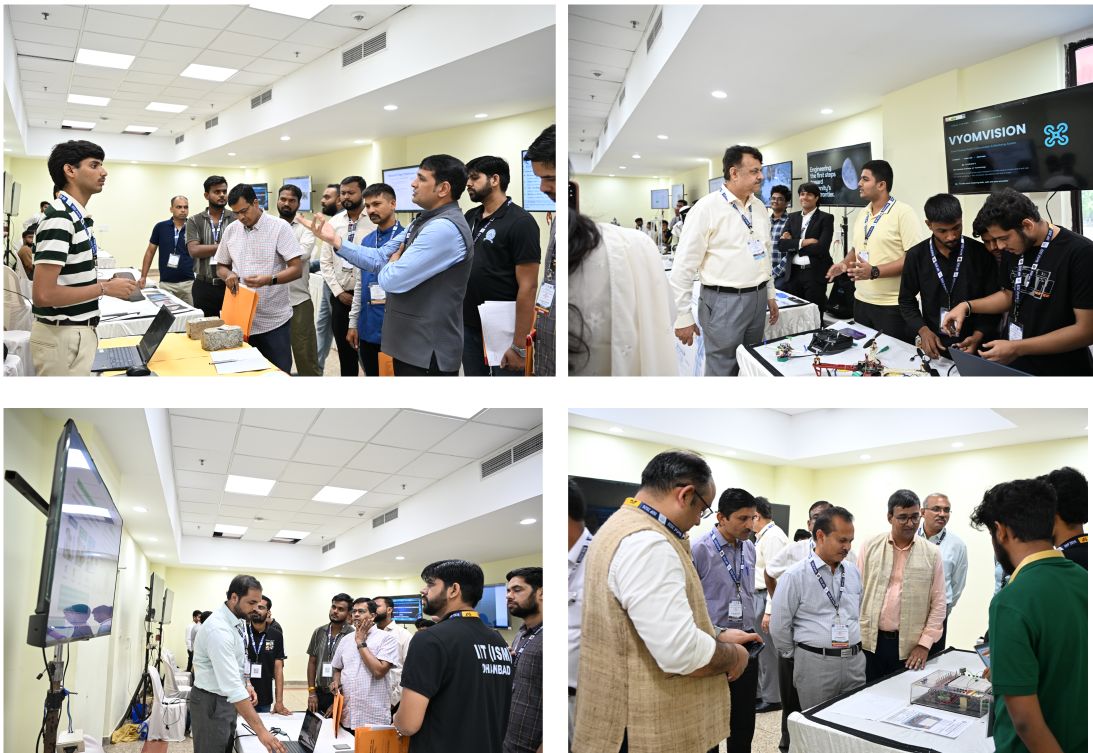
 Innovation in Manufacturing Practices (IMP 2026) competition- Evaluation by Jury
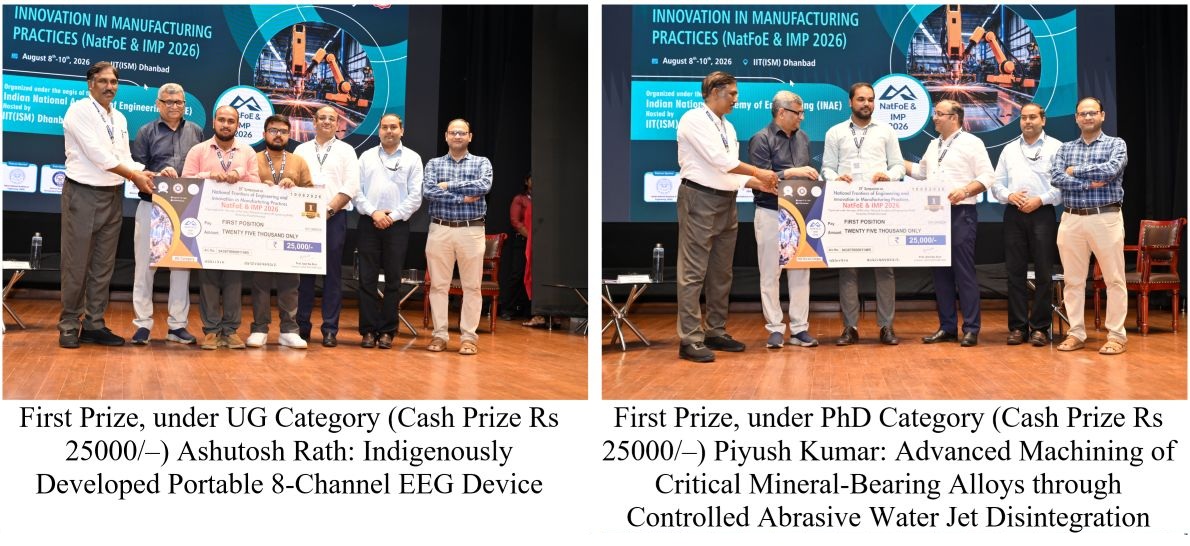
Following the mentoring and evaluation process, 12 unique innovations were shortlisted for showcase. Session 6 featured a short presentation by the IMP awardee, followed by IMP awards and certificate distribution. The final competition culminated in the recognition of three winning innovations:
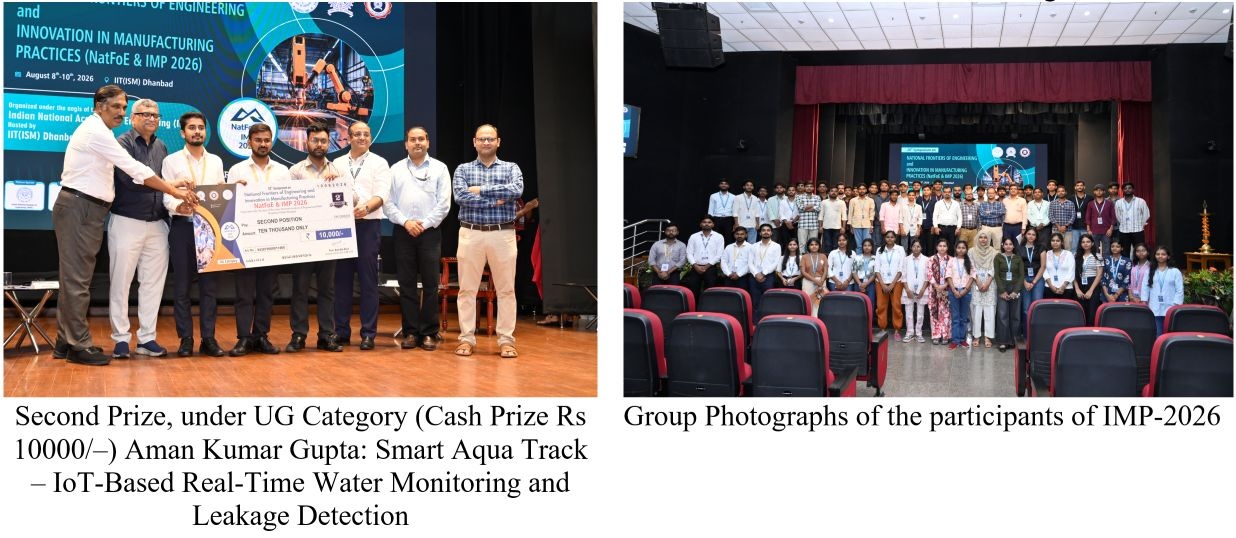
The overall process demonstrated the multidisciplinary nature of contemporary engineering innovation and highlighted solutions addressing healthcare technology, sustainable manufacturing, agriculture, renewable energy, smart infrastructure, robotics, mining and resource management.
A mentoring session led by Prof. J. Ramkumar, IIT Kanpur focused on helping young engineers translate technical ideas into start-ups.
IMP conclusion: Technical merit must be accompanied by a clear problem statement, prototype evidence, manufacturability, market or mission relevance, intellectual-property awareness, validation planning and a credible route to scale.
Day 3 — Monday, 10 August 2026 | I2H Building, IIT(ISM) Dhanbad
Research Paper Presentation by UG, PG and PhD Students
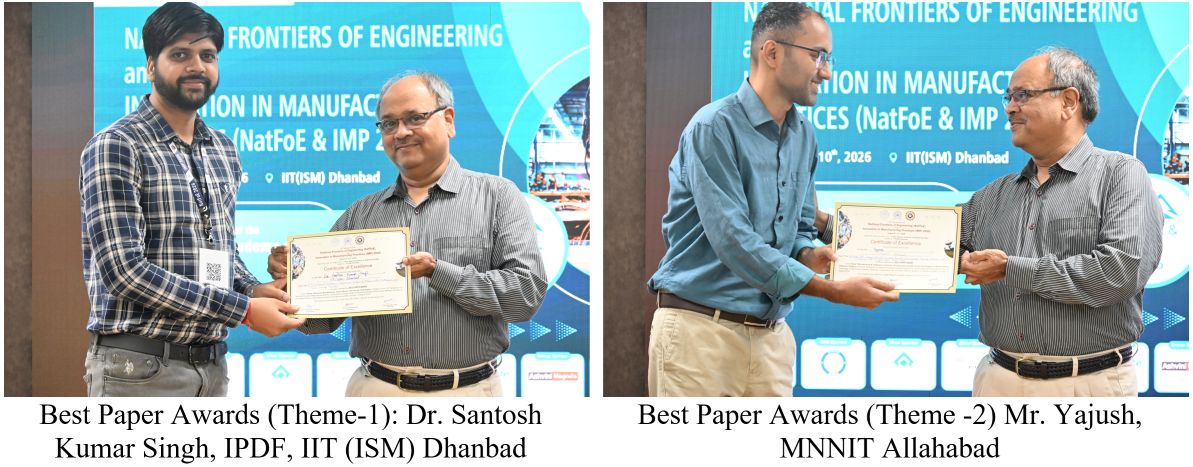
A significant new academic component introduced in NaTFoE–2026 was the encouragement of UG, PG, PhD and PDF students to submit research papers aligned with the two technical themes of the symposium. The initiative received an encouraging response, with around 150 research papers submitted from students and research scholars. Following technical review, 50 papers were selected for oral presentation, which were organized in five parallel technical sessions. The paper-presentation sessions provided young researchers an opportunity to present their work before experts from academia, R&D organizations and industry and receive technical feedback. To recognize outstanding research, two Best Paper Awards, carrying a cash prize of ₹10,000 each, were instituted—one under each symposium theme.
The Best Paper Awards were conferred on Dr. Santosh Kumar Singh, IPDF, IIT (ISM) Dhanbad, and Mr. Yajush, MNNIT Allahabad, for their outstanding research contributions under the respective themes of the symposium.
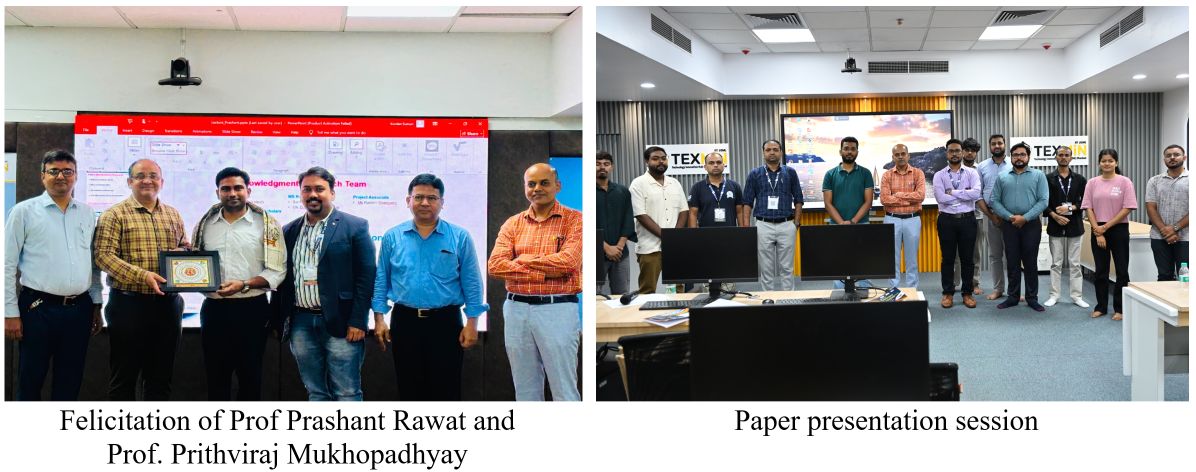
Keynote Address -Prof. Prashant Rawat, IIT Madras
Topic: Biomimicry for Advanced Manufacturing Applications
Prof. Rawat discussed how naturally evolved structural architectures can inspire advanced engineering materials combining strength, toughness, flexibility and lightweight characteristics. He emphasized translating biological functional mechanisms into manufacturable structures to achieve improved performance, resource efficiency and sustainability.
Keynote Address -Prof. Prithviraj Mukhopadhyay, IIT Delhi
Prof. Mukhopadhyay delivered a keynote associated with the research-paper sessions, providing a broader perspective on emerging engineering research and encouraging young researchers to pursue technically rigorous and application-oriented work. The session reinforced the importance of converting fundamental research into innovative engineering solutions relevant to the symposium themes.
Outcome of the Student Research Initiative
The introduction of research-paper presentations significantly enhanced the academic and student-engagement component of NaTFoE–2026. The large number of submissions demonstrated strong interest among young researchers in advanced manufacturing, critical materials, process technologies, antenna/RF systems and strategic defence technologies. The combination of keynote lectures, parallel oral sessions and Best Paper Awards provided an effective platform for identifying promising young researchers, encouraging high-quality research and connecting student innovation with nationally relevant engineering challenges.
Valedictory Session | 2:30–3:30 PM
The three-day symposium concluded with the Valedictory Session on 10 August 2026, marking the successful completion of NaTFoE–2026 & IMP–2026. The session included the Best Paper Awards and certificate distribution and formally acknowledged the valuable contributions of invited speakers, authors, reviewers, mentors, organizing committee members, volunteers and participants.
Prof. Sukumar Mishra, Director, IIT (ISM) Dhanbad, in his address, emphasized the importance of transforming the technical deliberations and interactions generated during the symposium into sustained research collaborations, industry partnerships and technology-development initiatives. He encouraged young engineers and researchers to pursue innovative solutions addressing nationally relevant engineering challenges.
Prof. Raman Singh, Monash University, Australia, highlighted the importance of high-quality interdisciplinary research and international collaboration in addressing emerging engineering challenges. He encouraged young researchers to combine strong scientific fundamentals with application-oriented research and to develop technologies capable of creating meaningful industrial and societal impact.
Prof. Amit Rai Dixit, Convener, NaTFoE–2026 & IMP–2026, presented a summary of the three-day symposium and highlighted the successful integration of plenary and keynote lectures, expert talks, the newly introduced panel discussion, IMP innovation competition, and student research-paper presentations. He emphasized that the symposium had effectively brought together academia, industry, R&D organizations, start-ups and young researchers on a common platform and expressed the need to carry forward the collaborations and technical interactions initiated during the event.
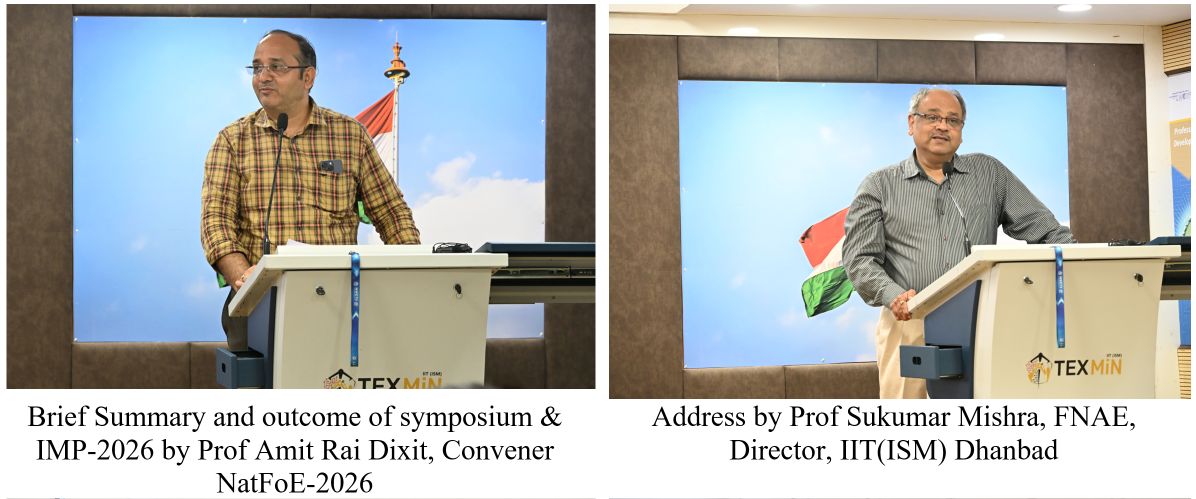
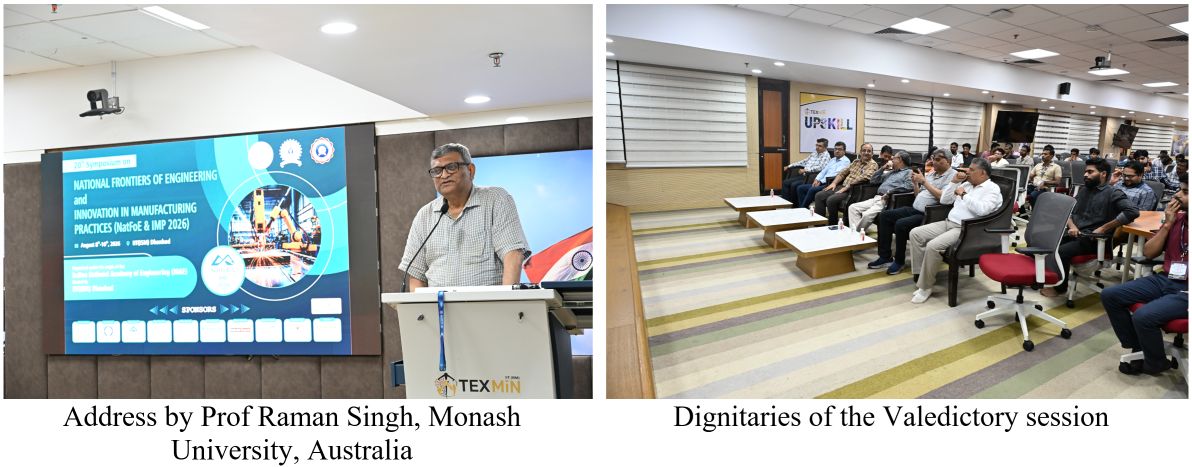
The valedictory proceedings concluded with the presentation of Best Paper Awards and certificates. The session reaffirmed the central outcome of NaTFoE–2026: that meaningful progress in frontier and strategic engineering technologies requires continued interaction among academia, industry, government and national R&D organizations beyond the symposium itself.
Two-Day Workshop On “Writing R&D Grant Proposal” Under INAE Women Engineers Program
The National Institute of Technology Mizoram organized a Two-Day Workshop on “Writing R&D Grant Proposal” under the INAE Women Engineers Program on 28–29 August 2026 at NIT Mizoram, Chaltlang, Aizawl. The workshop was organized with the objective of strengthening the research and proposal-writing capabilities of women researchers, faculty members, students, engineers and professionals in Science, Technology and Engineering. The programme was coordinated by Dr. Monica Naorem and Dr. Krishnarti De, with Prof. Pabitra Kumar Biswas, Dean (R&C), and Prof. Sukanta Roy, Dean (Academic), as Convenors and Prof. S. Sundar, Director, NIT Mizoram, as Patron.
The workshop was conceived in response to the increasing importance of competitive research funding in academic and professional growth. The program focused on helping participants understand the research funding ecosystem, identify high-impact research problems aligned with funding priorities, develop complete grant proposals, conduct effective literature reviews and research-gap identification, prepare project plans and budgets, understand proposal evaluation criteria, and make effective use of AI-assisted research and proposal-development tools.
The first day, 28 August 2026, commenced with registration, followed by expert lectures and the inaugural session. The technical program included an expert lecture by Dr. Lalhruaizela, Assistant Professor, Department of CSE, NIT Mizoram, followed by a session by Dr. Tanmay Kumar Behera, Assistant Professor, Department of CSE, NIT Mizoram. The inaugural session was followed by an expert lecture by Prof. Sivaji Chakravorti, Vice President, INAE.
A major highlight of the workshop was the expert session on “Writing a Fundable R&D Proposal: What Funding Agencies Expect.” The session emphasized that a technically strong research idea alone is not sufficient to secure funding. A successful proposal needs to clearly establish the research problem, demonstrate a meaningful and well-supported research gap, articulate measurable objectives, present a technically sound methodology, and establish the expected scientific, technological and societal impact. The discussions helped participants appreciate the importance of viewing a proposal from the perspective of a funding agency and addressing the questions that reviewers are likely to raise regarding novelty, relevance, feasibility, methodology, outcomes, resources and impact.
Another particularly valuable session focused on the “Gender-Centric Research Funding Ecosystem for Women in STEM.” This session was especially relevant to the objectives of the INAE Women Engineers Program, which seeks to encourage women to take a more active role in research, innovation and technological development. The discussion brought attention to the importance of awareness of funding opportunities specifically available to women researchers and the need to create an enabling research environment in which women can pursue independent research ideas and develop competitive proposals.
The gender-centric perspective also encouraged participants to recognize research funding not simply as a source of financial support, but as an important mechanism for building research independence, professional visibility, leadership and long-term academic growth. By bringing women researchers together in a common platform, the workshop provided opportunities for interaction, peer learning and networking. The target participants included female B.Tech. and M.Tech. students, Ph.D. scholars and IPDFs, female faculty members, and women executives, engineers and researchers from industry, government, public-sector organizations and R&D laboratories.
The second day, 29 August 2026, continued with expert lectures by Prof. Konika Das, Professor, Electrical Engineering, Indian Institute of Engineering Science and Technology (IIEST), Shibpur; Dr. R. Chawngsangpuii, Associate Professor, Department of Information Technology, Mizoram University; and Dr. Lalrinkimi, Curator, Mizoram Science Centre, DST Mizoram. The programme concluded with the valedictory session.
The workshop also addressed the growing role of Artificial Intelligence and Machine Learning in research and proposal development. Participants were introduced to AI-assisted approaches for literature review, research-gap identification, proposal drafting, refinement of methodologies and improvement of research productivity. Importantly, the program also stressed the ethical and responsible use of AI in academic research.
One of the most important messages emerging from the workshop was that successful research funding is a process that requires strategic thinking rather than simply good technical writing. Participants were encouraged to begin with a well-defined problem, establish novelty and significance, understand the expectations of the intended funding agency, and develop a coherent story connecting the problem, objectives, methodology, work plan, budget and expected outcomes. The emphasis on proposal evaluation and best practices further helped participants understand the importance of clarity, consistency and evidence-based justification in grant writing.
The workshop thus provided a comprehensive platform for strengthening the research proposal-writing skills of women in STEM. It combined expert lectures, interactive discussions, case-based learning and practical exposure, consistent with the workshop’s planned structure. The program also created an opportunity for participants to interact with experts from different disciplines and institutions, thereby encouraging interdisciplinary thinking and potential future collaborations.
The workshop concluded with the valedictory session and distribution of certificates, marking the successful completion of two days of intensive learning and interaction. The overall program successfully addressed its primary objective of empowering women researchers with practical knowledge and confidence to pursue competitive research funding. As envisaged in the workshop brochure, participants were expected to gain a comprehensive understanding of proposal preparation, funding opportunities and modern AI-assisted research tools that could enhance the quality and competitiveness of their future proposals.
In conclusion, the Two-Day Workshop on Writing R&D Grant Proposal under the INAE Women Engineers Program served as a valuable platform for capacity building, professional development and research empowerment. The sessions on what funding agencies expect from a fundable proposal and the gender-centric research funding ecosystem for women in STEM were particularly significant in helping participants understand both the technical and strategic dimensions of securing research support. The programme has the potential to translate into stronger research proposals, increased awareness of funding opportunities, greater research independence among women researchers, and stronger participation of women in the national research and innovation ecosystem.
The organizing committee also conducted a feedback collection from the participants to get valuable suggestions. A few responses have been attached to this report. The organizing members declared an Idea Pitching Competition and Poster Presentation, as a follow up activity which was held on 31st August 2026 and got a great response from the workshop participants.
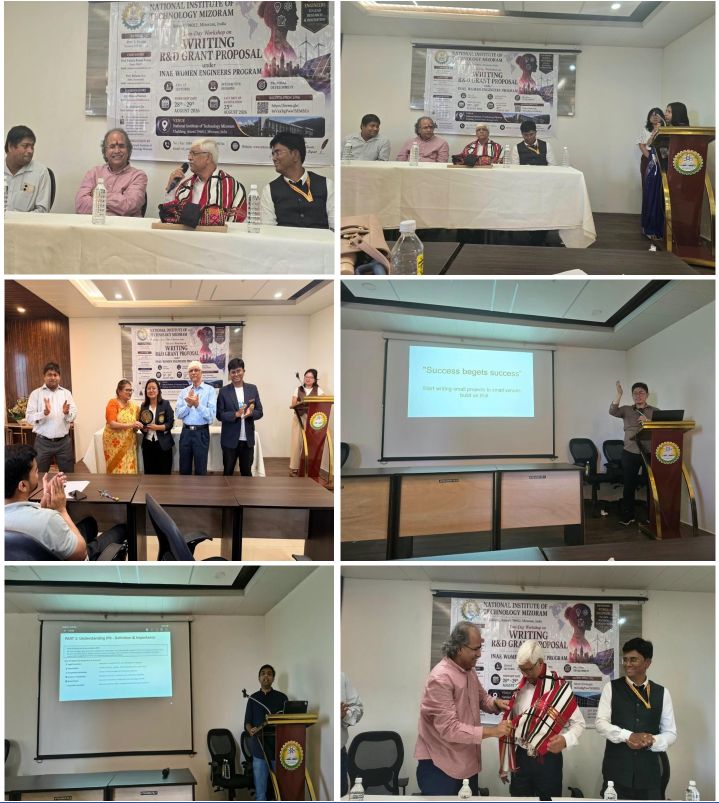
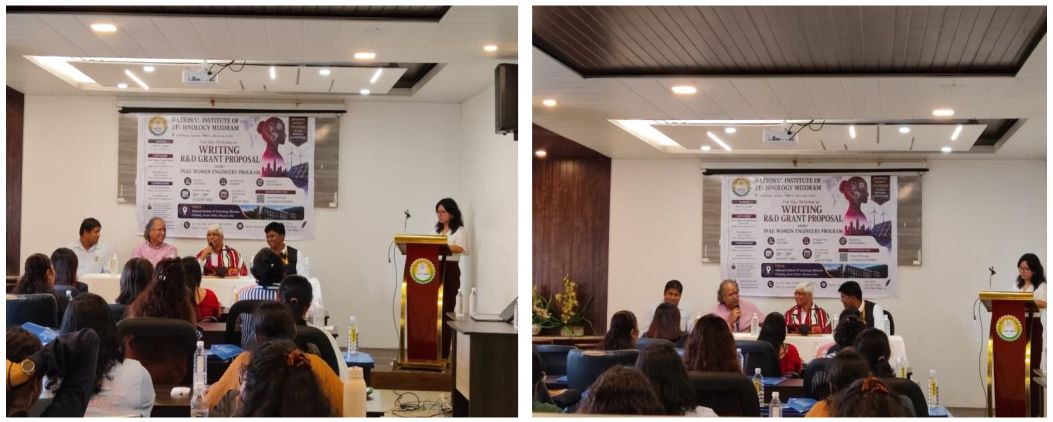 Inaugural Session in progress
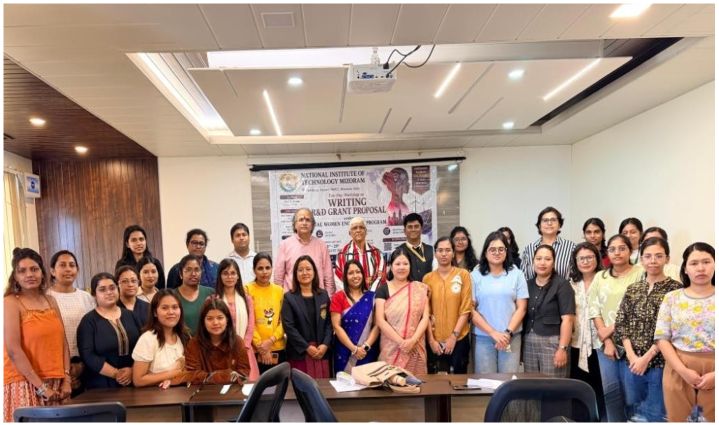 Group Photograph of Delegates with Prof Sivaji Chakravorti, Vice President, INAE (Second from Right in back row)
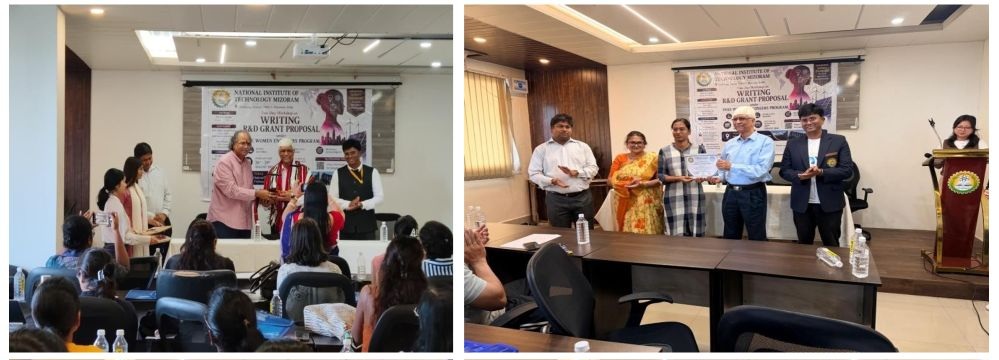
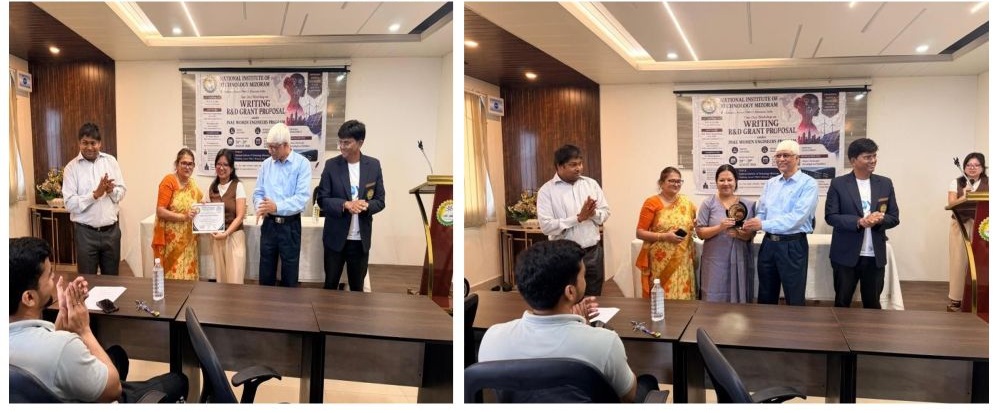 Prize Distribution by Prof Sivaji Chakravorti, Vice President, INAE (Second from Right)
 Student Presentation Felicitation of Prof Sivaji Chakravorti, Vice President, INAE
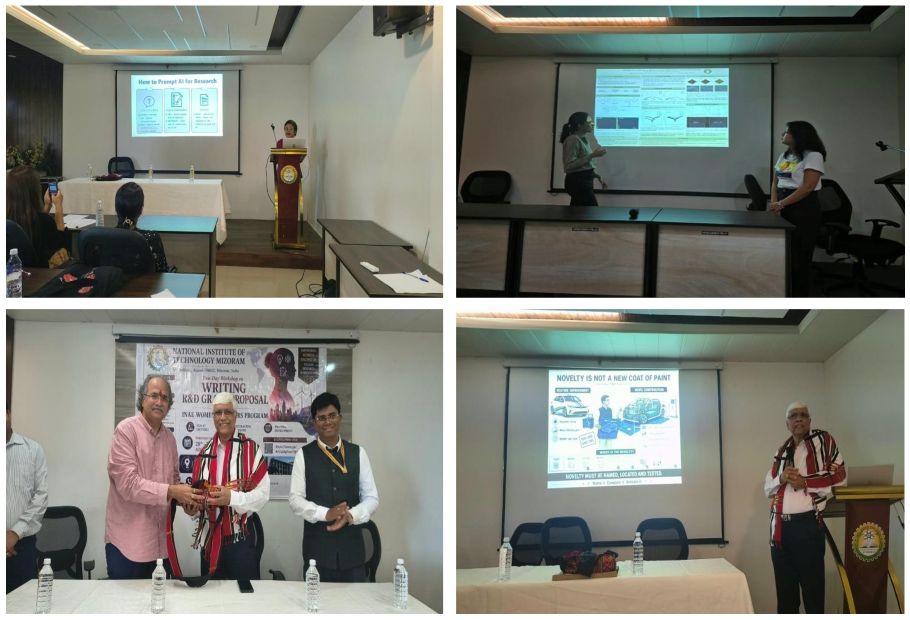 Dignitaries on the Dais Lecture by Prof Sivaji Chakravorti
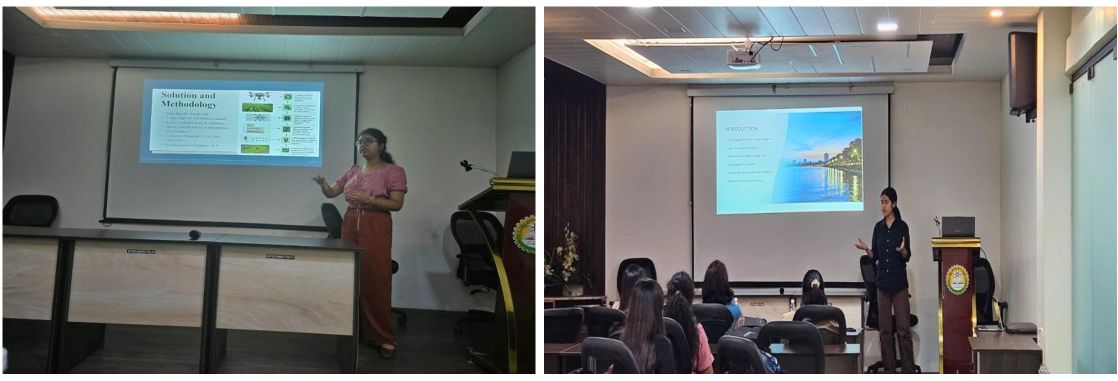 Student Presentation
The visual documentation of the program reflects the highly interactive and engaging nature of the workshop. The inaugural session brought together the invited experts, institute representatives, coordinators and participants. The photographs also capture expert interactions, technical presentations, felicitation of the resource persons, presentation of certificates and mementoes, and the participation of a large group of women researchers and faculty members. The sessions were conducted in an atmosphere of active engagement, with participants listening to expert presentations, interacting with speakers and sharing experiences.
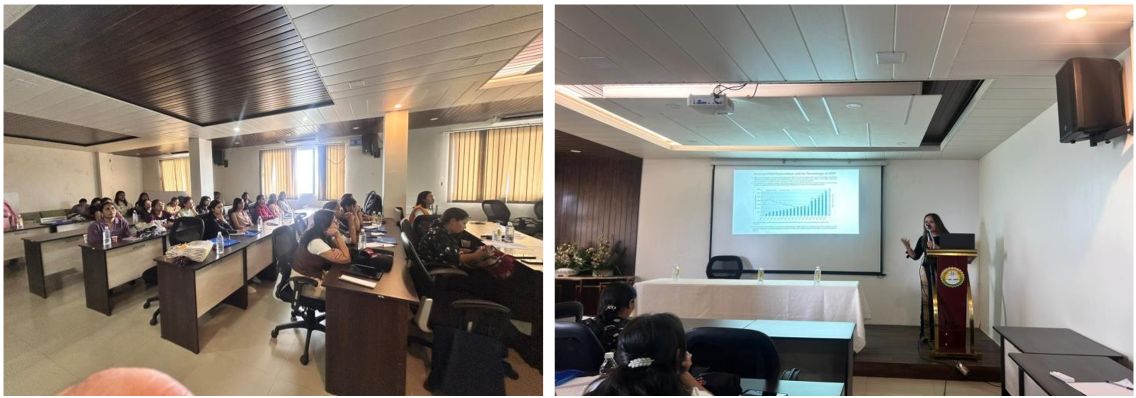 Technical Presentations in Progress
International events
9th INAE-NAEK Workshop on “Next Generation Technologies, Creative Computing & IT Talent Exchange” held on August 11, 2026 in online mode
1. Executive Summary
The 9th INAE-NAEK Workshop on “Next Generation Technologies, Creative Computing & IT Talent Exchange” was convened online on August 11, 2026 as part of the ongoing collaboration between the Indian National Academy of Engineering (INAE) and the National Academy of Engineering of Korea (NAEK), coordinated by Dr Aloknath De, FNAE & INAE Governing Council Member, Founder & CEO- TechCrafter.cps and Former CTO & CVP Samsung. The workshop brought together senior leaders from academia, industry, startups, and innovation ecosystems in India and Korea to discuss two broad themes- I: Creative Computing: Convergence of Art, Design, and Engineering, and II: Next-Generation IT Innovation and Global Talent Exchange.
Discussions examined how emerging technologies can deepen India-Korea cooperation, drawing on India’s engineering talent, digital economy, and startup dynamism alongside Korea’s strengths in advanced manufacturing, R&D, and design. A recurring message was that future innovation requires creativity, ethics, cultural intelligence, and mobility of talent, alongside institutional mechanisms that make collaboration systematic. The workshop concluded with action-oriented recommendations, including bilateral working groups, research and student exchange, startup councils, venture funds, maker spaces, cultural co-creation platforms, and improved policy frameworks.
2. Background and Objectives
The INAE NAEK collaboration has been ongoing since 2017, serving as a platform to strengthen bilateral cooperation in engineering, technology, research, and innovation. The 9th workshop continued this tradition by focusing on emerging areas where India and Korea can jointly shape global technology leadership, at a time when both countries are evolving rapidly as innovation hubs and when AI is reshaping creative industries, software engineering, education, and talent mobility.
Key objectives included, promoting INAE-NAEK collaboration in next-generation technologies; exploring creative computing at the intersection of art, design, and engineering; examining AI’s implications for authorship, ethics, and IP; identifying opportunities for IT innovation and talent exchange; strengthening university, industry, and startup linkages; and developing concrete action points for sustained institutional collaboration.
3. Workshop Deliberations
The workshop comprised an inauguration session, keynote addresses, two technical sessions, two panel discussions, and closing remarks.
3.1 Inauguration and Keynotes
The inauguration featured welcome addresses from the Presidents of INAE and NAEK, reaffirming the importance of continued bilateral engagement. Keynote addresses covered trends in India’s interactive media and gaming market relative to Korea and other global markets, and the broader landscape of IT talent and innovation exchange, highlighting India’s growing role as a technology hub supported by a large talent pool and expanding digital infrastructure.
3.2 Technical Session I Creative Computing
This session explored creative computing as an interdisciplinary domain bridging aesthetics, culture, design thinking, and engineering. Speakers examined the evolving relationship between technology and art, discussing technology’s roles as a tool, a guardian of cultural heritage, and a potential rival that challenges traditional notions of authorship and originality. A related talk traced the evolution of creative computing from early perspective systems to contemporary generative AI, highlighting how authorship is becoming distributed among artists, AI systems, and audiences, and outlining open questions around evaluating and preserving AI-based creative works.
3.3 Panel Discussion I
Panellists discussed how creative computing can be made human-centred, educationally meaningful, and ethically grounded. A major theme was AI’s transformation of software engineering, shifting emphasis toward specifying requirements, system design, and validation rather than writing code, while stressing that human judgment and rigorous engineering practice remain essential. The panel also discussed the democratization of creativity through accessible tools, the need for new intellectual property frameworks, the value of maker spaces in education, and the promise of cultural co-creation between young people in India and Korea.
3.4 Technical Session II IT Innovation and Talent Exchange
This session focused on structured India-Korea collaboration in technology, talent, startups, research, and commercialization. Speakers outlined a roadmap for a benchmark India-Korea innovation partnership, noting complementary strengths and underdeveloped bilateral mobility of students, researchers, and innovators, and identified priority technology areas for joint focus. A related talk addressed Korea’s evolving startup ecosystem and its shift toward deep tech, emphasizing that cross-border success with India needs to become systematic through institutional platforms, founder networks, and investment channels, rather than remaining a series of isolated success examples.
3.5 Panel Discussion II
Panellists discussed practical models for innovation ecosystems, including joint labs, industry-academia collaboration, and pathways from R&D to commercialization. Recommendations included a Korea-India Startup Council, a jointly seeded venture fund, and opening Korean corporate spin-off programs to Indian engineers. The panel emphasized founder mobility, and stressed that cross-border business success requires genuine localization, cultural understanding, and long-term trust-building rather than simple translation of products or strategies. Improved tax treaties, venture financing, and faster patent processing were also raised as enablers.
4. Core Strategic Imperatives
Creativity must be treated as a core technological capability that drives impactful innovation rather than a peripheral consideration. Within this landscape, artificial intelligence acts as a tool, collaborator, and disruptor, demanding updated frameworks for ethics, authorship, and intellectual property. Throughout these rapid technological shifts, human-cantered innovation grounded in responsibility, cultural context, and critical thinking remains paramount. Supporting this requires active talent mobility and cross-pollination among students, researchers, engineers, founders, artists, and designers, alongside comprehensive education reform tailored for creative computing, interdisciplinary collaboration, and responsible execution.
Sustaining this momentum relies on building robust cross-border and industrial ecosystems. Startup bridges, such as those between India and Korea, are growing but still require systematic support mechanisms to scale effectively. Similarly, cultural exchange across arts, music, gaming, and media serves as vital innovation infrastructure rather than simple soft diplomacy. High-impact deep-tech collaboration must focus on critical sectors including AI, semiconductors, cybersecurity, quantum computing, robotics, and advanced manufacturing, complemented by deliberate market-building initiatives in creative fields like gaming. Finally, none of these efforts can fully materialize without proactive policy enablement, encompassing modernized tax treaties, efficient patenting mechanisms, flexible IP frameworks, accessible venture capital, and streamlined mobility rules.
5. Key Outcomes
5.1 Talent Mobility & Academic Collaboration
Recognizing the necessity of structured talent mobility between both nations, there were key proposals to establish bilateral working groups and foster deeper university-to-university collaboration to drive long-term technical exchange with respective countries hardware, software expertise.
5.2 Partnership around Deep-Tech & Social Innovation
Priority deep-tech domains were identified, including AI, semiconductors, cybersecurity, quantum computing, robotics, physical AI, advanced manufacturing, and digital media/gaming. Alongside these high-tech sectors, mental health technology and youth-focused educational tools were highlighted as critical opportunities for socially relevant innovation.
5.3 Entrepreneurship & Seeded Venture Fund
To accelerate startup growth, proposals were made to launch a Korea-India Startup Council paired with a jointly seeded venture fund. Emphasis was placed on simplifying founder mobility, expanding startup exchange programs, and clearing direct pathways for technology commercialization.
5.4 Infrastructure, IP & Cultural Ties
Building a supportive ecosystem will require key policy improvements, specifically calling for updated IP, tax, patent, and localization frameworks. Furthermore, establishing cultural co-creation platforms for youth was highlighted as a foundational element to strengthen bilateral relationships.
5.5 Strategic Alignment & Core Focus around AI on Creativity
The strategic importance of the INAE-NAEK collaboration was strongly reaffirmed, highlighting creative computing as a high-potential area for joint India-Korea efforts. The discussion emphasized the far-reaching implications of artificial intelligence across art, authorship, software engineering, education, and intellectual property.
6. Recommended Action Points
6.1 Institutional Collaboration & Talent Mobility
Establish INAE-NAEK working groups in priority technology areas with defined annual targets and periodic reviews; advocate simplified mobility of researchers, students, and innovators; create fellowship and immersion programs with language and cultural training support.
6.2 University Collaboration & Education
Promote joint research, student exchange, and joint degree or certificate programs in emerging technology areas; encourage interdisciplinary curricula combining computing, art, design, engineering, humanities, and ethics; establish maker spaces and fabrication labs.
6.3 IP, Ethics & AI Governance
Initiate bilateral dialogue on IP frameworks for AI-generated and AI-assisted work; develop responsible AI guidelines for creative computing, software engineering, and education; study models for attribution and human-AI co-creation. Promote accelerated IP examination, approval in reciprocal way.
6.4 Startups & Commercialization
Establish a Korea-India Startup Council and a jointly seeded venture fund; organize annual bilateral startup showcases; open Korean corporate spin-off programs to Indian engineers; build founder mobility pathways and joint lab models linking research to commercialization.
6.5 Cultural Exchange & Market Building
Create platforms for youth cultural co-creation in arts, music, gaming, and digital media; support artist-engineer residencies and bilateral showcases; strengthen India’s gaming and interactive media markets through improved monetization and localization strategies
6.6 Policy & Social Impact
Explore improved tax treaties, accelerated patent processing, and clearer venture investment regulations; develop technology-based initiatives for mental health, accessibility, and rural education as areas for joint impact.
7. Follow-Up Roadmap
Immediate term: circulate the proceedings report, constitute a coordination committee, identify working-group members, and prepare concept notes for the startup council, venture fund, and exchange programs.
Short term: launch initial working groups, identify pilot universities for exchange, hold a startup roundtable, and begin dialogue on AI and IP frameworks.
Medium term: launch the Startup Council, announce pilot joint research projects, conduct a bilateral startup showcase, and develop a policy note on mobility, tax, and funding.
Long term: operationalize the joint venture fund, scale university exchanges and joint labs, publish bilateral white papers, and institutionalize the workshop as a recurring program.
8. Conclusion
The 9th INAE-NAEK Workshop demonstrated strong potential for India and Korea to build a forward-looking partnership in next-generation technologies, creative computing, and IT talent exchange, drawing on highly complementary national strengths. Sustained progress will require structured follow-up working groups, startup councils, venture funds, university exchanges, maker spaces, joint labs, and policy reform to convert dialogue into lasting collaboration that is technologically advanced, culturally rich, and socially responsible. It will be an accomplishment if some of these materialize before our 10th INAE-NAEK workshop.
To view the proceedings of the event, please visit INAE YouTube Channel https://www.youtube.com/watch?v=6Z5YK4jFXJY
To view the Abstract Booklet of the Workshop click here ….
Centre for Engineering Education Excellence (CEEE) Program
The Centre for Engineering Education Excellence (CEEE) Program, a flagship initiative of the Indian National Academy of Engineering (INAE), supported by the Infosys Foundation and the All India Council for Technical Education (AICTE), continued its mission during 2026–27 to strengthen the quality of engineering education in India through structured mentoring, faculty development and knowledge sharing. The program brings together distinguished faculty members and domain experts from premier Indian Institutes of Technology (IITs), to equip engineering faculty with contemporary subject knowledge, innovative teaching methodologies and effective pedagogical practices. Through this collaborative framework, the program seeks to bridge the gap between academic learning and the evolving requirements of industry while contributing to the development of skilled, industry-ready engineering graduates.
A major milestone during the reporting period was the successful implementation and widespread acceptance of the CEEE Automation Portal, which has significantly enhanced the efficiency, transparency and scalability of programme administration. The portal has been adopted across all participating CEEE Centres as the primary digital platform for managing programme activities. It facilitates end-to-end automation of key operational processes, including participant registration, course scheduling, mentor and faculty management, attendance monitoring, dissemination of course materials, submission of assignments and feedback, certificate generation, and preparation of programme reports. The portal has substantially reduced manual administrative effort, improved the accuracy and consistency of programme data, enabled real-time monitoring of program progress, and strengthened coordination among INAE, participating IITs and affiliated institutions. Its successful deployment marks an important step towards the digital transformation of the CEEE Program and establishes a robust foundation for efficient programme management and evidence-based decision-making.
During 2026–27, the program is being conducted through nine CEEE Centres located at IIT Kharagpur, IIT Bombay, IIT Madras, IIT Kanpur, IIT Delhi, IIT Guwahati, IIT Gandhinagar, IIT Hyderabad and IIT Indore. The programme covered a broad spectrum of engineering disciplines, including Computer Science and Information Technology (including Data Science); Artificial Intelligence, Data Science and Machine Learning; Electrical, Electronics and Instrumentation Engineering; Mechanical, Aerospace and Energy Engineering; Materials, Chemical and Biomedical Engineering; and Civil and Environmental Engineering.
By mid July 2026, the offline mentoring of 29 courses has been successfully completed in accordance with the approved schedule. The overall program has continued to provide a highly enriching and professionally rewarding learning experience for participating faculty members. Through direct interaction with eminent academicians, experienced mentors and subject experts from premier institutions, participants have strengthened their disciplinary knowledge while gaining exposure to contemporary teaching-learning methodologies and best pedagogical practices. The combination of expert-led technical sessions, structured mentoring, collaborative learning and peer interaction has encouraged participants to reflect upon and enhance their classroom practices. The hybrid design of the programme, integrating in-person engagement with online academic interactions, has further ensured sustained learning beyond the classroom and facilitated the continued exchange of knowledge among faculty members.
The CEEE Automation Portal has complemented these academic initiatives by providing a unified digital ecosystem for program management. The availability of real-time participant data, automated workflow management, centralized documentation and analytical reporting has improved institutional coordination and enabled timely monitoring of programme outcomes. The portal has also contributed to greater transparency, accountability and standardization in programme implementation across all participating centres, thereby strengthening the overall governance framework of the CEEE Program.
As the 2026–27 CEEE Program progresses with online mentoring scheduled across various CEEE Centres, the initiative continues to reaffirm INAE’s commitment to advancing excellence in engineering education through capacity building, academic mentoring and institutional collaboration. The successful integration of the CEEE Automation Portal with program operations further demonstrates the Academy’s commitment to leveraging digital technologies for effective program delivery and continuous improvement. Together, these initiatives are expected to make a sustained contribution towards enhancing faculty competencies, promoting innovative pedagogy and strengthening the quality of engineering education across the country.
Reports on Activities of Local Chapters in Previous Quarters
IIT Kanpur Organizes 4-day “Materials Camp” for Kanpur School Students
Advanced Centre for Materials Science (ACMS) along with Material Advantage @ Indian Institute of Technology (IIT) Kanpur, a student technical chapter in the Department of Materials Science and Engineering (MSE) co-organized the four-day “Materials Camp 2026” during May 07-10, 2026, in collaboration with Materials Society, Indian Institute of Metals (IIM) Kanpur Chapter, Indian National Academy of Engineering (INAE) Kanpur Chapter, and ASM International India Chapter. “Materials Camp 2026” has attracted the participation of 43 students and nine teachers from schools of Jhansi (Mahatma Hansraj Modern School Jhansi), and Kanpur (i.e. Jai Narayan Vidya Mandir, Allenhouse Public School, Kendriya Vidyalaya IIT Kanpur, Sheiling House School, Methodist High School, Jugal Devi Saraswati Vidya Mandir, Dr Virendra Swaroop Public School, and DPS Kalyanpur).
During the inaugural ceremony, Prof. Kantesh Balani, Head Materials Science and Engineering & Chair INAE Kanpur Chapter, welcomed the participants and apprised the importance of materials in human civilization, Prof. Anish Upadhyaya, Head, ACMS, emphasized exploring new application avenues using materials engineering, and. Dr. Navin Manjooran, President, ASM International, joined online for inaugurating the event on May 07, 2026, and highlighted ASM International as the biggest materials society in the world and congratulated everyone for their participation in the Materials Camp 2026.
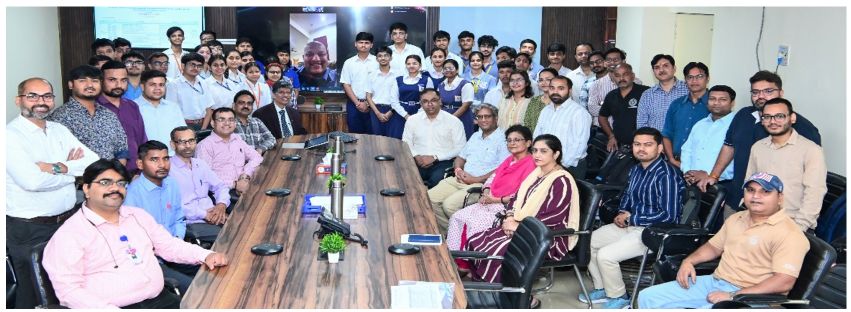 Group Photograph of Faculty and Students in Camp
Mr. Om Upadhyaya, a B.Tech. student at IIT Kanpur and an earlier participant of Materials Camp, shared personal insights and the “Experience of the Past Materials Camp“. The technical session began with an engaging talk on the “Classification of Materials” by Prof. Niraj Chawake, who correlated the choice of materials with the Structure, processing, property, and performance tetrahedron through his talk on, “Introduction to Classification of Materials’. Then Prof. Kantesh Balani delivered a talk on, “Fascinating World of Materials” showcasing materials for re-entry space vehicles, to developing superhydrophobic surfaces for self-cleaning, to the changing colours observed in peacock feathers. The talks were followed by real-life demonstrations on materials in “Disassembling a television” wherein a LED flat television was broken-open and functional role of various layers were underscored by Dr. Shruti Dubey and Mr. P. Shiven. Thereafter, the afternoon lab-sessions were conducted on sample preparation and microscopy of various samples in physical metallurgy laboratory at IIT Kanpur, wherein students learnt to polish a sample and observe its microstructure under an optical microscope. Materials Camp 2026 is expected to enthuse school students in choosing fascinating domain of Materials Science and Engineering as their career option.
The second day (May 08, 2026) of Material Camp 2026 @ IIT Kanpur witnessed involved talk by Prof. Anish Upadhyaya on “Materials Failure: Learnings From It”, where he enunciated various examples from bulletproof armour to design of nature-inspired cutting tools among others. At ACMS, in the morning session, students visited various facilities, i.e. scanning electron microscopy (SEM), Instrumentation Indentation Lab, X-ray Diffraction lab, Optical profilometry, Live-cell imaging, X-ray photoelectron spectroscopy (XPS) and mechanical testing lab. The afternoon-session of the day was also heavily packed with visit to Engineering Metallurgy Lab with demonstrations of welding simulator, Brazing/Welding, Casting, Mechanical Testing Lab, and Materials Workshop.
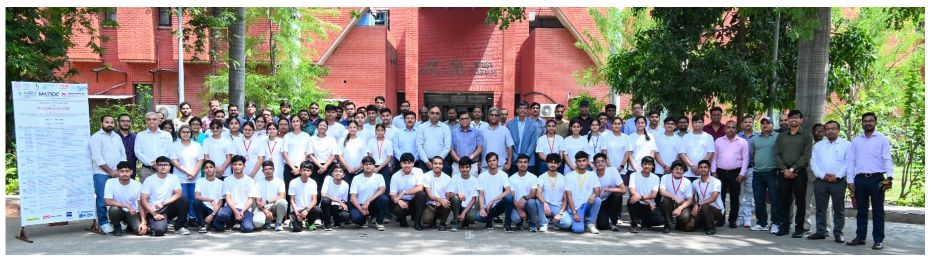 Group Photograph of Students with esteemed faculty
The third day (May 09, 2026) of Material Camp 2026 @ IIT Kanpur included talks from Prof. Shobit Omar on ‘Materials for Li-ion Batteries’, from Prof. Vivek Verma on, ‘Materials for Wound Healing’, and from Prof. Shikhar Misra on ‘AI/ML in Materials Science’. The afternoon session was an industrial visit to Anod Spray in the city and the exposure to such an industry scenario with thermal spray coatings on pulleys for textile industries, and electroplating on copper cylinders for consequent printing on packets/wrappers was also very intriguing.
The fourth day (May 10, 2026) of Material Camp 2025 @ IIT Kanpur started with two parallel sessions, with swap on: (i) real-life interaction and demonstrations on laboratory setting showcasing Chemical Vapor Deposition technique, Compression molding for polymers, Wetting experiment, and Lab videos on Cell-Bacteria culture, and (ii) exposure to Virtual laboratories demonstrating use of computations tools/programming with demonstration to virtual reality and samples experiments. The event ended with feedback from participants, and certificate distribution.
Local Chapter Activities and Webinar Series held during August 1, 2026 to August 31 2026
The following Webinars/activities/meetings/Technical Lectures were conducted during August 1, 2026 to August 31, 2026 by INAE Local Chapters.
INAE Bhubaneswar Chapter
The 79th lecture of the INAE Distinguished Lecture Series was organized by INAE Bhubaneswar Chapter, jointly with SOA University, CSIR-IMMT Bhubaneswar, IIT Bhubaneswar, NISER Bhubaneswar and IEEE Bhubaneswar Sub-section and delivered by Prof. Prabir Kumar Biswas, Professor, Dept. of Electronics and Electrical Communication Engineering, IIT Kharagpur on “Generative Adversarial Network (GAN): An efficient tool for data generation and data completion” on 11th August, 2026 between 4.00 PM to 5.30 PM (Virtual Mode)
Key Points: Generative Adversarial Network (GAN) is a relatively recent concept in deep generative learning wherein two neural networks are pitted against each other in a zero-sum non-cooperative game to match a non-stationary distribution to an intractable stationary distribution. In this lecture he talked about how the generative modelling capability of GAN can be exploited to design efficient frameworks for image/video inpainting. Semantic inpainting refers to realistically filling up large holes on an image or video frame. His approach is to first train a generative model to map a latent noise distribution to natural image manifold and during inference time, search for the best-matching noise vector to reconstruct the signal. The primary drawback of this approach is its inference time iterative optimization and lack of photo-realism at higher resolution. In this talk both of the above mentioned shortcomings are addressed. This is made possible with a nearest neighbour search based initialization (instead of random initialization) of the core iterative optimization involved in the framework. The concept is extended for videos by temporal reuse of solution vectors. Significant speedups of about 4.5-5x on images and 80x on videos is achieved. Simultaneously, the method achieves better spatial and temporal reconstruction qualities. Next, we will pose the following question and try to get the answer – `Do we at all need iterative inference framework?’- to answer this, a data driven parametric network is trained to directly predict a matching prior for a given masked image. This converts an iterative paradigm to a single feed forward inference pipeline with around 800x speedup. Finally, recent advancements in application of GAN for 3D point cloud completion to estimate a plausible complete shape from a given partial point cloud will be discussed. Due to composite structural details and complex geometry of 3D shape completion of 3D point cloud using a single latent vector becomes extremely challenging. The speaker proposed to employ multiple latent vectors, each of which generates individual feature maps, which are then combined to reconstruct a faithful complete 3D shape corresponding to an available partial shape.
Bio -Data: Prof. Prabir Kumar Biswas received his B.Tech., M.Tech., and Ph.D. degrees in Electronics and Electrical Communication Engineering from the Indian Institute of Technology Kharagpur in 1985, 1989, and 1991 respectively. He served Bharat Electronics Ltd. (BEL), Ghaziabad as a Deputy Engineer during the period 1985 to 1987. In 1991 he joined the faculty of the Department of Electronics and Electrical Communication Engineering at IIT Kharagpur where he is presently a Professor and was also holding the position of Head of the Department during January 2015 to December 2020. He served as the Head of the Computer and Informatics Center at IIT Kharagpur from March 2008 to December 2014. He also held the position of the Head of the Department of Artificial Intelligence and also the Project Director of AI4ICPS Innovation Hub at IIT Kharagpur. Prof. Biswas visited the University of Kaiserslautern, Germany during March 2002 to February 2003 as Alexander von Humboldt Fellow. Prof. Biswas is a Senior Member of the IEEE and was the Chairman of IEEE Kharagpur Section during the Year 2004. He is a life member and former President of Indian Unit of Pattern Recognition and Artificial Intelligence (IUPRAI, India). He is also a former Additional Director of West Bengal Electronics Industry Development Corporation (WEBEL).
His research interests are in image and video processing, pattern recognition, machine learning, multimedia systems etc. He published more than 200 research papers in various international and national journals and conference proceedings in these areas. He has prepared five online Video Courses under NPTEL program. He has served as member of technical program committees of several national and international conferences, and served as Organizing Chair of Indian Conference on Computer Vision, Graphics and Image Processing (ICVGIP) in 2008.
No. of Participants: 120
YouTube Link: https://youtu.be/9n1NRgAs2GM
Email: pkb@ece.iitkgp.ac.in
INAE Forums
The following are the updates on activities carried out by INAE Forums during the period August 1, 2026 to August 31, 2026.
INAE Forum on Civil Infrastructure
The INAE Forum on Civil Infrastructure, chaired by Prof Prem Krishna, former Vice President, INAE consisting of domain experts is presently undertaking a study on issues related to civil infrastructure in India and to deliberate on the preparation of a comprehensive report. Meetings were held to review the progress of the study which were attended by members of the Forum along with invited experts, and detailed discussions were held on the structure and content of the proposed report. Emphasis was placed on integrating technical aspects with broader considerations relating to policy, regulatory frameworks, and societal engagement in infrastructure development. In order to enrich the report with relevant and updated information, members were requested to interact with institutions and experts working in related fields. Inputs were sought from organizations dealing with buildings, transportation, sustainability, and construction technologies. Discussions were also held on establishing relationships between projected material requirements, costs, and the associated carbon footprint of infrastructure development, particularly in cement, steel, and other construction materials, as well as the need to consider emerging sustainability concerns such as embodied carbon and environmental impact. The Forum emphasized that the scale and unique context of the Indian infrastructure scenario must be carefully taken into account.
The recommendations emerging from the study are expected to be prioritized, with those considered most critical for implementation in the next five to ten years receiving the highest priority. The Forum considered the possibility of preparing case studies related to infrastructure projects, such as buildings and bridges, which could illustrate practical approaches to reducing carbon footprints and improving sustainability in the built environment. The Forum is nearing completion of its report and held rigorous deliberations with experts on August 20, 2026; August 26, 2026 and August 31, 2026 wherein the repost is being finalized taking into account all the case studies and comments from the members. A brief presentation was made about this study at CAETS 2025 Annual Meeting in September 2025 and a brief updated version will be expected to be presented at CAETS 2026, again in September 2026. The said report by the Forum is in advanced stage of finalization.
INAE Forum on Critical Minerals
The INAE Forum on Critical Minerals chaired by Dr VK Saraswat, FNAE was set up to help the country plan and act on the issue of critical minerals. These minerals are needed for clean energy, electric vehicles, electronics, defense and other modern technologies. The Forum’s aim is to study the availability of these minerals in India and to suggest a clear strategy, policy and roadmap so that India can become more self-reliant in this area. During the period the Forum held two meetings on August 1 and August 26, 2026, bringing together experts from research, industry and government linked bodies to discuss the way forward.
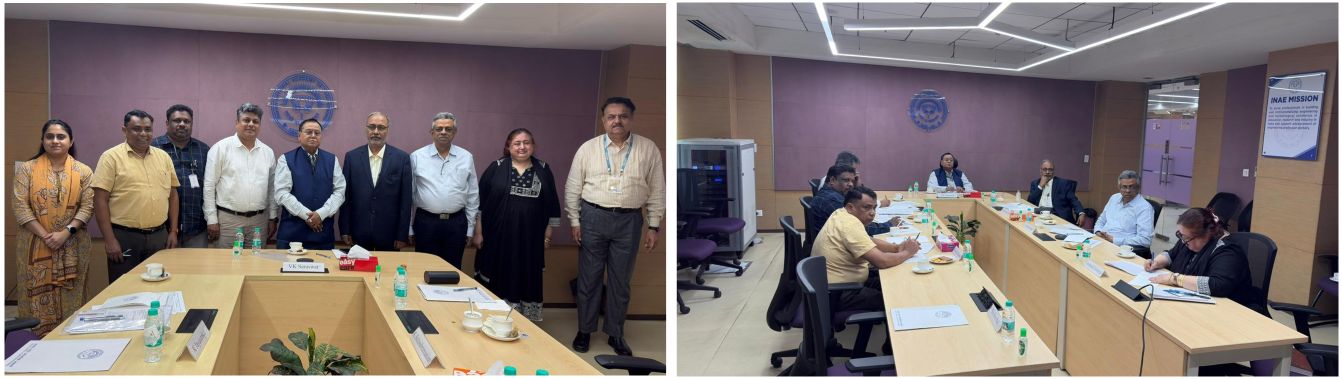 Group Photo of Members with INAE Team Meeting Chaired by Dr VK Saraswat, FNAE
In the first meeting held on August 1, the Forum discussed why critical minerals matter for India’s energy transition, technology growth and national security and noted that India still depends on other countries for many of these minerals. To take the work forward, four teams were formed: one on Exploration and Mining, one on Research and Development Programs, one on Technology Development, Scale-up and Industrialization, and one on Policy Gaps. Each team was asked to look closely at its own area and bring out ideas and solutions. Members also shared updates on ongoing work in exploration, extraction, processing and recycling of critical minerals and on efforts to reduce dependence on imports.
In the second meeting held on August 26, the four teams reported on their progress and their membership and work plans were finalized. Discussions covered new ways to find mineral resources using modern technology, the option of building ties with resource rich countries, the growing need for minerals such as uranium for the nuclear power programme and the importance of recycling as an added source of critical minerals. It was agreed that a final report would be prepared to guide the government, covering resource mapping, technology and policy. Teams were asked to share their work plans and inputs by September 10, 2026, so that the Forum’s work could continue moving forward.
INAE Forum on Nuclear Energy
The INAE Forum on Nuclear Energy, chaired by Dr Anil Kakodkar, former President, INAE was formed to look closely at the role of Thorium in securing India’s long-term energy needs. As Thorium is available in large amounts in India, the Forum’s aim is to work out how it can be used well and safely to prepare a report that lays out the steps, technologies and time needed to bring Thorium into large-scale use alongside India’s existing nuclear programme. During the period the Forum held two meetings on August 2 and August 30, 2026 where members shared technical notes and discussed different options in detail.
In the meeting held on August 2, 2026 members discussed different reactor types including molten salt reactors and reactors that use solid fuel and weighed the benefits and challenges of each. The need to build up a stock of Uranium-233 which can be produced using Thorium was highlighted as an important early step. Members also discussed ways to process and purify Thorium and Uranium, the possible role of the private sector and academic groups and the importance of managing waste safely. It was agreed that members would keep preparing short notes on these topics to help build the final report.
In the meeting held on August 30, 2026 the discussion continued in more depth focusing on how Thorium could first be used in existing types of reactors already running in India and later in molten salt reactors as the technology matures. Members discussed the need to build India’s own capacity to prepare enriched fuel, ways to safely manage the by-products and waste created during processing and how experience from different reactor types could be combined to make the introduction of Thorium smoother and less risky. Members agreed to continue preparing report sections on these subjects with the aim of recommending a small number of practical options rather than leaving all choices open, so that the report can give clear and useful guidance for India’s energy security.
New Proposals for Forums
During the Governing Council meeting on March 21, 2026 the concept of INAE Forums was reviewed. The genesis of this initiative is certain INAE Forums had earlier brought out pertinent reports including technology roadmaps on topical issues however, most had completed/exceeded their tenure and therefore, proposals for new Forums are being invited with slightly revised guidelines and format as approved by the Governing Council during the meeting. The objective of the forums is development of a policy document on selected engineering theme or domain to help the country (government, funding agencies, educational institutions, research organizations, industry and users) formulate a policy, strategy and roadmap for immediate or distant future. Proposals for constituting of INAE Forums on topics of engineering and technological interest to society were invited on the revised guidelines and format by the last date of July 15, 2026. The proposals received are being selected and approved during the forthcoming Governing Council Meeting on September 9, 2026. Besides the above, the two newly constituted Forums on Nuclear Energy and Critical Minerals have commenced the tasks accordingly.
INAE Schemes
INAE Chair Professorships and Distinguished Professorship Technologists
The applications for the year 2026–27 under the INAE Chair Professorships and INAE Distinguished Professorship for Technologists schemes were invited on 4 June 2026. The last date for receipt of applications/nominations is September 30, 2026. Further details can be viewed on INAE website www.inae.in at the links https://www.inae.in/research-innovation/inae-chair-professorship/ and https://www.inae.in/research-innovation/inae-distinguished-professors-technologists/
International Affairs
CAETS Energy Community
The CAETS Energy Community is undertaking a global study titled “Towards Reliable Low-Carbon Energy for All: Assessment of Risks and Opportunities,” co-chaired by Dr. Ajay Mathur, FNAE and Mr. Pradeep Chaturvedi, Vice President, INAE. The study aims to assess pathways for achieving reliable, affordable, and sustainable low-carbon energy while examining the associated risks and opportunities across different regions.
The CAETS Energy Community Meeting held on 27 April 2026 deliberated on the draft concept note, focusing on the scope, objectives, and broad framework of the proposed study. Following the meeting, the concept note was finalized and circulated to CAETS Member Academies and domain experts for comments and inputs. Subsequently, a meeting of the key members of the CAETS Energy Community was held on 12 June 2026, during which the inputs received were reviewed and the methodology, operational framework, and broad outline of the report were finalized, including the reporting structure, expected deliverables, and mechanisms for collaboration among participating academies. The interim draft of the study will be presented during the CAETS 2026 Annual Meeting in Munich, Germany, with the final report scheduled for release at the CAETS 2027 Annual Meeting in Rotterdam, Netherlands.
CAETS Engineering Education Working Group (EEWG)
The CAETS Engineering Education Working Group (EEWG), co-chaired by Prof. Indranil Manna, Immediate Former President, INAE and Prof. Ed Lazowska, serves as a platform for member academies to exchange perspectives, identify emerging challenges, and develop recommendations for strengthening engineering education in response to evolving technological and societal needs. Building upon discussions held during previous Working Group meetings and the CAETS 2025 Annual Meeting in Brisbane, the EEWG reviewed a preliminary compilation document capturing the key observations and recommendations that have emerged from its deliberations on engineering education.
The 13th Meeting of the Engineering Education Working Group (EEWG) of the International Council of Academies of Engineering and Technological Sciences (CAETS) was held online on 8th August 2026. The revised volume of the EEWG Compendium was presented for discussion. Members observed that the document had become more structured, concise and reader friendly with around eight to nine key recommendations incorporated. It was agreed that the revised document should focus on practical and actionable recommendations for engineering education. Members emphasized the need to translate the deliberations and exchange of experiences within the Working Group into practical and actionable outcomes, including identifying and sharing effective solutions and practices that could be adapted across member countries and institutions. The need for wider dissemination of the Working Group’s work and outcomes among member academies was also highlighted, including exploring appropriate mechanisms for sharing the identified issues, practices and recommendations with a broader community. Members emphasized the importance of further refining the Compendium based on the comments and suggestions received. Members were requested to provide their comments and suggestions on the revised Compendium within one to two weeks to facilitate its finalization for presentation at the forthcoming meeting in Munich. The meeting concluded with members expressing satisfaction regarding the progress made by the Working Group and reaffirming their commitment towards continuous improvement in engineering education through international collaboration.
INAE Publications
Transactions of Indian National Academy of Engineering – An International Journal of Engineering and Technology
INAE is currently publishing a Journal named “Transactions of Indian National Academy of Engineering – International Journal of Engineering and Technology” published by M/s Springer which was earlier named INAE Letters which is a broad-scoped, peer-reviewed journal that publishes original research in all the disciplines of engineering, including various inter-disciplinary aspects. Transactions of the Indian National Academy of Engineering has been accepted for inclusion in Scopus. This achievement reflects the dedication of the Editorial Board, reviewers, authors, and readers in maintaining the journal’s high scientific standards. Indexing will soon begin with the first volume available on the journal website, further enhancing the visibility and discoverability of research published in the journal. Further details are on Springer website at the link https://link.springer.com/journal/41403
INAE Membership
The INAE Individual Membership category was established to broaden the Academy’s engagement with the engineering community by recognizing accomplished professionals from industry, R&D, academia, engineering services, entrepreneurship, and government/private organizations. Through a structured and approved selection process, Individual Membership is conferred on mid-career and senior engineering professionals who demonstrate significant potential and are on the path to achieving the distinction of INAE Fellowship. The Membership category is subscription-based and operates on an annual renewal cycle.
The need for focused and innovative strategies to substantially expand the membership base has been undertaken and following action are noteworthy:
- INAE Technology Conclave 2026: The Technology Conclave 2026 was conducted at SOA University, Bhubaneswar (11–12 July 2026), for enhancing awareness of INAE and attracting new members.
- Enhanced Fellow Engagement:Fellows are encouraged to recommend at least five distinguished engineering professionals each for Individual Membership and to actively facilitate Institutional and Corporate Memberships to strengthen INAE’s national engineering network.
- Membership Growth and Institutional Support: INAE acknowledges with gratitude the generous support received from leading corporates and institutions, including HAL, Infosys Foundation, and several premier academic and research organizations. These partnerships reflect strong confidence in INAE’s mission and contribute significantly to its long-term financial sustainability.
The Academy currently comprises:
- 39 Institutional Members(31 Diamond, 2 Ruby, and 6 Coral).
- 310 Individual Members(196 Senior Members and 114 Associate Members).
INAE also gratefully acknowledges the generous contribution made by Larsen & Toubro to the INAE Corpus Fund.
Strengthening the INAE Corpus Fund
The INAE has also appealed to the Fellowship to support the Academy’s transition towards long-term financial sustainability through voluntary contributions to the INAE Corpus Fund. This phase presents an important opportunity to strengthen INAE’s institutional capacity and expand its impact in advancing engineering for national development. Contributions to the Corpus Fund are regarded as a collective responsibility of the Fellowship and a strategic investment in the Academy’s future.
INAE leadership had appealed to the Fellowship for contributions to the INAE Corpus Fund, emphasizing the importance of collective support during the transition to financial autonomy. Contributions are seen as a shared responsibility of the entire Fellowship.
In recognition of donors, INAE has a Wall of Donors on its website at the link https://www.inae.in/wall-of-donors/

Tax Benefits:
Donations qualify for 50% tax deduction under Section 80G (for those under the old tax regime), with receipts and certificates issued within a quarter.
INAE expresses deep gratitude to all supporters and continues to welcome contributions from Fellows, Young Associates, Awardees, and Corporate partners, which are essential to ensuring INAE’s long-term self-reliance and mission continuity.
Important Meetings held during August 1, 2026 to August 31, 2026
| August 1, 2026 | First Meeting of the INAE Forum on Critical Minerals held in INAE Office, New Delhi in hybrid mode |
| August 2, 2026 | Second Meeting of INAE Forum on Nuclear Energy held over Webex |
| August 4, 2026 | Discussion on case study for CAETS Working Group held over Webex |
| August 8, 2026 | 13th meeting of CAETS Engineering Education Working Group (EEWG) held over Webex |
| August 19, 2026 | INAE Meeting with Chairpersons/Office Bearers of INAE Local Chapters held over Webex |
| August 20, 2026 | Meeting on INAE Forum on Civil Infrastructure held at INAE Office in hybrid mode |
| August 25, 2026 | Meeting of Selection Committee for INAE Innovative Student Projects Award 2026: First Shortlisting held over Webex |
| August 26, 2026 | Second Meeting of INAE Forum on Critical Minerals held in INAE Office, New Delhi in hybrid mode |
| August 26, 2026 | Meeting to discuss Civil Infrastructure Study Report held over Webex |
| August 27, 2026 | 58th Apex Committee Meeting of INAE held in INAE Office, New Delhi in hybrid mode |
| August 27, 2026 | 48th Finance Committee Meeting of INAE held in INAE Office, New Delhi in hybrid mode |
| August 27, 2026 | Selection Committee Meeting for Election of Fellows under Rule 37(g) held in INAE Office, New Delhi in hybrid mode |
| August 30, 2026 | Third Meeting of INAE Forum on Nuclear Energy held over Webex |
| August 31, 2026 | Meeting to discuss Civil Infrastructure Study Report held over Webex |
International/National Conferences/Seminars being organized by IITs/other Institutions
To view a list of International/ National Conferences/Seminars being held in the month of September, October, November 2026 , click here….
Honours and Awards (covering the period August 1, 2026 to August 31, 2026)
| 1 | Prof. S. K. Bhattacharyya, FNAE, Founding Vice Chancellor, Shiv Nadar University Chennai, was honoured with the Distinguished Alumnus Award by IIT Kharagpur on the Institute’s Foundation Day, 18 August 2026. The honour celebrates a distinguished career marked by academic leadership, research and lasting contributions to engineering. The award was presented by the Director and Chairman, ISRO. |
| 2 | Prof. Mahesh Tandon, FNAE, Chairman & Former Managing Director, Tandon Consultants Pvt. Ltd., New Delhi received the Lifetime Achievement Award from Waterproofers Association of India in recognition of a lifetime of outstanding contribution, visionary leadership, and unwavering commitment to excellence in the Structural Engineering & Construction Industry. He was honoured for his remarkable journey, expertise and lasting impact have helped shape the industry and inspire generations to come. The award was conferred during the Waterproofers Association of India- India International Waterproofers Conference &Expo 2026 on 6-7 August 2026 at New Delhi. |
| 3 | Prof. Thalappil Pradeep, FNAE, Institute Professor, Former Deepak Parekh Institute Chair Professor; IIT Madras, Chennai has become the third Indian to be elected as a full member of the European Academy of Engineering (EAE), headquartered in Gothenburg, Sweden in recognition of his pioneering contributions to nanoscience and affordable clean water technologies. There are several Nobel Laureates, Fields Medallists and Turing Award Laureates as members of the academy. |
| 4 | Prof. Kirti Chandra Sahu, FNAE, Professor (HAG), IIT Hyderabad received the Best Teacher Award by the Union Ministry of Education for faculty members from higher education institutions across the country. The award was presented on the occasion of Guru Purnima celebrations on September 5, 2026 |
| 5 | Professor Sanghamitra Bandyopadhyay, FNAE, Professor, former Director, Indian Statistical Institute, Kolkata was selected for the prestigious Maria Petrou Prize awarded to a living lady scientist/engineer “who has made substantial contributions to the field of Pattern Recognition and whose past contributions, current research activity and future potential may be regarded as a model for both aspiring and established researchers”. The Prize was conferred to Prof. Bandyopadhyay during the International Conference on Pattern Recognition (ICPR) held in Lyon, France, August 17-22, 2026. |
News of Fellows (covering the period August 1, 2026 to August 31, 2026)
| 1 | Mr J.D. Patil, President Indian National Academy of Engineering (INAE), Former Whole Time Director (Defence & Semiconductor Technologies) and Member of Executive Committee of Management Larsen & Toubro Limited; Member of the Board of IN-SPACe; Member Board of Governors IIT Kanpur; Founding Chairman Indian Space Association (ISpA) was nominated as Chairperson of the Research Council (RC) for CSIR National Metallurgical Laboratory (CSIR-NML), Jamshedpur constituted by DG, CSIR. |
| 2 | Dr S Somanth, Vice President, INAE, Prof. Vikram Sarabhai Professor, ISRO; Distinguished Visiting Professor, IISc; Chancellor, Chanakya University, Bangalore; Advisor (Space Technology), AP Government, and Former Secretary, DOS / Chairman, ISRO has been appointed by the Central Government as part-time, Non-official Director on the Central Board of Reserve Bank of India for a period of four years with effect from August 20, 2026. |
| 3 | Prof. Debabrata Das, FNAE, Former Professor of Department of Biotechnology and Professor-in-Charge of PK Sinha Centre for Bioenergy, Department of Biotechnology, IIT Kharagpur has authored three books recently published as follows: 1. Das, D., Banerjee, S., & Mahata, C. (2025 & 2026). Environmental Biotechnology: Advanced Technology for Combating Pollution. Capital Publishing Company, New Delhi, and Springer, Switzerland. ISBN: 978-93-81891-93-3 and ISBN: 978-3-032-14605-2. 2. Das, D. (2026). Sobuj Jwalanir Ekti Shohoj Golpo. Kolkata Press Books. ISBN: 978-93-47514-54-8. 3. Das, D. (2026). Biohydrogen: A Simple Story of Green Energy. Kolkata Press Books. ISBN: 978-93-47514-41-8.These books reflect his continued efforts to communicate and disseminate knowledge in the areas of environmental biotechnology, green energy, biohydrogen, and sustainable technologies, with an emphasis on making scientific and technological concepts accessible to students, researchers, engineers, and general readers. |
OBITUARIES
Based on an intensive review of the records of very senior INAE Fellows, it was observed that eleven Fellows and two Foreign Fellows have passed away during the last few years, for which INAE had no information/intimation. The Governing Council during its meeting on September 9, 2026 observed one minute of silence as a mark of respect to the following departed souls in remembrance of their valuable contributions to INAE as per Obituaries given below.
Mr N Venkataramani
Mr N Venkataramani, FNAE born on December 09, 1939 passed away on August 1, 2020. He was elected to INAE Fellowship in the year 2017 and was affiliated to Engineering Section-III (Mechanical Engineering). Mr N Venkataramani, Chairman & Managing Director, India Pistons Ltd., Chennai had made significant contributions in the fields of Mechanical Engineering and Automobile Engineering. He was a pioneer of the auto component sector and India Pistons’ indigenous development of Composite Coated Rings, IP Rings foray into the unique orbital cold forming process are all credited to his unique understanding of customer and market needs.
Mr Samir K Chatterjee
Mr Samir K Chatterjee, FNAE born on January 01, 1935 passed away on March 1, 2022. He was elected to INAE Fellowship in the year 1992 and was affiliated to Engineering Section-IX (Energy Engineering). Mr Samir K Chatterjee, Former Member, Atomic Energy Commission and MD, Nuclear Power Corporation of India Ltd., Mumbai had made significant contributions in the fields of Nuclear Power and Nuclear Safety. He had laid a very strong foundation of design discipline within NPCIL and supported development, testing and validation of new concepts and systems and peer review of directorates of NPCIL bringing in transformative reforms.
Dr Syamal Gupta
Dr Syamal Gupta, FNAE born on April 15, 1934 passed away on pril 1, 2022. He was elected to INAE Fellowship in the year 2005 and was affiliated to Engineering Section-X (Interdisciplinary and Special Engineering Fields and Leadership in Academia, R&D and Industry). Dr Syamal Gupta, Former Chairman, Tata International Limited, Mumbai had made significant contributions in the fields of Environment and Energy and Precision Engineering. He was a management leader who opened markets for Tata products across geographies and businesses into new areas in numerous African, European and South-East Asian markets.
Prof Prabhat K Swamee
Prof Prabhat K Swamee, FNAE born on November 09, 1940 passed away on April 18, 2022. He was elected to INAE Fellowship in the year 2008 and was affiliated to Engineering Section-I (Civil Engineering). Prof Prabhat K Swamee, Consulting Engineer, Formerly Professor, IIT Roorkee and Former Visiting Faculty, IIT Kanpur had made significant contributions in the fields of Water Resources Engineering and Fluid Dynamics. He and his co-worker were responsible for development of the Swamee–Jain equation, an explicit mathematical formula used in fluid mechanics to directly calculate the Darcy–Weisbach friction factor for full-flowing circular pipes.
Dr ZS Tarapore
Dr ZS Tarapore, born on June 25, 1933 passed away on November 10, 2023. He was elected to INAE Fellowship in the year 1988 and was affiliated to Engineering Section-I (Civil Engineering). Dr ZS Tarapore, Formerly Director, Central Water and Power Research Station (CWPRS), Pune had made significant contributions in the fields of Hydraulics and Sediment Transport. His contributions include modeling studies related to major and minor ports spread over the vast coastline of India and port infrastructure development ranging from Kandla to Kolkata, Brahmaputra as well as from Ganga-Indus to Kaveri, which are well recognized.
Prof KN Bhat
Prof KN Bhat, FNAE born on July 05, 1943 passed away on March 23, 2024. He was elected to INAE Fellowship in the year 1999 and was affiliated to Engineering Section-VI (Electronics and Communication Engineering). Prof KN Bhat, Visiting Professor, Indian Institute of Science, Bangalore and formerly Professor, IIT Madras had made significant contributions in the field of Microelectronics. He organised, developed and offered several undergraduate andpostgraduate courses at IIT Madras and offered courses on NPTEL and other online platforms, benefiting students across the country and the world.
Dr HS Chauhan
Dr HS Chauhan, FNAE born on November 17, 1936 passed away on April 7, 2025. He was elected to INAE Fellowship in the year 1988 and was affiliated to Engineering Section-I (Civil Engineering). Dr HS Chauhan, Formerly Dean, College of Technology, GB Pant University of Agriculture & Technology and AICTE Emeritus Fellow had made significant contributions in the fields of Irrigation & Drainage Engineering and Agricultural Engineering. He played a pivotal role in shaping the academic policies and programs of GB Pant University of Agriculture & Technology and established the department as a center of excellence in Agricultural Engineering.
Dr GP Sinha
Dr GP Sinha, FNAE born on July 17, 1946 passed away on October 15, 2025. He was elected to INAE Fellowship in the year 2006 and was affiliated Engineering Section-III (Mechanical Engineering). Dr GP Sinha, Formerly Director, CSIR-CMERI, Durgapur had made significant contributions in the fields of Operations Research & Industrial Engineering and Production Engineering. He was a visionary leader, a dedicated scientist, and an inspiring mentor whose contributions played a vital role in shaping CMERI and advancing mechanical engineering research.
Prof AW Date
Prof AW Date, FNAE born on September 30, 1945 passed away on April 24, 2026. He was elected to INAE Fellowship in the year 2000 and was affiliated to Engineering Section-III (Mechanical Engineering). Prof AW Date, Rahul Bajaj Chair Professor & Emeritus Fellow, Indian Institute of Technology, Bombay had made significant contributions in the fields of Thermo-fluids and Computational Fluid Dynamics (CFD). He was renowned for his work on heat and mass transfer, energy conversion, and applying thermo-fluid science to rural technology problems in India
Prof S Rajasekaran
Prof S Rajasekaran, FNAE born on September 18, 1942 passed away on August 5, 2026. He was elected to INAE Fellowship in the year 2002 and was affiliated to Engineering Section-I (Civil Engineering). Prof S Rajasekaran, Visiting Professor and Formerly Professor & Head, Department. of Civil Engineering, PSG College of Technology, Coimbatore had made significant contributions in the fields of Structural Engineering and Artificial Intellgence. His teaching, research and publications in the areas of in the fields of structural engineering, finite element analysis, computational mechanics, and soft computing are well recognized.
Prof Kripa Shankar
Prof Kripa Shankar, FNAE born on July 01, 1949 passed away on August 10, 2026. He was elected to INAE Fellowship in the year 2007 and was affiliated to Engineering Section-X (Interdisciplinary and Special Engineering Fields and Leadership in Academia, R&D and Industry). Prof Kripa Shankar, Visiting Professor, Former Professor & Deputy Director, IIT Kanpur and Formerly Vice-Chancellor, Uttar Pradesh Technical University, Lucknow had made significant contributions in the fields of production/operations management and flexible manufacturing systems. He played a leadership role in initiating research in manufacturing systems management, supply chain and logistical management at IIT Kanpur.
May God bless their souls to rest in peace.
Foreign Fellows
Dr Arun Netravali
Dr Arun Netravali, FNAE born on June 26, 1946 passed away on November 4, 2021. He was elected to INAE Foreign Fellowship in the year 2002 and was affiliated to Engineering Section-VI (Electronics and Communication Engineering). Dr Arun Netravali, Managing Partner, OmniCapital, LLC.; President Emeritus & Formerly President, Bell Laboratories, Chief Technology Officer and Chief Architect, Lucent, USA had made significant contributions in the fields of Visual Communications and Communications Sciences. He led Bell Labs R&D of high-definition television and was widely acknowledged as a pioneer in the development of digital video technology.
Prof David John Ewins
Prof David John Ewins, FNAE born on March 25, 1942 passed away on January 25, 2023. He was elected to INAE Foreign Fellowship in the year 2013 and was affiliated to Engineering Section – III (Mechanical Engineering). Prof David John Ewins, Professor of Vibration Engineering, Imperial College London and University of Bristol, London had made significant contributions in the fields of Vibrations and Structural Dynamics. He was one of the driving forces behind the development of modal analysis for describing the vibration performance of systems
May God bless their souls to rest in peace.

