



The Technology Conclave is INAE’s flagship event envisioned to strengthen the collaboration to drive technological innovation and self-reliance (Atmanirbhar Bharat), highlight industry-driven innovations, and foster collaborations that address critical challenges for national development. The conclave provides an opportunity for experts to showcase their contributions through presentations, poster sessions, and other interactive formats. Key highlights include Expert talks by industry leaders, showcasing of Industrial innovations, sessions on sustainable engineering and policy. The conclave is aimed at Industry experts, Academia, Fellows and Members of INAE.
INAE Technology Conclave 2026
This year Second edition of the Technology Conclave will be jointly organized by the Indian National Academy of Engineering (INAE) and the Siksha ‘O’ Anusandhan University, on July 11-12, 2026, at SoA Bhubaneswar. The INAE Technology Conclave 2026 will be a forum for engineering researchers, faculty and professionals to engage in technical discourse and knowledge exchange. The conclave will have discourses on focal theme, contributory abstract presentations, posters, industry and start-up exposition. This year the focal theme will be Energy Security, Transportation and logistics, Health Care Technology and Reduction and Diversification in Energy Intensive Industries. This is the second such Conclave. The first one was held at IIT Bombay in 2025.
The Conclave has four important focuses.
- Technologies that are being used or being developed to some of the critical areas such as long-term Energy Security, Health Care Technology, Transportation and Logistics and Next Generation Communication, Critical Minerals exploration and exploitation Oil and Gas exploration, Reduction and Diversification in Energy Intensive Industries.
- To expose young engineering professionals to the emerging national problems and their solutions.
- Encouraging Start-ups and entrepreneurs to show case their initiatives in problem solving.
- Engaging academia, researchers and industries aligned with INAE mandate of advancing engineering excellence for India’s development by presentation of Extended Abstracts.
To submit the Extended Abstract please CLICK HERE
To submit the proposal for Startup Display please CLICK HERE
For more details on Technology Conclave 2026 CLICK HERE
INAE Technology Conclave 2025
The Indian National Academy of Engineering (INAE) jointly with IIT Bombay had successfully organized the INAE Technology Conclave 2025 on August 30, 2025, at IIT Bombay. The Conclave on the theme, “Sustainability of Civil Infrastructure in India,” brought together 100+ eminent experts, academicians, industry leaders, and young professionals to deliberate on the challenges and opportunities in creating sustainable, resilient, and future-ready infrastructure.
The conclave began with a Welcome Address by Prof. D.N. Singh, followed by an address from Mr. J.D. Patil, President, INAE, who highlighted the Academy’s commitment to advancing engineering solutions for national priorities. Prof. Prem Krishna, Chairman, INAE Forum on Civil Infrastructure then presented an overview of the ongoing INAE study and offered a perspective on the significance of the conclave. This was followed by introductions from participants, setting the tone for an engaging and collaborative day of discussions.
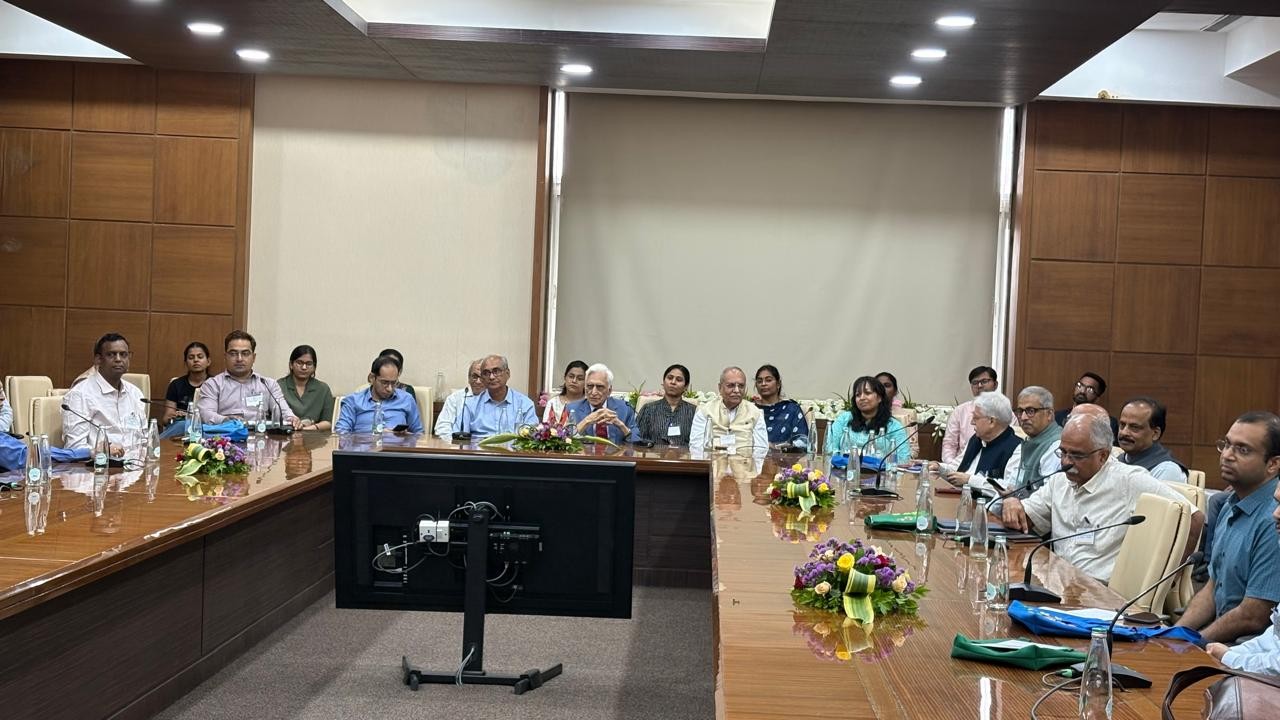
INAE Technology Conclave in progress at IIT Bombay
The first technical session featured a series of expert talks on multiple facets of sustainability in civil infrastructure covering its diverse dimensions. The discussions addressed the growing infrastructure demand and the need for sustainable habitat development, along with the importance of environmental impact assessment and life cycle cost analysis. The session also highlighted innovations in sustainable construction materials and related educational initiatives, as well as perspectives on sustainable design and construction practices. Attention was given to the role of policies and standardization in mainstreaming sustainability, and the relevance of sustainable approaches in achieving Net Zero goals. A global perspective was also shared, emphasizing the potential of the Triple Helix model to build smart and sustainable futures in both Africa and India. Together, these contributions set a comprehensive framework for advancing sustainability in the sector.
The session emphasized the integration of innovative materials, design practices, and policies into mainstream infrastructure development, highlighting global best practices alongside India’s unique challenges. The afternoon session was dedicated to presentations by participants, where young researchers and practitioners showcased their work and shared insights. This interactive session fostered dialogue across academia, industry, and government representatives, ensuring a multi-stakeholder perspective.
The day concluded with a Panel Discussion led by Dr. P.K. Sikdar, joined by participating industry experts. The panel deliberated on the way forward for India’s civil infrastructure sector, emphasizing actionable strategies, cross-sector collaborations, and the role of engineering innovation in achieving sustainability goals. The deliberations at the Conclave highlighted that sustainability must be integrated at every stage of civil infrastructure development, from design and construction to long-term operation and maintenance. Strong policy frameworks, effective standardization, and educational initiatives were identified as essential enablers for mainstreaming sustainable practices. The discussions emphasized that achieving India’s Net Zero goals will require innovations in construction materials, optimization of design, and adoption of life cycle cost analysis. Further, it was underlined that meaningful progress can only be achieved through close collaboration between academia, industry, and government, with the Triple Helix model offering a powerful framework for building smart, resilient, and future-ready infrastructure.
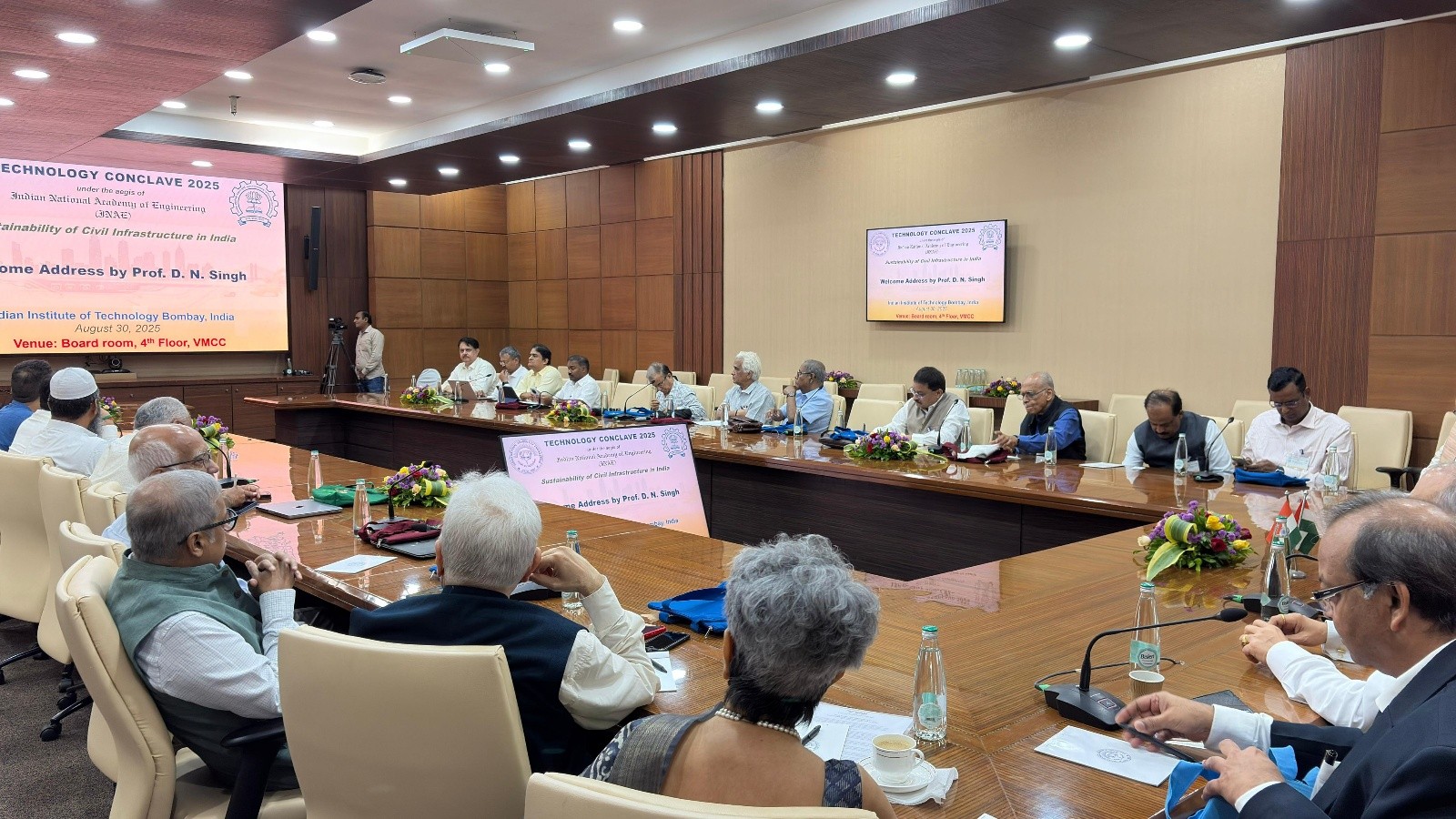
INAE Technology Conclave in progress at IIT Bombay
The INAE Technology Conclave 2025 provided an engaging platform for thought leadership and dialogue on sustainable civil infrastructure. With a rich mix of expert lectures, participant presentations, and a forward-looking panel discussion, the conclave successfully charted directions for advancing sustainable practices in India’s infrastructure development.

