








ACADEMY ACTIVITIES
Academy News (Covering period from April 1, 2026 to July 31, 2026)
Events/Programs conducted by INAE from April to July 2026
40th INAE Foundation Day Function at R&I Park, IIT Delhi on April 18, 2026 (Saturday)
The Indian National Academy of Engineering (INAE) was founded on 20th April, 1987 to promote excellence in Engineering and Technology (E&T) in the country. INAE celebrates this landmark as its Foundation Day, each year, as a landmark day to rededicate itself to the professed goals with an aim to promote excellence in Engineering and Technology (E&T) in the country. On the occasion of 40th Foundation Day, the Indian National Academy of Engineering (INAE) reaffirmed its commitment to advancing the engineering profession in India. The celebrations, held on 18 April 2026 at the R&I Park, Indian Institute of Technology, Delhi, began with a traditional inauguration by the INAE leadership. Mr. JD Patil, President INAE, during his Presidential Address highlighted the invaluable contributions of INAE Fellows, Young Associates, and members in shaping the engineering landscape of the nation.
A highlight of the event was a thought-provoking panel discussion on “Engineering India’s Multi-Modal Future: Synergizing High-Speed Rail, Space Infrastructure, and Industrial Logistics for a Viksit Bharat.” Brief Introduction was given by the Program Moderator, Prof. Indranil Manna, Former President, INAE who steered the discussion with expert Panellists in following areas:
- High Speed Rail by Mr. K Senthilnathan, Executive Vice President and Head Technical Services, Heavy Civil Infra IC, L&T
- Space Infrastructure by Nigar Shaji, Outstanding Scientist (Retd.), URSC, ISRO and
- Manufacturing and Logistics by Prof. Prem Vrat, FNAE, Chairperson, Board of Governors, IIT(ISM) Dhanbad and Pro Chancellor, The NorthCap University).
The event was graced by the esteemed Chief Guest, Dr. Ajai Chowdhry, FNAE, Co-founder of HCL and Chairman, EPIC Foundation, whose insightful address on India’s technological challenges and pathways forward, sparked a lively discussion. INAE affirmed its intent to develop a suggested roadmap with recommendations for addressing these critical issues.
A special felicitation ceremony honoured Fellows elected in 1987—the Academy’s founding year:
- Prof. Prem Krishna, former Professor & Head, Civil Engineering, IIT Roorkee.
- Prof. S. C. Dutta Roy, former Professor, Electrical Engineering, IIT Delhi.
- Mr. Paritosh C. Tyagi, former Chairman, Central Pollution Control Board
Their enduring contributions to engineering and to the Academy continue to inspire future generations.
The event witnessed the presence of several distinguished Fellows, including Dr. Sanak Mishra and Prof Indranil Manna, former Presidents of INAE, Vice Presidents Prof. Santanu Chaudhury, Prof. Sanjay Mittal, Prof. Sivaji Chakravorti, Dr. S. Somanath, Mr. Pradeep Chaturvedi, and Mr. T. Suvarna Raju, along with Young Associates, members, invitees, researchers, and students.
Pictorial Delight of the Foundation Day Celebrations 2026:
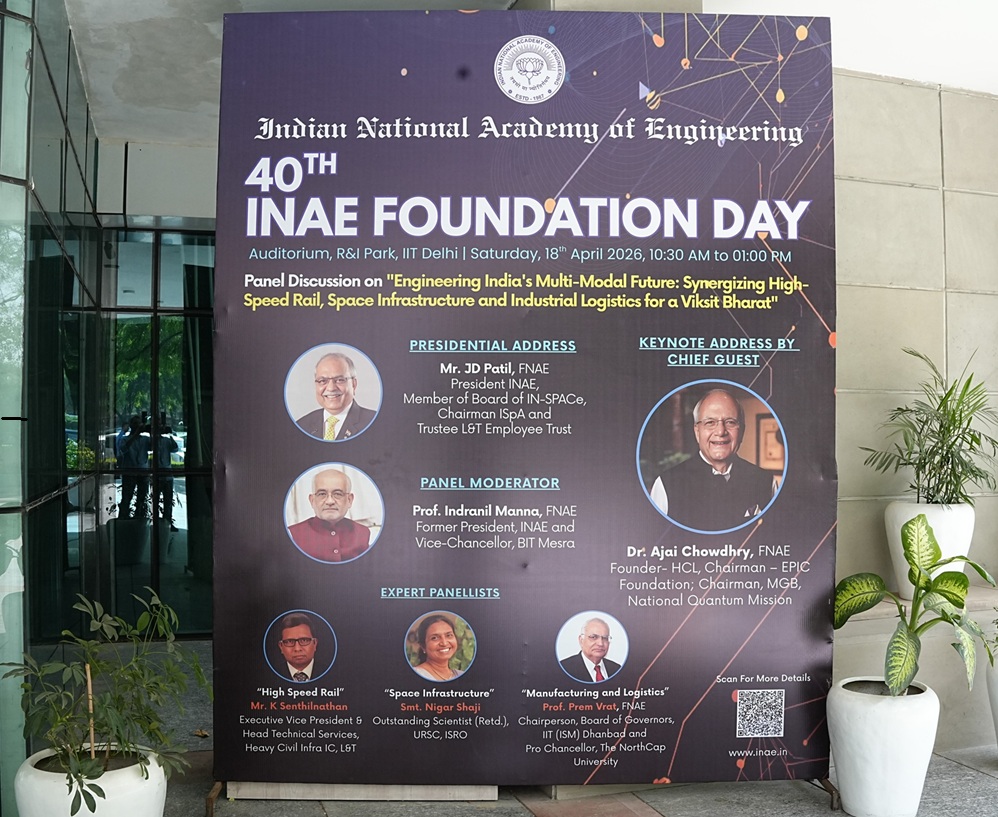 Backdrop of INAE Foundation Day 2026 Celebrations
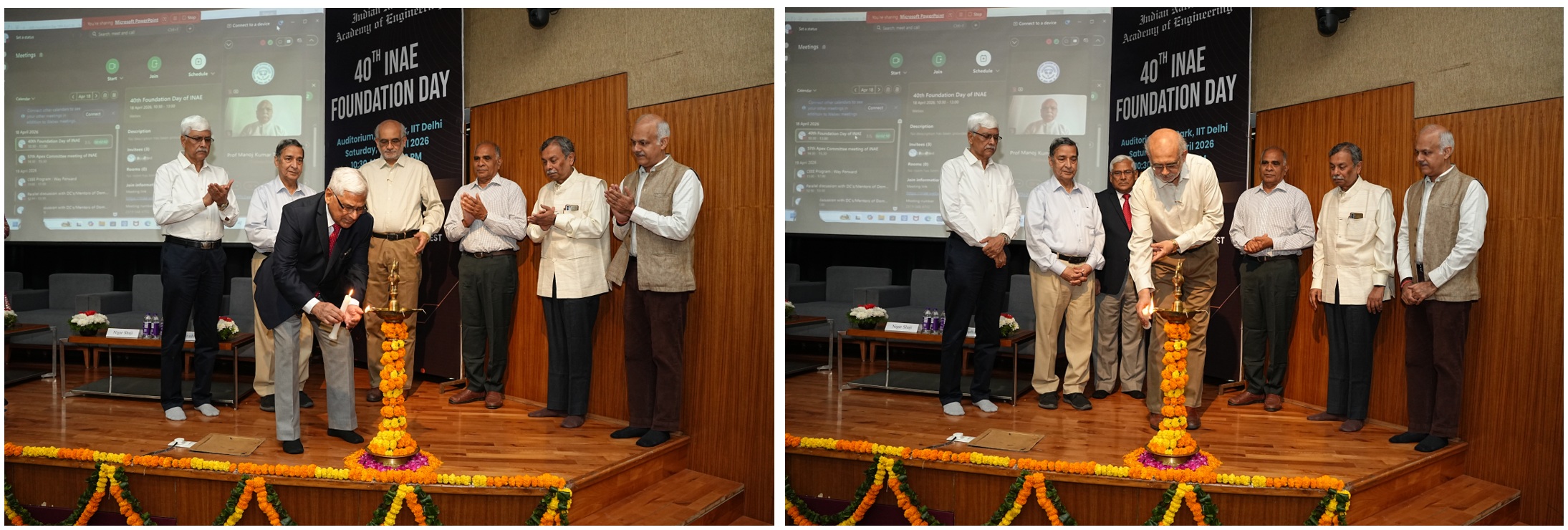 Lighting of the lamp by Former INAE Presidents – Dr Sanak Mishra & Prof Indranil Manna
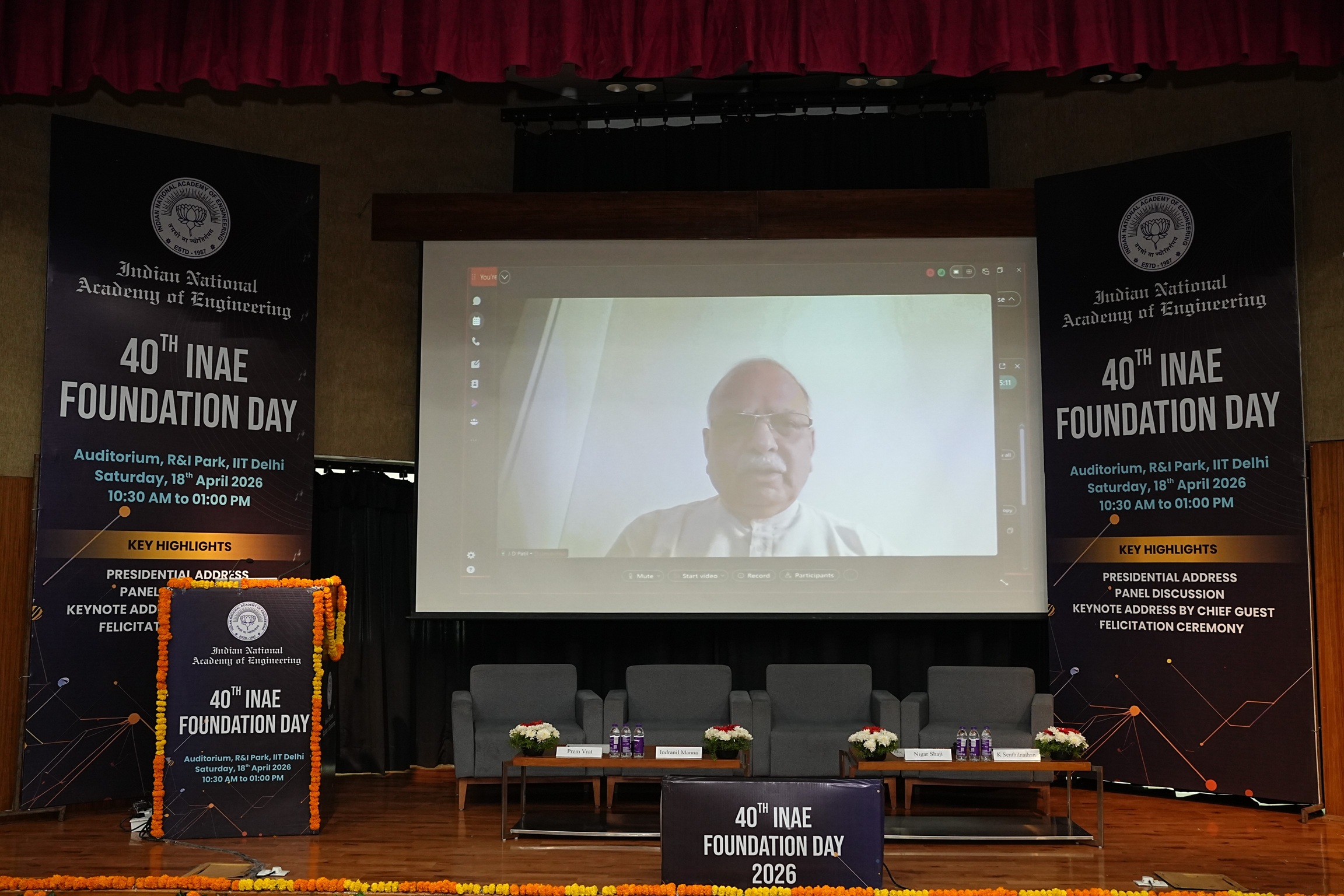 Mr JD Patil, President, INAE Delivering Presidential Address Online
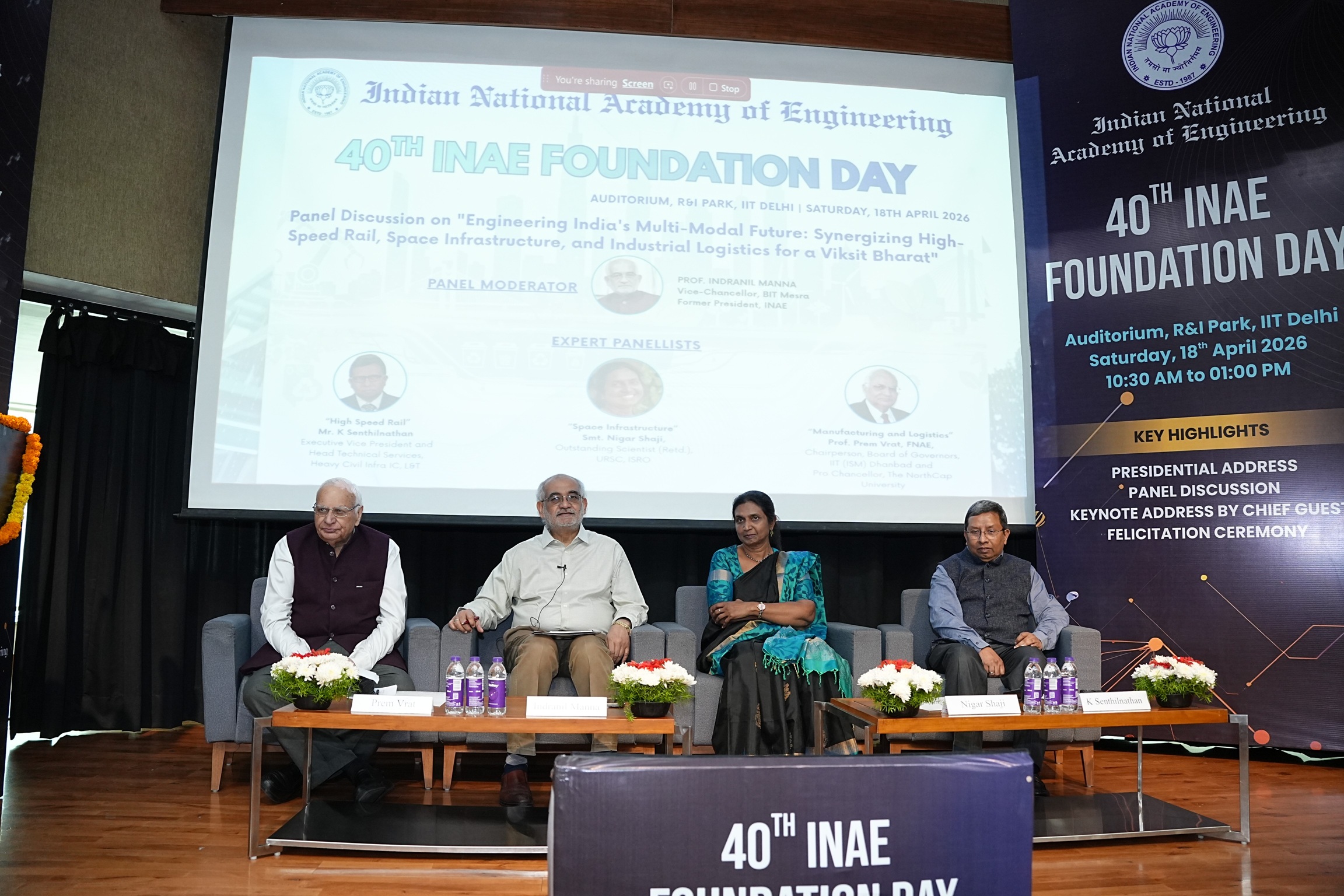 Panel Discussion in Progress. (L to R)- Prof Prem Vrat, FNAE; Prof Indranil Manna, Former President, INAE; Smt Nigar Shaji and Mr. K Senthilnathan
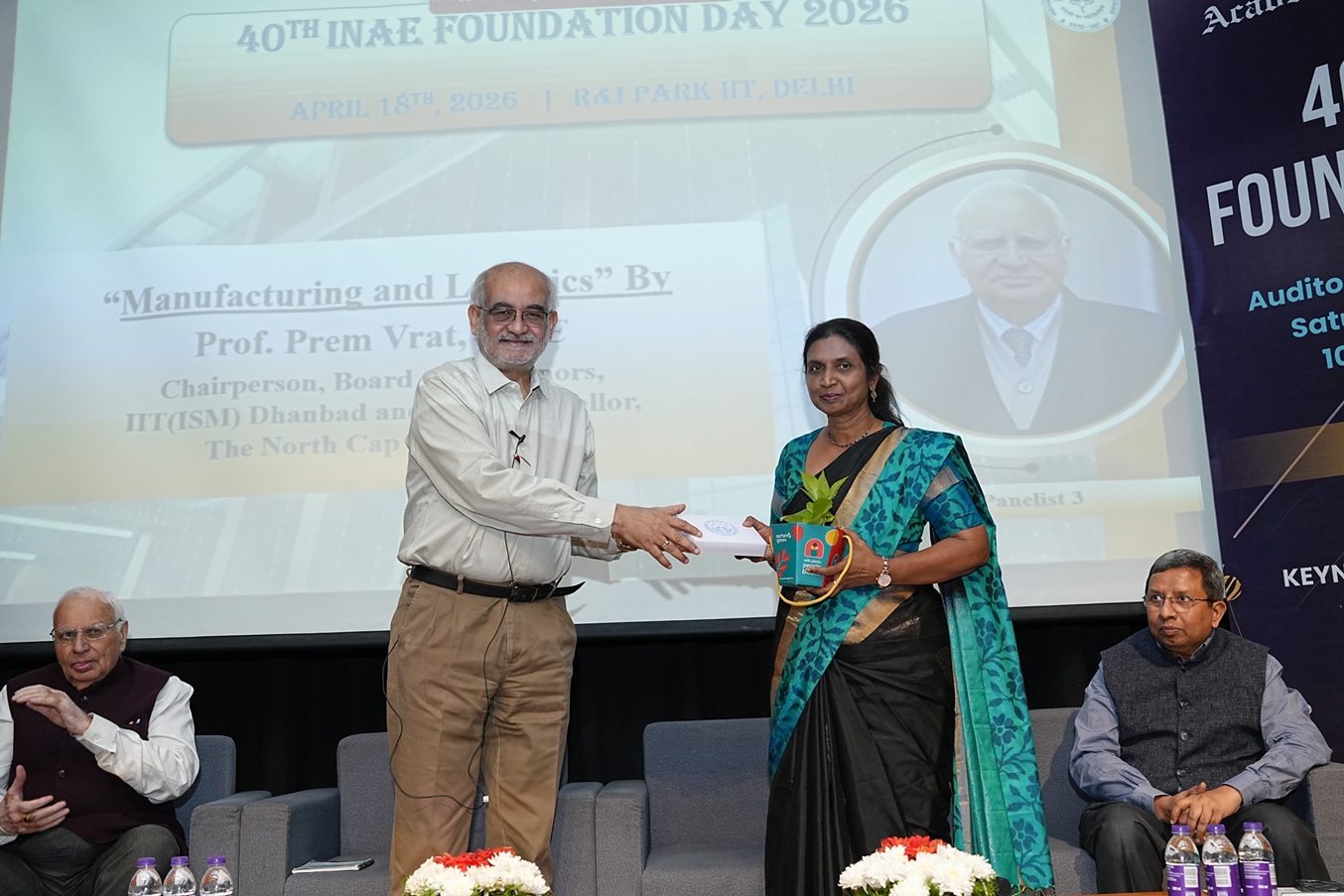 Felicitation of Panellist- Smt. Nigar Shaji by Prof Indranil Manna
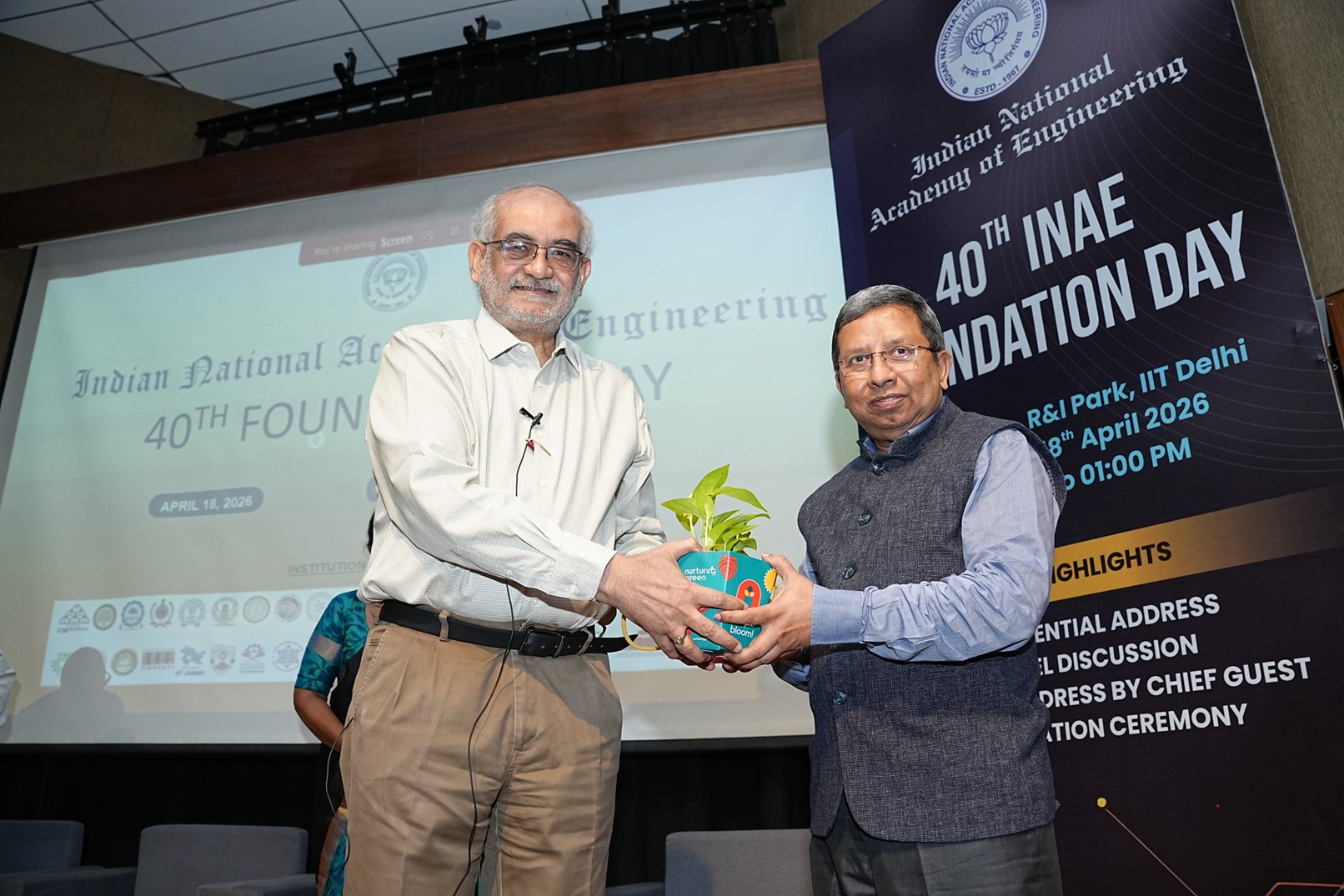 Felicitation of Panellist- Mr. K Senthilnathan by Prof Indranil Manna
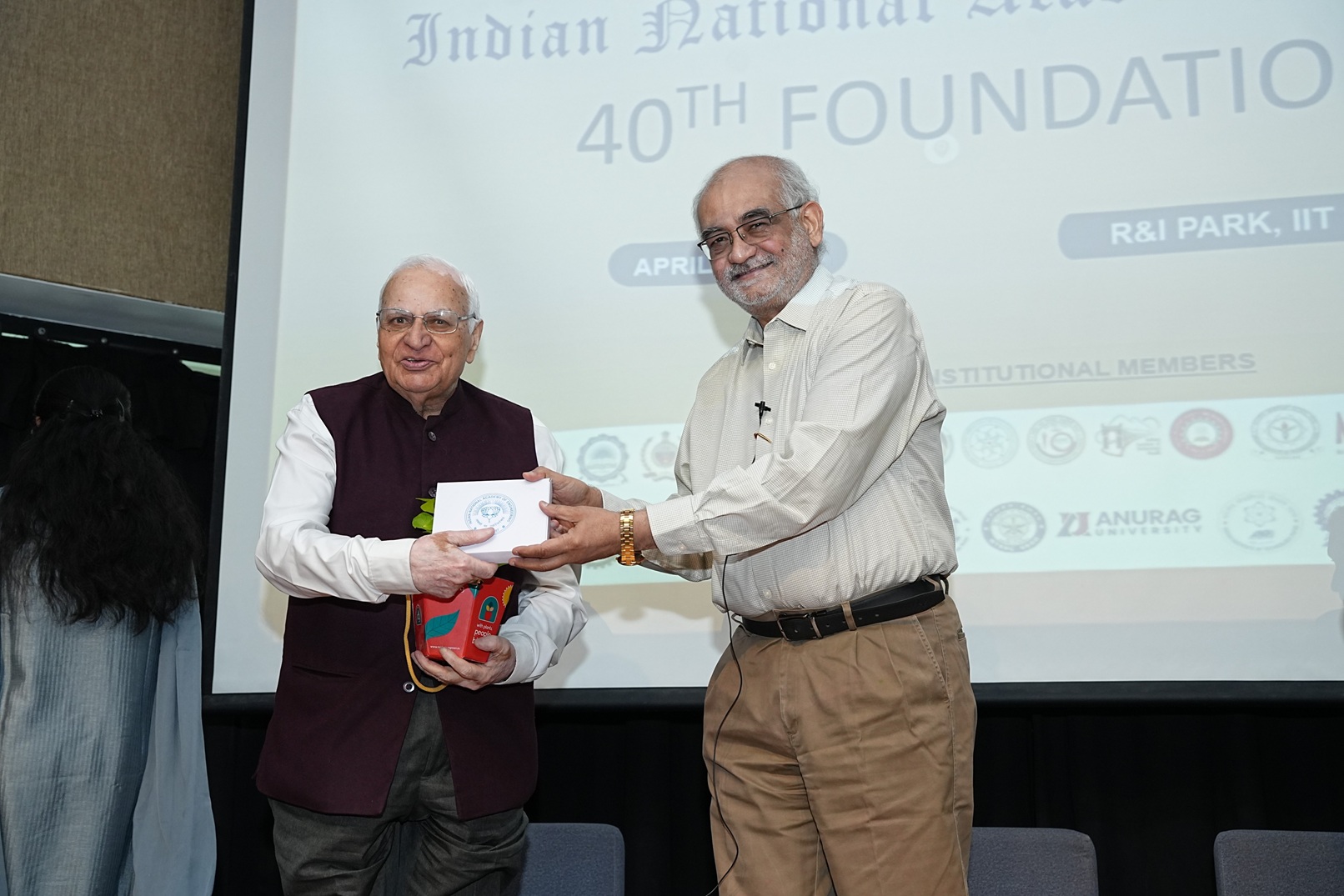 Felicitation of Panellist- Prof Prem Vrat, FNAE by Prof Indranil Manna
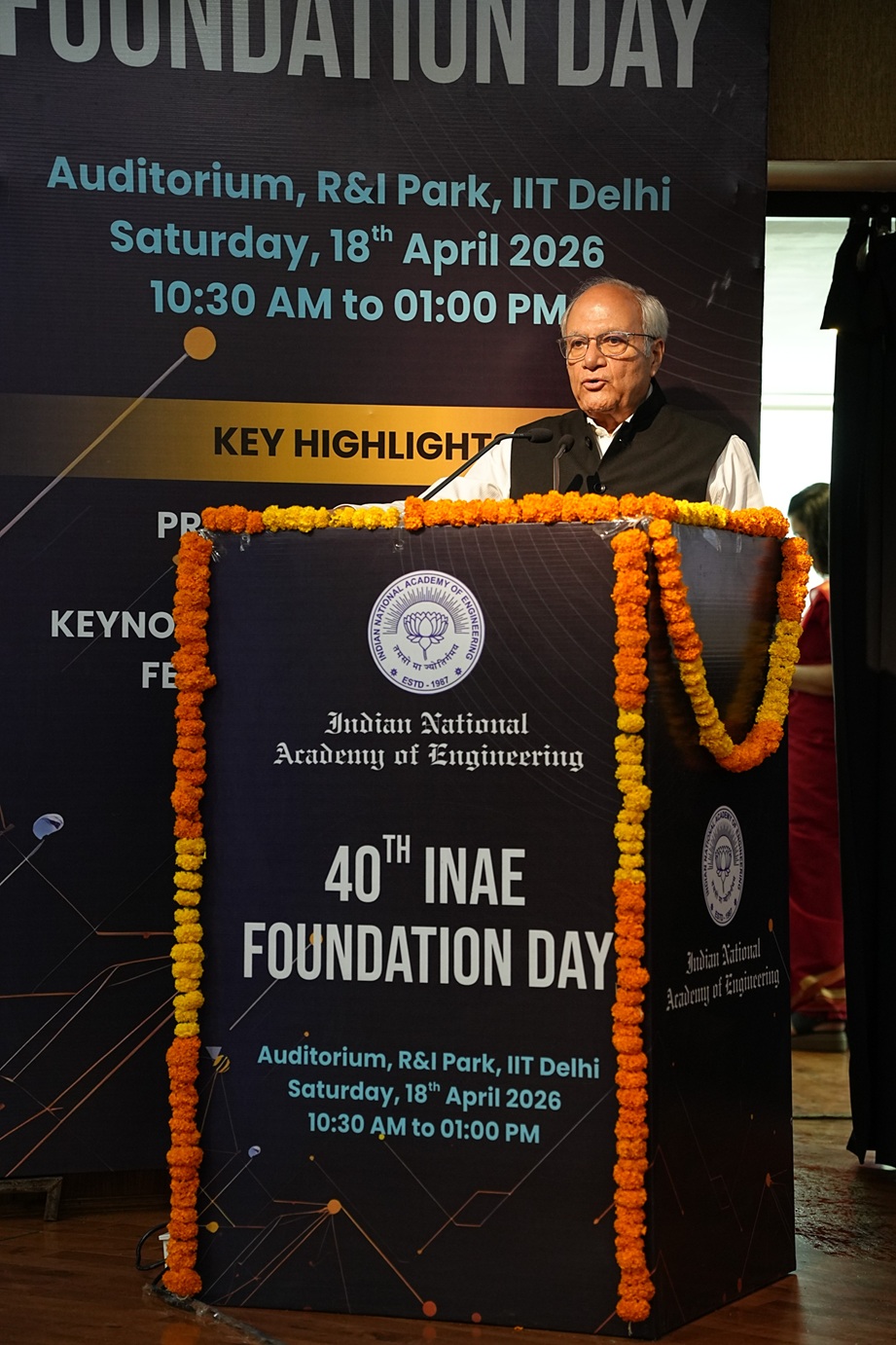 Address by Chief Guest – Dr Ajai Chowdhry, FNAE
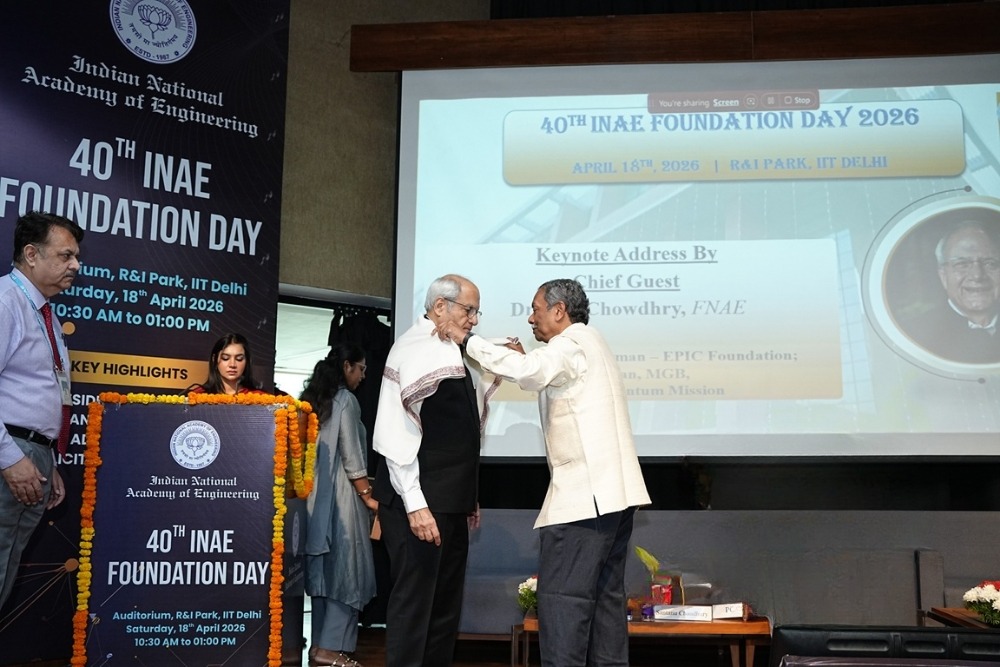 Felicitation of Chief Guest – Dr Ajai Chowdhry, FNAE by Prof Santanu Chaudhury, Vice President, INAE
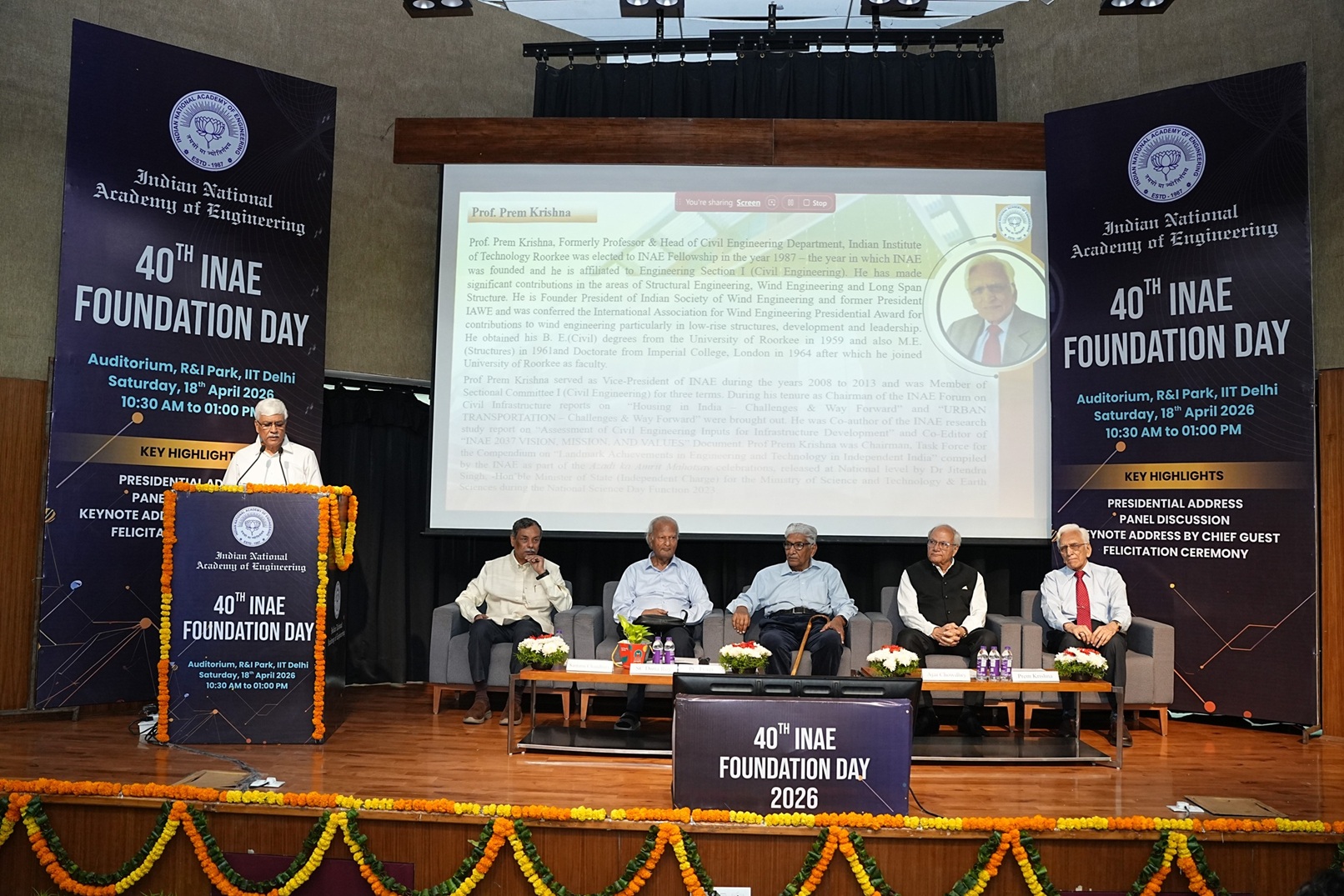 Introduction by Prof Sivaji Chakravorti, Vice President, INAE during Felicitation Session
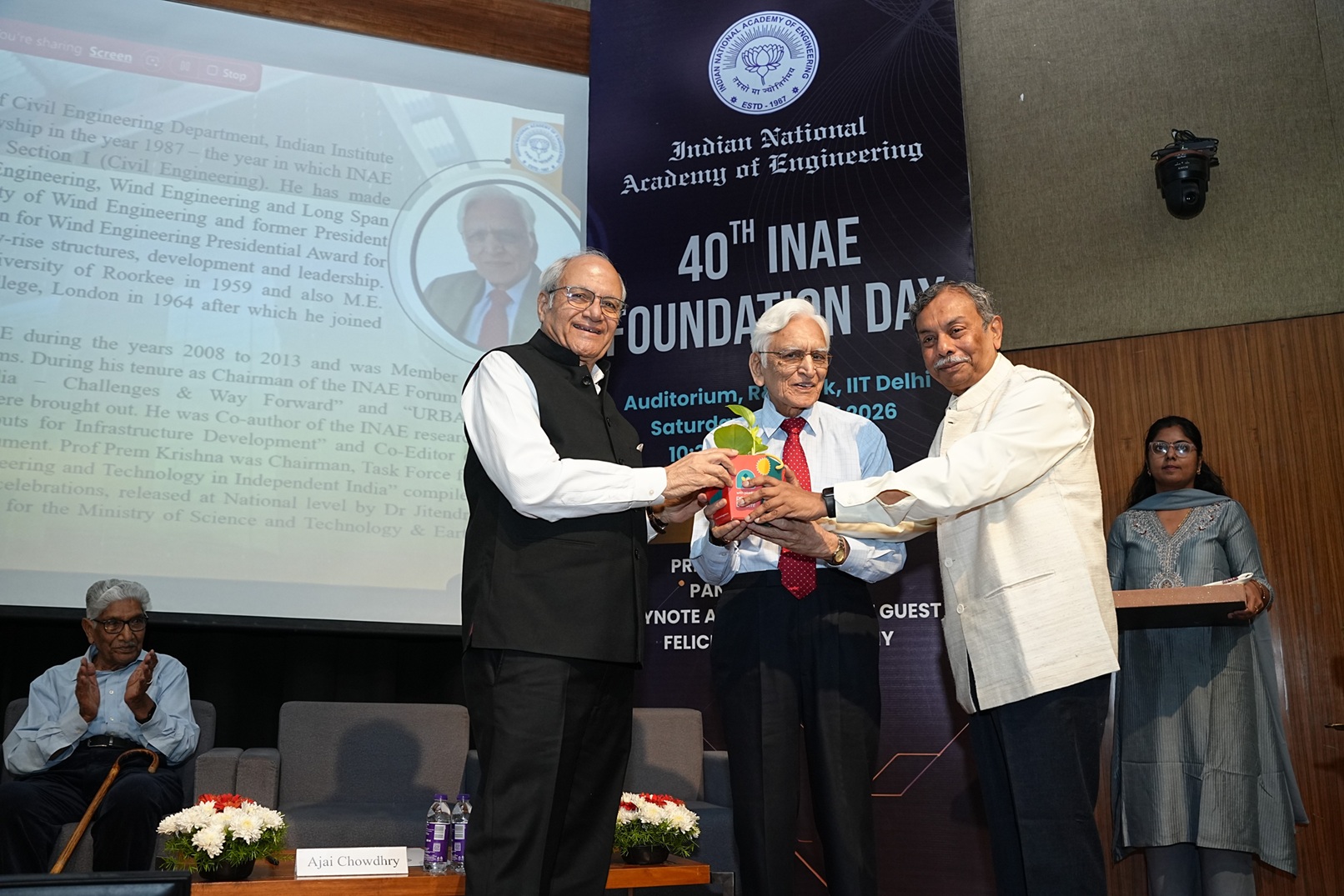 Felicitation of Prof Prem Krishna, former Vice President, INAE (centre) by Dr Ajai Chowdhry, FNAE (left) and Prof Santanu Chaudhury, Vice President, INAE (Right)
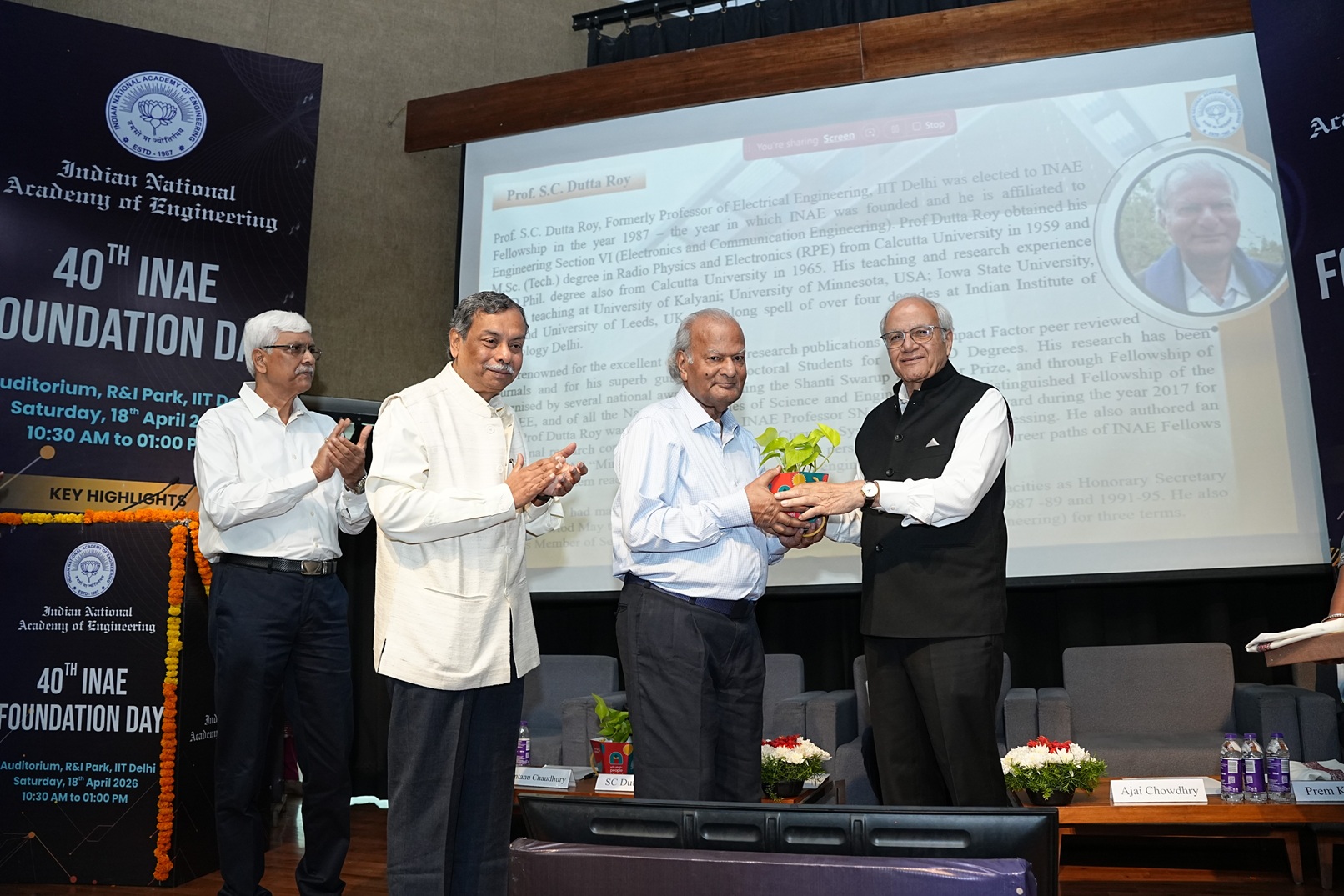 Felicitation of Prof SC Dutta Roy, FNAE by Prof Sivaji Chakravorti and Prof Santanu Chaudhury, Vice Presidents of INAE and Dr Ajai Chowdhry, FNAE (extreme right)
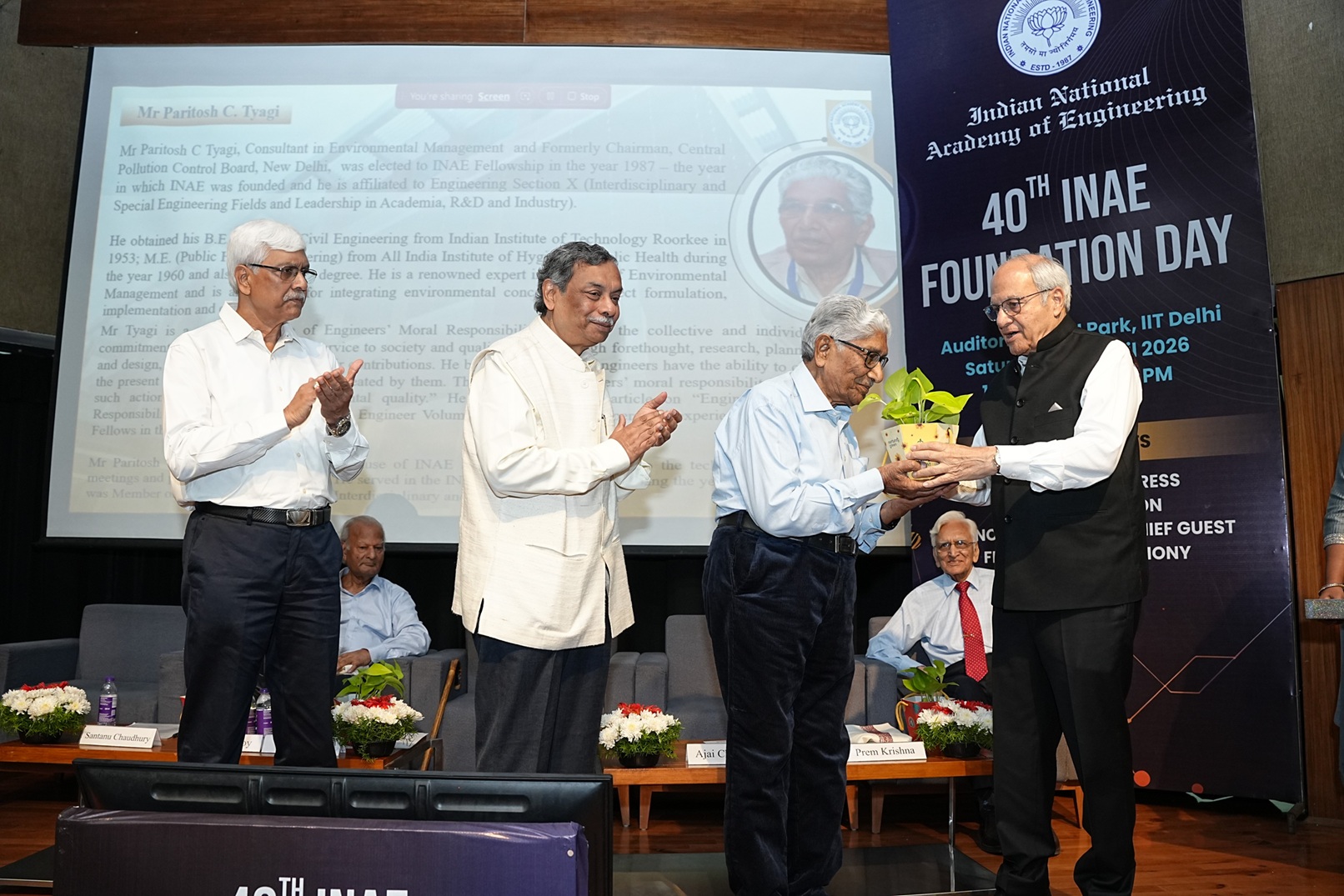 Felicitation of Mr. Paritosh C. Tyagi, FNAE by Prof Sivaji Chakravorti and Prof Santanu Chaudhury, Vice Presidents of INAE and Dr Ajai Chowdhry, FNAE (extreme right)
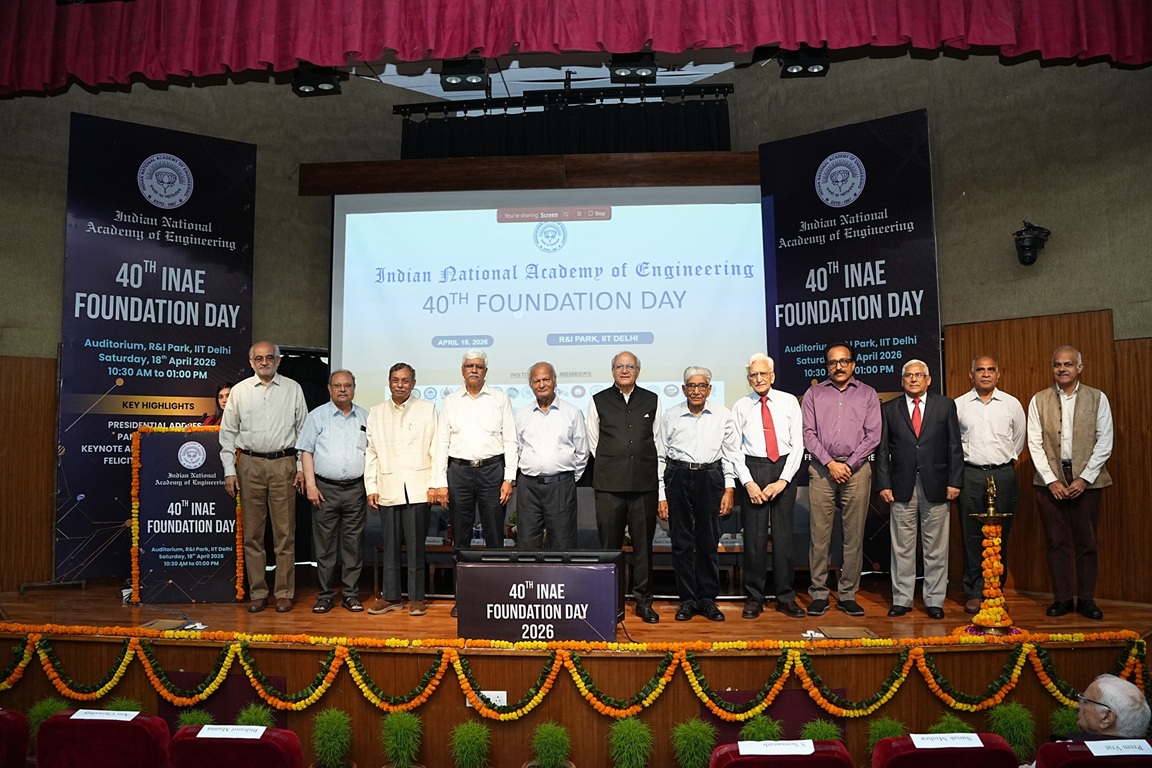 Group Photographs of Dignitaries during Foundation Day 2026 Celebrations
National Technology Day Celebrations 2026 by INAE
INAE celebrated National Technology Day 2026 by organizing a Distinguished Lecture by Dr Anil Kakodkar, FNAE, Former President, INAE; Chancellor, Homi Bhabha National Institute; Chairman, Rajiv Gandhi Science & Technology Commission, Govt. of Maharashtra; Formerly Director, BARC, Mumbai; Formerly Chairman, Atomic Energy Commission and Secretary, Department of Atomic Energy, Mumbai on “Thorium for India’s Energy Independence” on May 15, 2026 (online). Mr JD Patil, President, INAE delivered the Welcome Address and introduced the distinguished speaker and highlighted his key contributions in the India’s advancement on nuclear energy as well as the advancement of thorium utilization for India’s energy independence. He also pioneered the design of the advanced heavy water reactor which will power the whole country for decades. Dr Anil Kakodkar in his lecture mentioned that the country has have plenty of thorium and only modest quantities of Uranium which is the basis of our three-stage program. He opined that transition from uranium to thorium is a priority. A number of new developments beyond PFBR would be necessary for the growth of Thorium irradiated platforms. These include a set of reactor and nuclear fuel cycle technologies based on mixed oxide, metallic and Thorium fuels. Start of Thorium utilization at scale is thus three to four decades away. He mentioned the benefits of deployment of thorium and the technological advancements required for the same. In his closing statement he mentioned that “energy security is about eliminating vulnerabilities in meeting our energy needs. Realizing energy independence should be the end objective. Collaboration designed to be a win-win situation for the participating parties should be preferred over mere vendor buyer relationship”. The Distinguished Lecture was attended by over 225 delegates online and closed with deep gratitude for the esteemed Speaker on behalf of INAE and the event was an astounding success.
INAE Technology Conclave 2026 held on 11–12 July 2026 at Siksha ‘O’ Anusandhan (SOA) University, Bhubaneswar
Introduction
The Indian National Academy of Engineering (INAE), in collaboration with Siksha ‘O’ Anusandhan (SOA) University, successfully organised the INAE Technology Conclave 2026 on July 11–12, 2026 at the SOA University campus in Bhubaneswar. The two-day INAE member centric event, the conclave brought together Fellows and Members of INAE, distinguished academicians, industry leaders, researchers, policy makers, innovators, entrepreneurs and young engineers to deliberate on emerging technologies, engineering innovation and national technological priorities.
Designed as a INAE membership centric event with a multidisciplinary platform for knowledge sharing and collaboration, the conclave featured distinguished plenary lectures, thematic panel discussions, technical presentations, innovation showcases, networking opportunities and cultural events. A significant feature of this year’s conclave was the introduction of dedicated sessions for the presentation of extended abstracts by INAE Members and the wider engineering community, along with a special Start-up Showcase and Innovation Track that highlighted engineering entrepreneurship and technology commercialisation. The conclave also focused on a dedicated session of felicitation of newly selected members of INAE. These additions substantially broadened participation and strengthened the conclave’s role as a platform connecting research, innovation and industry.
Inaugural Session
The conclave commenced with a formal inaugural ceremony attended by eminent personalities from academia and industry. The programme began with the ceremonial lighting of the lamp and rendition of the National Anthem.
The delegates were welcomed by Prof. Pradipta Kumar Nanda, Vice Chancellor, SOA University. The inaugural session also featured addresses by Prof. Damodar Acharya, Chairman, International Advisory Board, SOA University and Chairman, INAE Bhubaneswar Chapter; Prof. Indranil Manna, Former President, INAE and Vice Chancellor, BIT Mesra; and Shri Manoranjan Ram, Senior Vice President, Danieli India.
Delivering the Presidential Address, Mr. J. D. Patil, President, INAE, highlighted the Academy’s commitment to fostering engineering excellence, interdisciplinary collaboration and innovation-driven national development. The inaugural keynote address was delivered by Dr. Ashok Kumar Panda, Chairman and Managing Director, SAIL, who emphasised the pivotal role of engineering and technology in strengthening India’s industrial competitiveness and achieving sustainable growth.
The inaugural session concluded with the felicitation of guests and a vote of thanks proposed by Prof. S. R. Samantaray, Dean (PG & Research Programmes), IIT Bhubaneswar and Secretary, INAE Bhubaneswar Chapter.
Technical Sessions
The technical programme was structured around four thematic sessions spread over the two days of the conclave, bringing together eminent experts from academia, industry and government to deliberate on technologies of strategic importance to the nation. Through distinguished plenary lectures and thought-provoking panel discussions, the sessions provided participants with valuable insights into emerging engineering trends, technological innovations and national priorities while promoting interdisciplinary dialogue and industry-academia collaboration.
The technical deliberations commenced with an online plenary lecture on “Nuclear Energy with Distributed Small and Medium Size Reactors” by Mr. Bhuban Chandra Pathak, Chairman and Managing Director, Nuclear Power Corporation of India Limited (NPCIL), who highlighted the transformative role of Small Modular Reactors in meeting India’s future energy security requirements. This was followed by a plenary lecture on “Coal Gasification, Fertilizers and Coal-based Chemicals” delivered by Prof. G. D. Yadav, FNAE, Bhatnagar Fellow (CSIR), Emeritus Professor of Eminence and Former Vice Chancellor, Institute of Chemical Technology, Mumbai. He presented the latest developments in coal gasification technologies and their potential for enhancing resource utilisation and promoting sustainable industrial growth.
A special session on engineering entrepreneurship featured Mr. Jayant S. Karve, Director and CEO, RCupe Lifesciences Pvt. Ltd., Bengaluru, recipient of the INAE Young Innovator and Entrepreneur Award, who shared his entrepreneurial journey and demonstrated how innovative engineering solutions can be successfully translated into commercially viable technologies.
The second technical session commenced with an online plenary lecture on “Next Generation Communications” by Prof. U.B. Desai, FNAE, Chancellor, Anurag University and Founding Director, IIT Hyderabad, who discussed emerging communication technologies and their implications for India’s digital future. This was followed by an engaging panel discussion on Transportation and Logistics, organised and moderated by Prof. Manoj Kumar Tiwari, FNAE, Director, IIM Mumbai. The distinguished panellists included Prof. Gita Krishnan, Department of Civil Engineering, IIT Madras; Prof. Debjit Roy, Centre for Transportation and Logistics, IIM Ahmedabad; Shri Pushkar Singh, Founder and CEO, LetsTransport, Bengaluru; and Mr. Rajiv Agrawal, Former CEO, Essar Ports. The panel deliberated on multimodal transportation systems, intelligent logistics, digital supply chains and technological interventions required to improve efficiency and sustainability in India’s logistics sector.
The third technical session began with a plenary lecture on “Semiconductor Technologies” by Prof. Shanthi Pavan, FNAE, NT Alexander Institute Chair Professor, IIT Madras, who provided an overview of the rapidly evolving semiconductor ecosystem and India’s opportunities in chip design and manufacturing. The session also included an insightful panel discussion on Healthcare Technologies, organised and moderated by Prof. Suman Chakraborty, FNAE, Director, IIT Kharagpur. The distinguished panellists comprised Dr. Dilip Kumar Chekuri, CEO, AIC-AMTZ Medi Valley; Dr. Shesheer Kumar, Huwel Life Sciences; Dr. Ashok Choudhury, Institute of Liver and Biliary Sciences (ILBS), New Delhi; and Dr. Suchitra Markan, Scientist F, Indian Council of Medical Research (ICMR), New Delhi. The panel explored technological innovations in medical devices, diagnostics, healthcare delivery systems and translational research aimed at improving healthcare outcomes.
Participants also benefited from a special address by Prof. A.B. Pandit, FNAE, Vice Chancellor, Institute of Chemical Technology, Mumbai, who shared his perspectives on the evolving landscape of chemical engineering in India and how it has started impacting lives even more. He gave reference of an article co-authored with Prof MM Sharma, which formed the basis of his distinguished talk.
The final technical session featured a plenary lecture on “Critical Minerals and Rare Earths” by Dr. Rabi Narayan Patra, Former Chairman and Managing Director, Indian Rare Earths Limited (IREL), who discussed the strategic importance of critical minerals in supporting India’s clean energy transition, advanced manufacturing and national security. This was followed by a panel discussion on “Reduction and Diversification of Energy Inputs in Energy Intensive Industries”, organised and moderated by Mr. Sashi Sekhar Mohanty, Former Director, SAIL and Essar Steel. The panellists included Mr. Biwaranjan Pallai, Executive Director (Works), Rourkela Steel Plant, SAIL; Mr. Bibhu Mishra, Advisor, Hindalco Industries; Shri Naveen Ahlawat, President and Head – Sustainability & Decarbonisation, Jindal Steel Ltd.; and Mr. V. Upadhyay, Head, Vedanta Aluminium, Jharsuguda. The discussion focused on industrial decarbonisation, energy efficiency, adoption of cleaner technologies and diversification of energy sources to improve sustainability and competitiveness in energy-intensive industries.
Collectively, the plenary lectures and panel discussions reflected the multidisciplinary character of the Technology Conclave and provided participants with valuable perspectives on frontier technologies, engineering innovation and industrial transformation. The quality of the deliberations, coupled with the active participation of experts from academia, industry and government, significantly enriched the technical content of the conclave and reinforced its objective of promoting engineering excellence and collaborative solutions to address India’s technological priorities.
Distinguished Addresses
The conclave also featured two distinguished pre-dinner lectures delivered virtually by eminent national leaders. Prof. Abhay Karandikar, FNAE, Member, NITI Aayog, Government of India, shared his perspectives online on India’s evolving technology landscape and the importance of engineering-led innovation in achieving national development goals as well as progress being made by ANRF in the Research, Development and Innovation (RDI) Fund, which aligns ANRF to support startups and industry investments in deep tech and scalable real-world solutions.
This was followed by an online address from Dr. Binay Kumar Das, FNAE, Director General, Electronics and Communication Systems, DRDO, who highlighted strategic technologies and the growing importance of indigenous research and technological capability in national security.
Both lectures were widely appreciated by the participants.
Extended Abstract Presentation Sessions
One of the defining features of the INAE Technology Conclave 2026 was the introduction of Extended Abstract Presentation Sessions, providing a dedicated platform for INAE Members and engineers from academia, industry and research organisations to present their recent research and technological innovations.
Parallel technical sessions were organised throughout the two-day conclave covering a broad spectrum of engineering disciplines, including Civil Engineering, Chemical Engineering, Mechanical Engineering, Electrical Engineering, Electronics and Communication Engineering, Computer Science and Information Technology.
The presentations showcased cutting-edge research, novel engineering solutions, applied technologies and industrial case studies addressing contemporary engineering challenges. The sessions facilitated meaningful interaction between presenters and experts, encouraging technical discussions, constructive feedback and opportunities for future collaboration.
The enthusiastic participation in these sessions demonstrated the growing research capability within the engineering community and reflected the Academy’s commitment to providing a national platform for dissemination of high-quality engineering research. The Extended Abstract Sessions substantially enhanced the academic content of the conclave while creating opportunities for members, researchers and practicing engineers to engage with Fellows of the Academy.
Start-up Showcase and Innovation Track
Another major highlight of the conclave was the Start-up Showcase and Innovation Track, which underscored INAE’s commitment to promoting innovation-driven entrepreneurship and facilitating the translation of engineering research into commercially viable technologies.
In addition, a dedicated Start-up Display was organised throughout the conclave, providing technology start-ups with an opportunity to exhibit their products, prototypes and innovative solutions before an audience comprising industry leaders, researchers, investors and policy makers.
The Innovation Track stimulated productive interactions between innovators, researchers and industry representatives, highlighting the importance of engineering entrepreneurship in addressing societal challenges, creating high-value enterprises and contributing to the vision of an innovation-led economy. The sessions also inspired young engineers to pursue entrepreneurial ventures and demonstrated the increasing contribution of technology start-ups to India’s engineering ecosystem.
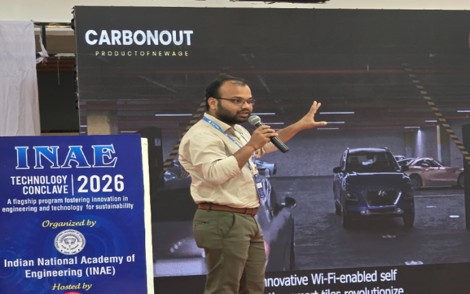
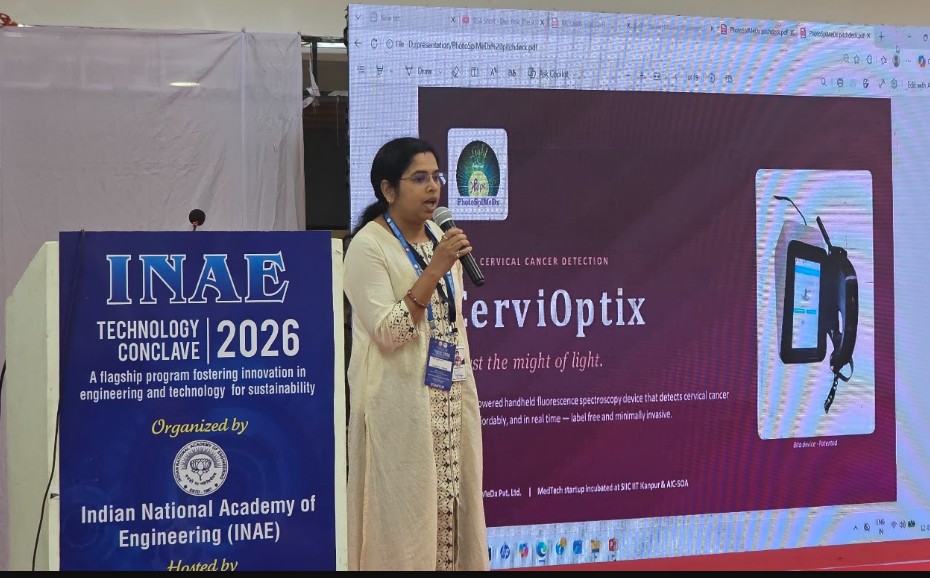
The Startup Showcase Pavilion was inaugurated by Dr. Ashok Panda, Chairman & Managing Director, Steel Authority of India Limited (SAIL), in the esteemed presence of Dr. Pradipta Kumar Nanda, Vice Chancellor, SOA Deemed to be University; Prof. Damodar Acharya, Former Chairman, AICTE & Former Director, IIT Kharagpur; Prof. Manas Kumar Mallick, Director, ITER & Director, AIC-SOA Foundation; Dr. B.K. Sahu, Senior Regional Manager & Head, NRDC Outreach Office; Dr. Ashok Kumar Choudhury, Additional Professor, ILBS; Dr. Pravakar Sahoo, Programme Director, Atal Innovation Mission, NITI Aayog; Mr. Rashmi Ranjan Mohapatra, CEO, World Skill Center, Government of Odisha; Prof. A.B. Pandit, Vice Chancellor, ICT Mumbai; Prof. Ravindra V. Adivarekar, Director, ICT Bhubaneswar; Mrs. Lopa Mishra Jana, CEO, AIC-SOA Foundation; Prof. Indranil Manna, Former President, INAE & Vice Chancellor, BIT Mesra; and Mr. J.D. Patil, President, INAE & Member of the Board of IN-SPACe.
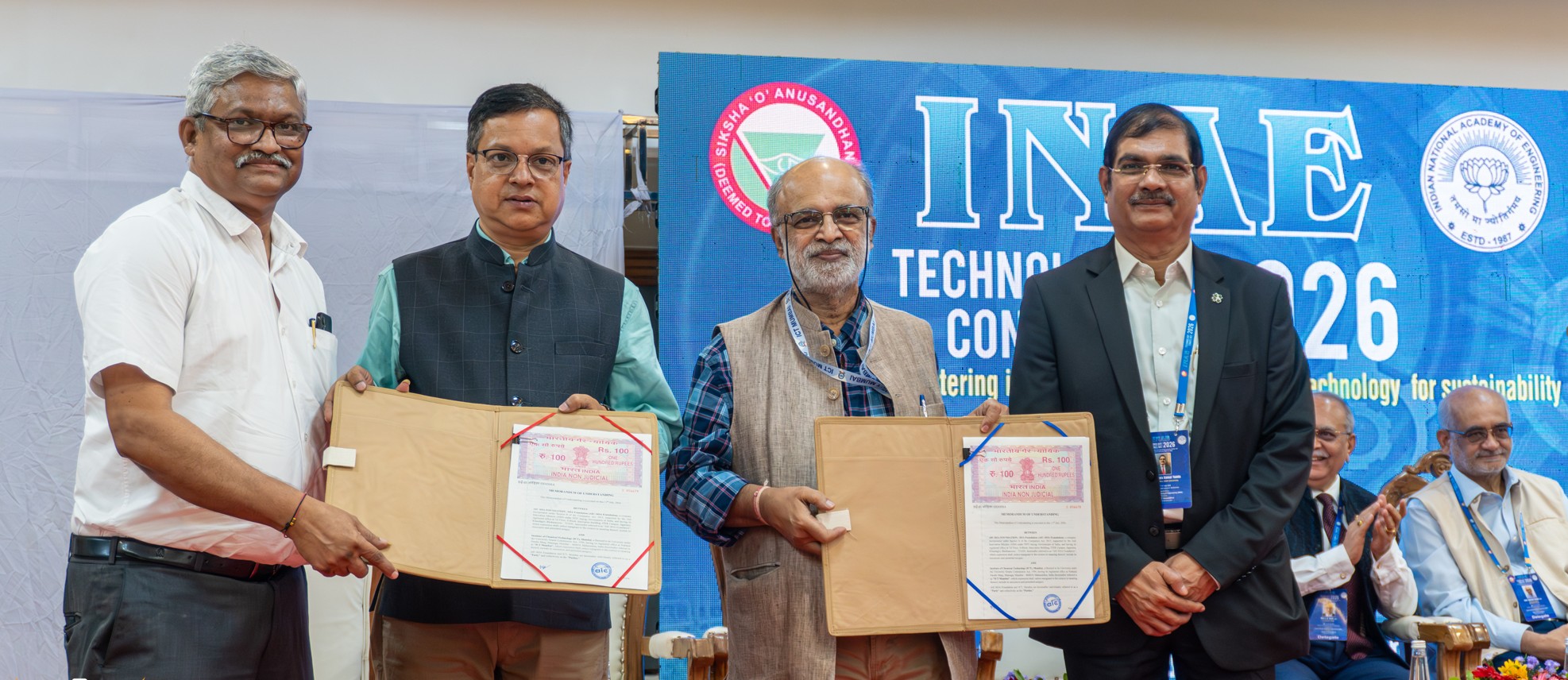
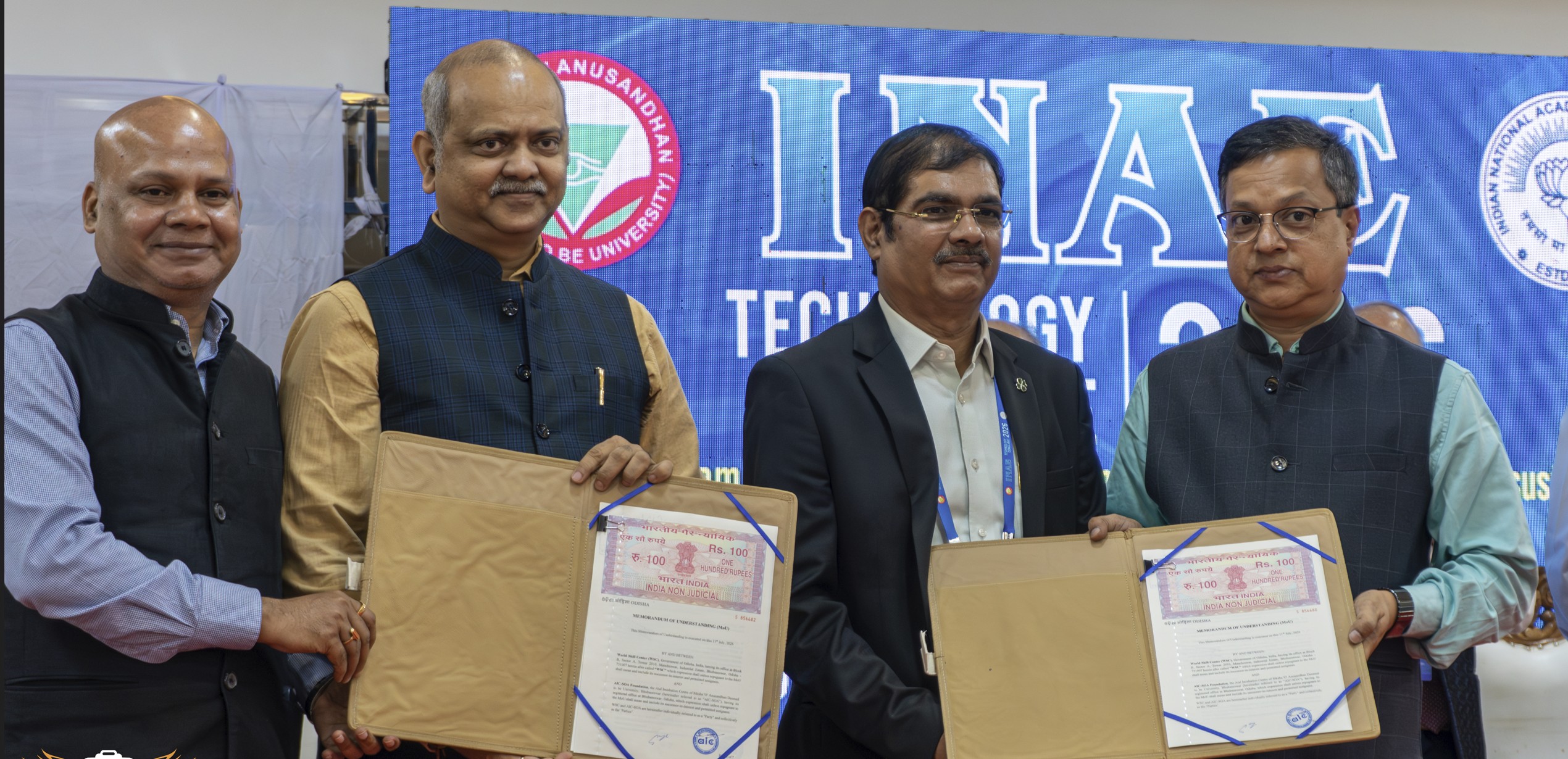
A significant highlight of the inaugural session was the signing of two memorandum of Understanding (MoUs). AIC-SOA Foundation signed a MoU with the World Skill Center, Bhubaneswar, to collaborate on skill development, entrepreneurship promotion, innovation and industry-oriented capacity building. Another MoU was signed between AIC-SOA Foundation and ICT Mumbai to foster joint initiatives in research, innovation, technology commercialization, startup incubation, entrepreneurship development and academic collaboration.
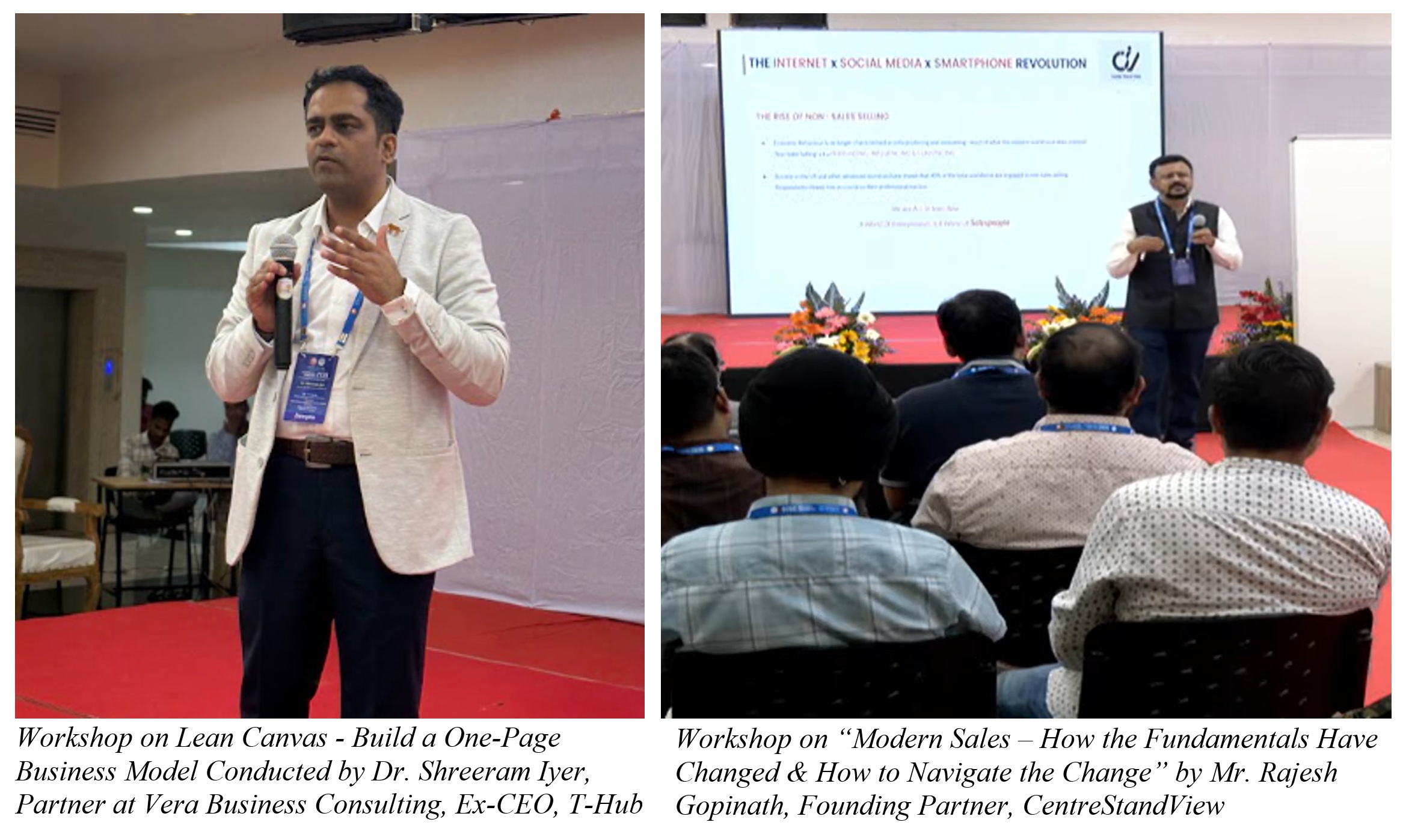
The conclave featured two highly engaging workshops designed to strengthen entrepreneurial capabilities:
- Lean Canvas – Build a One-Page Business Model, led by Dr. Shreeram Iyer, Partner, Vera Business Consulting LLP, equipped participants with practical tools to build sustainable and scalable business models.
- Modern Sales – How the Fundamentals Have Changed & How to Navigate the Change, conducted by Mr. Rajesh Gopinath, Founding Partner, CenterStandView Consulting LLP, provided valuable insights into customer acquisition, sales strategy, market positioning and business growth in today’s dynamic marketplace.
Around 40 technology startups from Odisha showcased cutting-edge solutions across Artificial Intelligence, Healthcare, Robotics, Agriculture, Clean Technology, Advanced Manufacturing and Digital Technologies. The exhibition attracted significant appreciation from dignitaries, investors, industry experts and delegates, highlighting the remarkable quality of innovation emerging from the region.
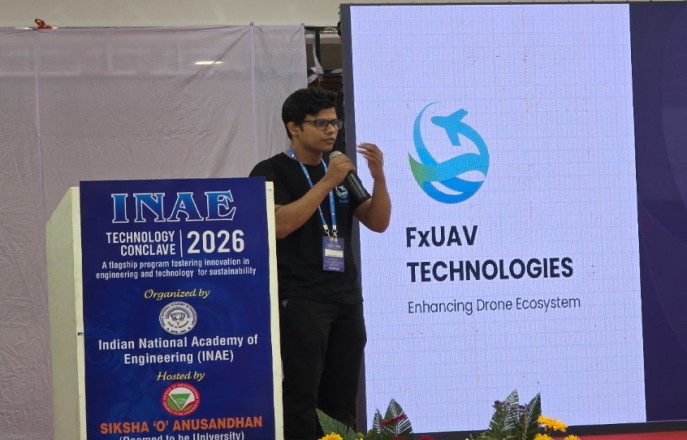
The Startup Pitching & Demonstration Session provided startup founders with a platform to showcase their innovative solutions before an esteemed jury comprising experts from academia, industry, and the startup ecosystem. The session featured technologies with strong commercial potential and the ability to create meaningful societal impact. Following the evaluations, FxUAV Technologies Private Limited, Vayuraksha Kinetics Private Limited, and Team IRA emerged as the winners in this segment.
Recognition of New INAE Members
An important feature of the conclave was the felicitation of newly inducted Individual Members of INAE. The ceremony recognised the expanding community of engineering professionals associated with the Academy and reaffirmed INAE’s commitment to nurturing emerging engineering talent and strengthening professional engagement across academia, industry and research institutions.
Networking and Cultural Programme
The conclave also provided several opportunities for informal interaction and professional networking through tea breaks, working lunches and an evening cultural programme followed by dinner. These interactions enabled participants from diverse disciplines and organisations to exchange ideas, explore collaborative opportunities and strengthen professional relationships beyond the formal technical sessions.
Valedictory Session
The conclave concluded with a valedictory session addressed by distinguished dignitaries including Prof. Santanu Choudhury, Vice President, INAE as the Chief Guest; Prof. Damodar Acharya; Prof. S. R. Samantaray; Dr. Ramanuj Narayan, Director, CSIR-IMMT, Bhubaneswar. A formal vote of thanks was presented by Lt. Col. Shobhit Rai (Retd.), Deputy Executive Director, INAE acknowledging the role of Chief Patrons, Patrons, various organizing Committees, student volunteers at SOA University and partner institutes as well as sponsors of the event as well as distinguished speakers and delegates.
The speakers appreciated the quality of the technical deliberations, the active participation of delegates and the successful introduction of the Extended Abstract Presentation Sessions and the Start-up Showcase. The top three winners of the best start up were announced namely FxUAV Technology Pvt Ltd, Vayuraksha Kinetics Pvt Ltd and IRA, as well as best paper in each of the six engineering disciplines were also announced which were Mr Neeraj Kumar from DRDO in Civil Engineering, Dr Rudranarayan Pradhan from Odisha Institute of Technology & Research, in electrical engineering, Ms Amrita Bose from IIT Kharagpur in CS &IT, Er Indranil Aich from Aich Appraisers Auctioneers & Valuers in Mechanical engineering, Prof Gargi Das of IIT Kharagpur in Chemical engineering and Prof S Indu in Electronics & Communications of DTU, New Delhi and felicitated. They emphasised the need for continued collaboration among academia, industry, government and entrepreneurs to accelerate engineering innovation for national development.
Conclusion
The INAE Technology Conclave 2026 successfully achieved its objective of creating a vibrant multidisciplinary platform for discussions on emerging technologies, engineering research, innovation and entrepreneurship. Through its carefully curated programme of distinguished plenary lectures, thematic panel discussions and interactive networking opportunities, the conclave promoted meaningful dialogue among researchers, industry leaders and policy makers.
The introduction of the Extended Abstract Presentation Sessions significantly broadened technical participation by providing engineers and researchers with an opportunity to present their work before an eminent audience, while the Start-up Showcase and Innovation Track effectively highlighted the growing importance of engineering entrepreneurship and technology commercialisation in India’s innovation ecosystem.
Overall, the conclave reinforced the Indian National Academy of Engineering’s role in promoting engineering excellence, encouraging interdisciplinary collaboration, nurturing innovation and supporting India’s aspiration to emerge as a global technology leader as well as providing a platform to INAE members to be engaged with the activities of the Academy. The enthusiastic participation of delegates and the high quality of technical discussions underscored the growing relevance of the Technology Conclave as one of INAE’s flagship annual programmes for advancing engineering knowledge and innovation.
Pictorial Delight of Technology Conclave 2026
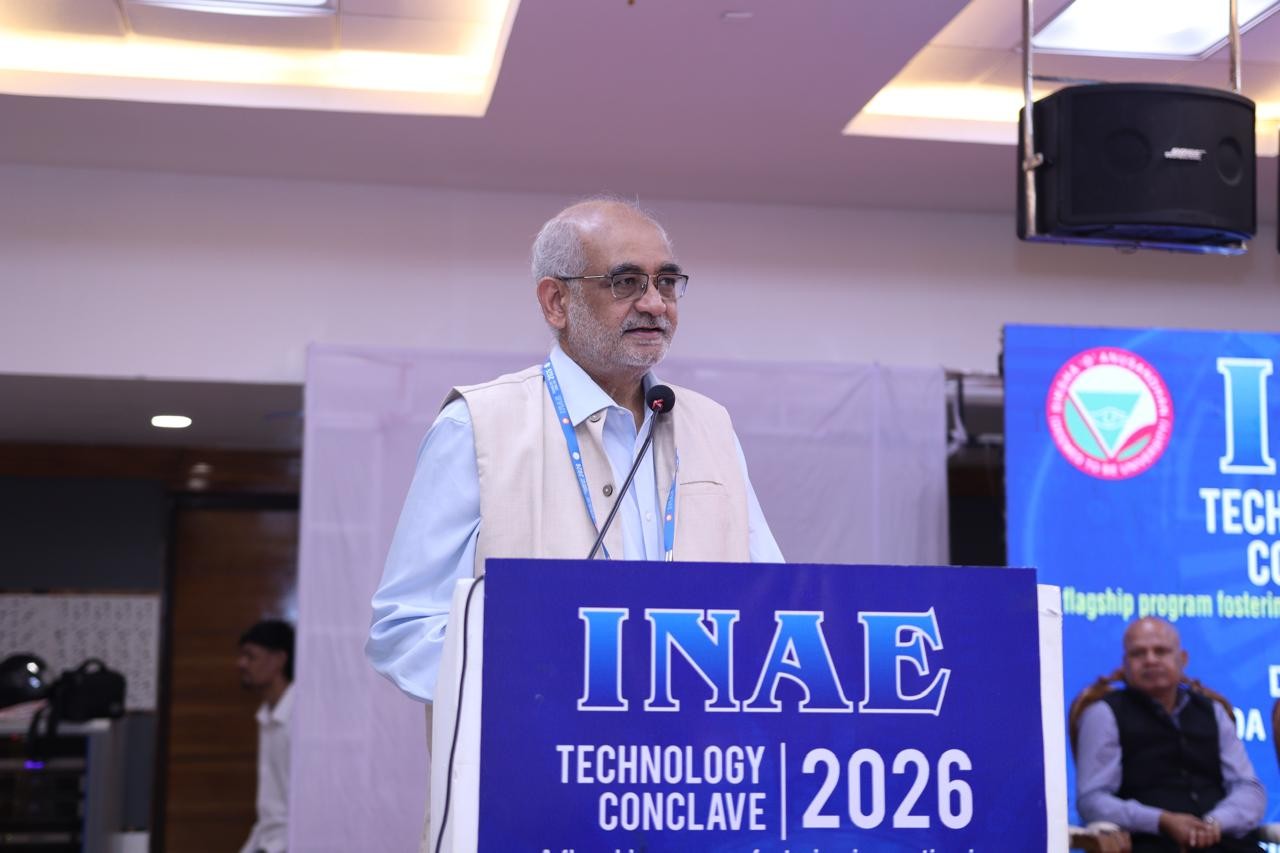 Prof. Indranil Manna, Former President, INAE Delivering Address
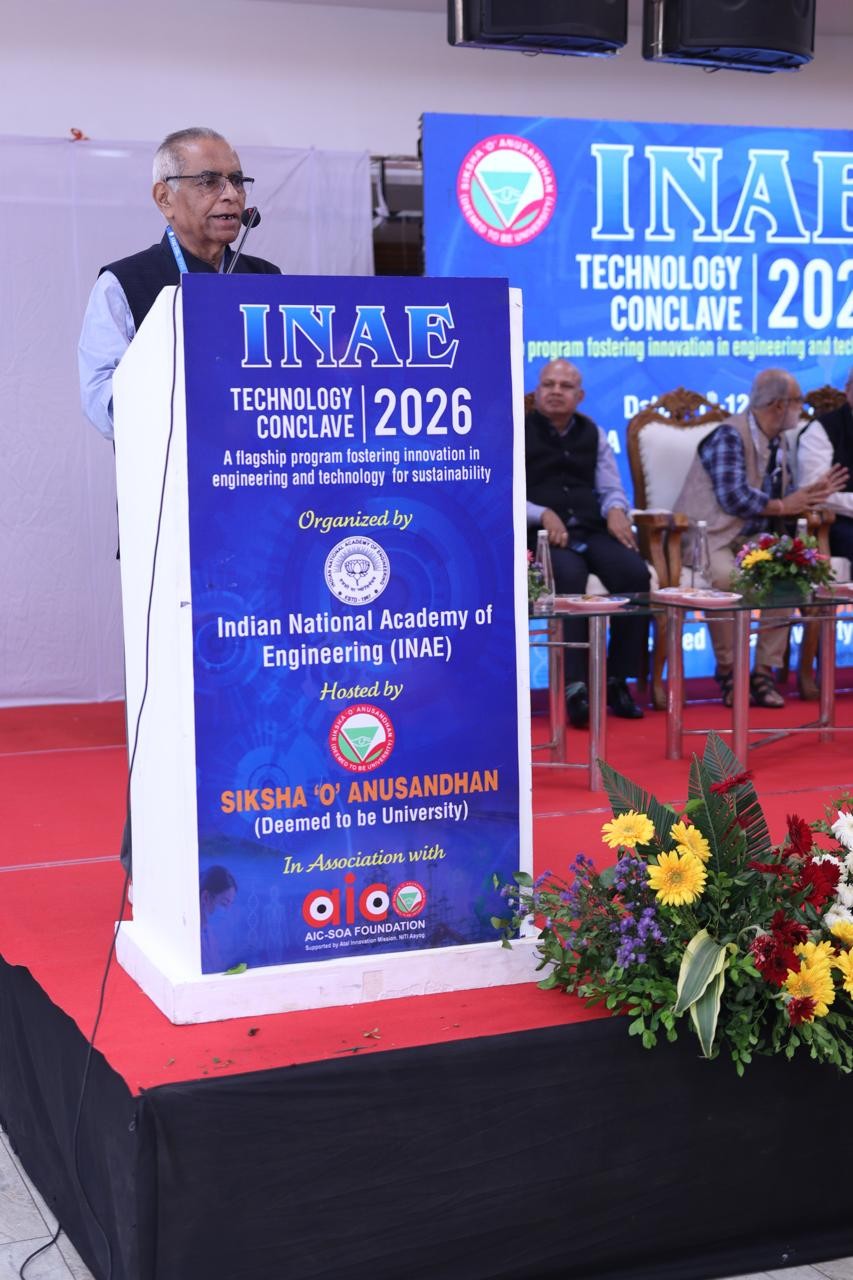 Prof. Damodar Acharya, FNAE, Chairman, International Advisory Board, SOA University and Chairman, INAE Bhubaneswar Chapter Delivering Address
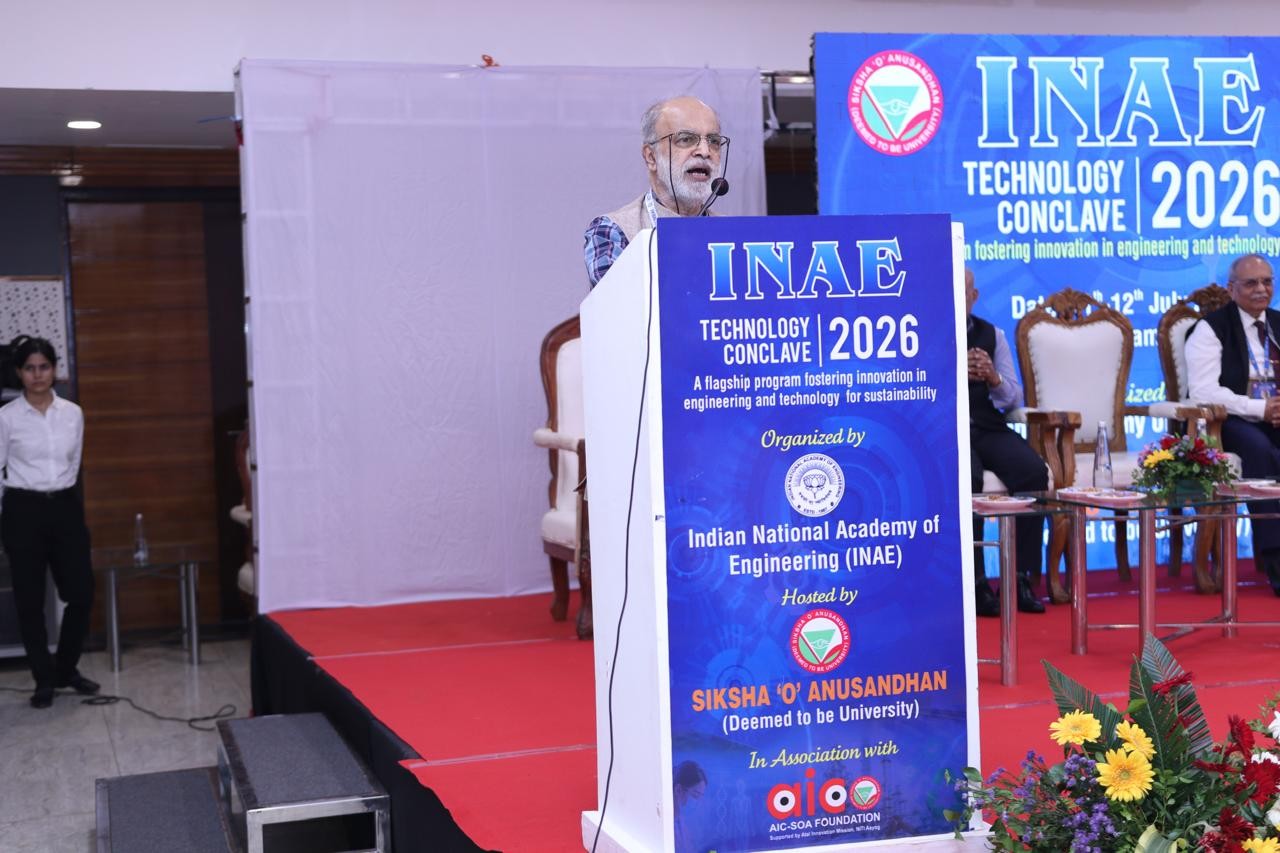 Prof AB Pandit, FNAE, Vice Chancellor, Institute of Chemical Technology, Mumbai Delivering Address
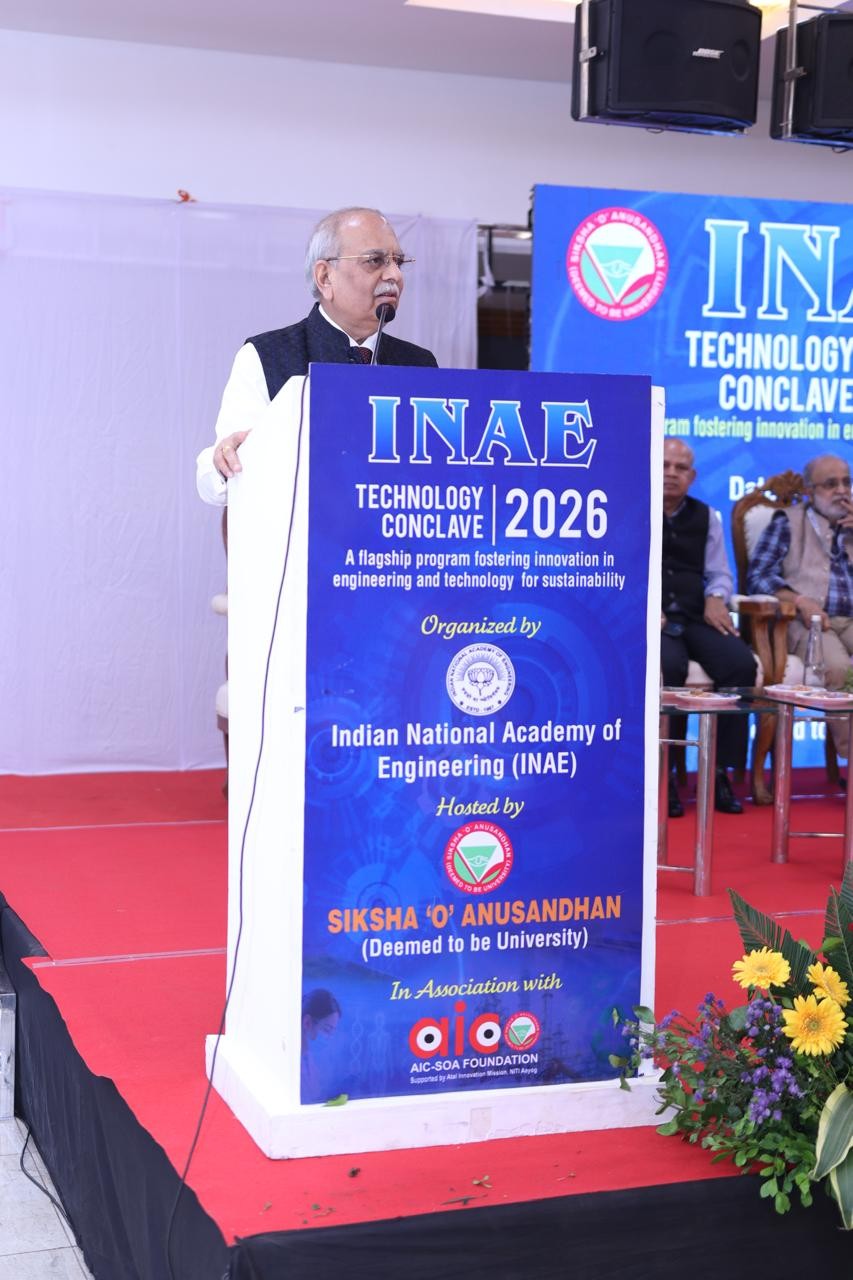 Mr J.D. Patil, President, INAE Delivering Address in Inaugural Session
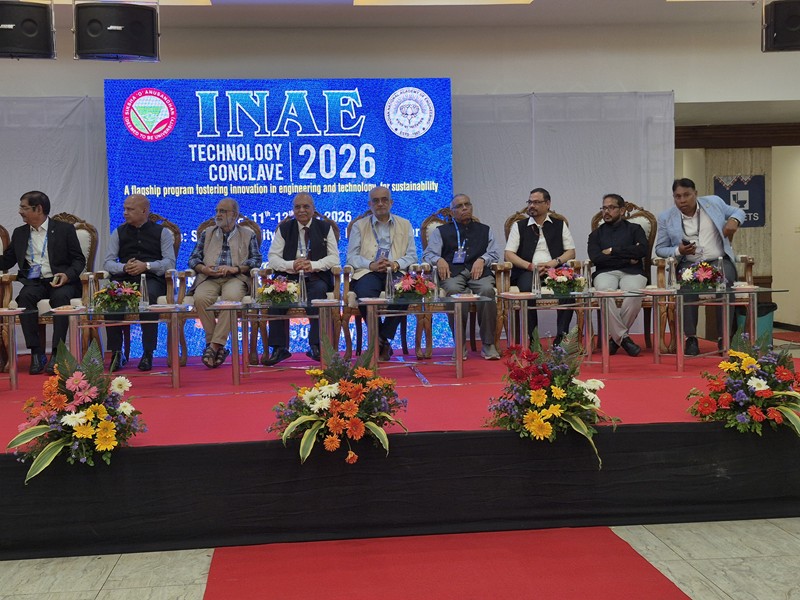
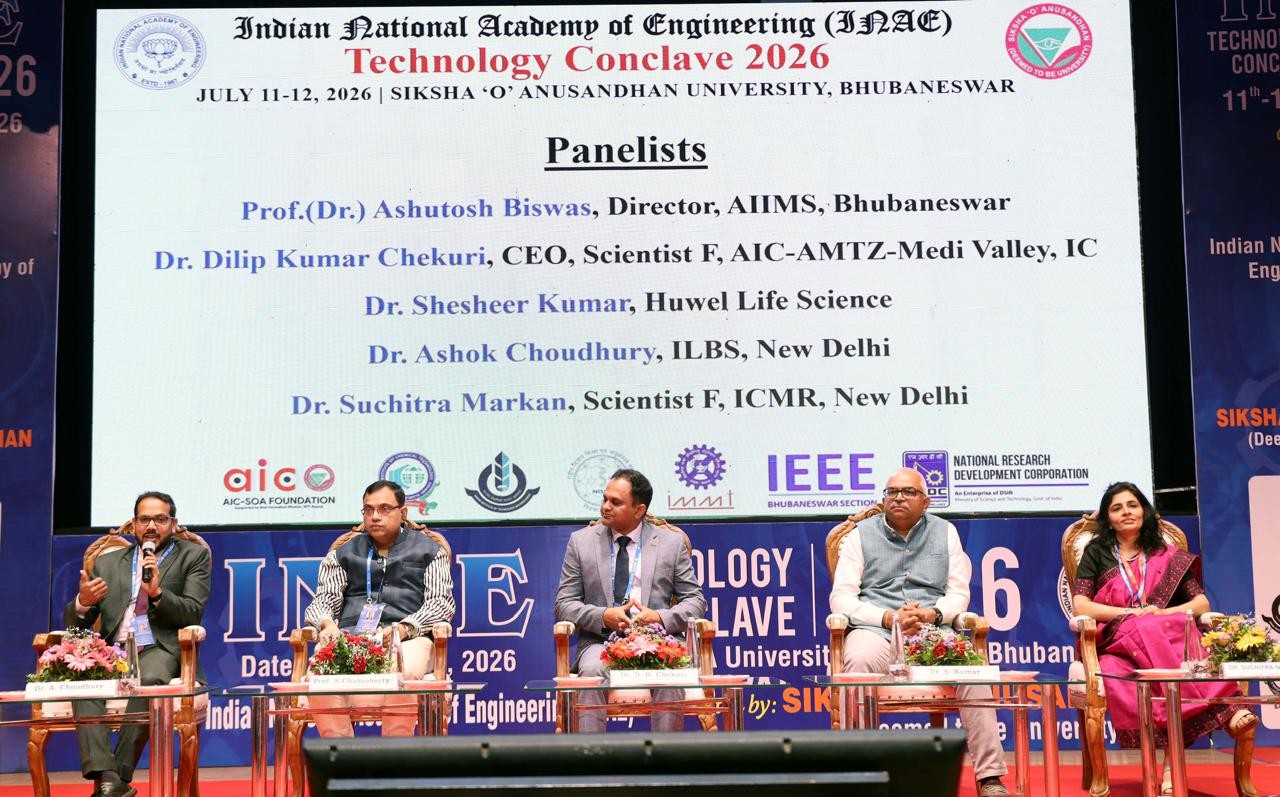 Dignitaries on Dais in Panel Discussion
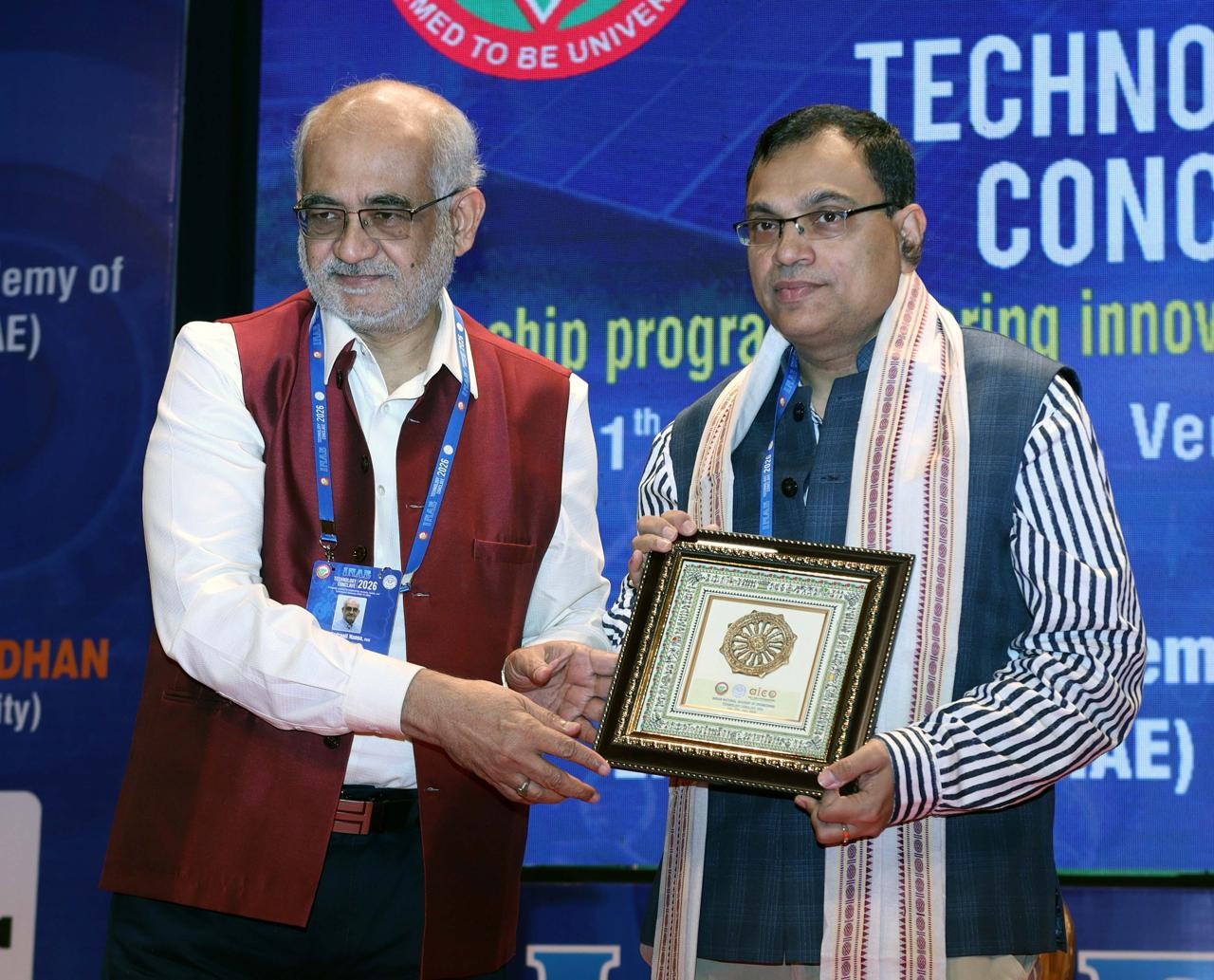 Prof Indranil Manna, former President, INAE Felicitating Prof Suman Chakraborty, FNAE, Director, IIT Kharagpur
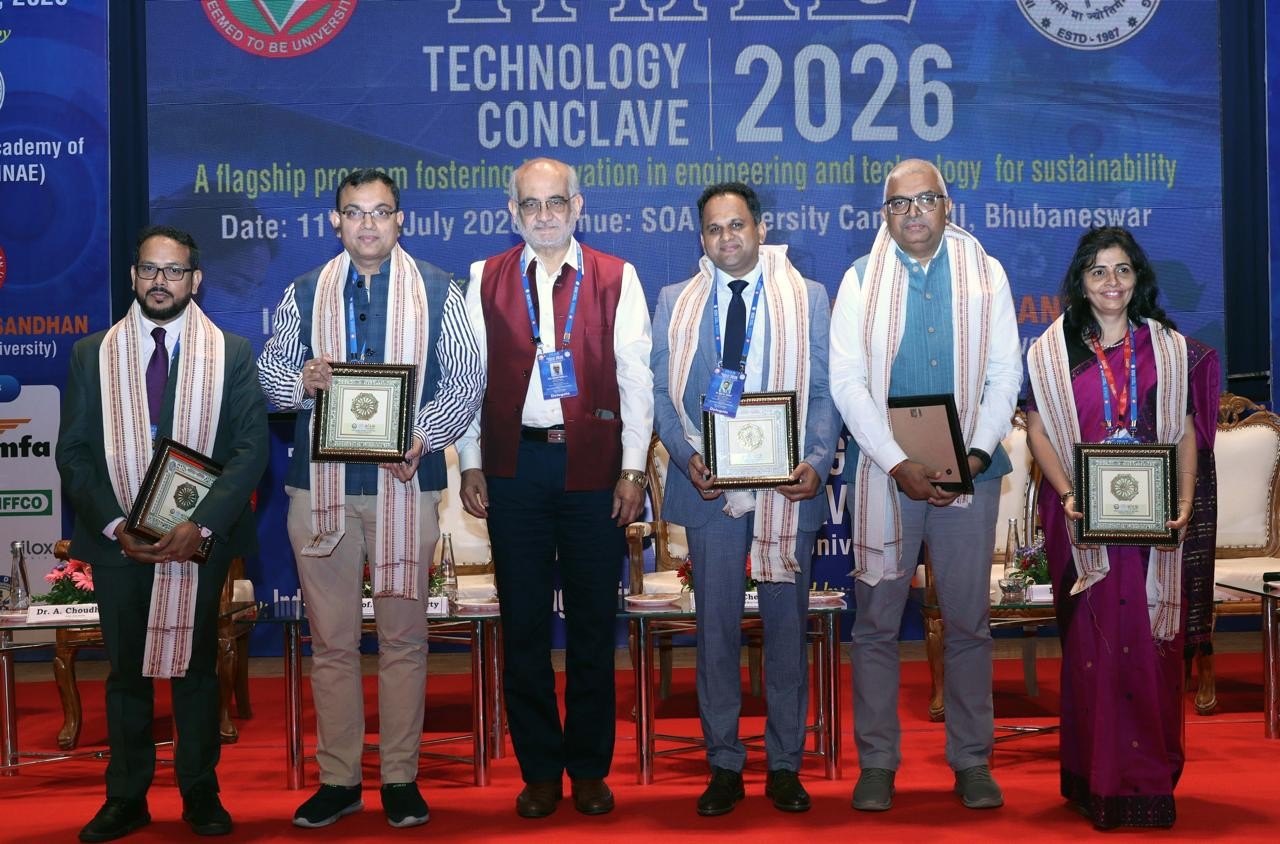 Group Photograph of Panellists with Prof Indranil Manna, Former President, INAE (third from left)
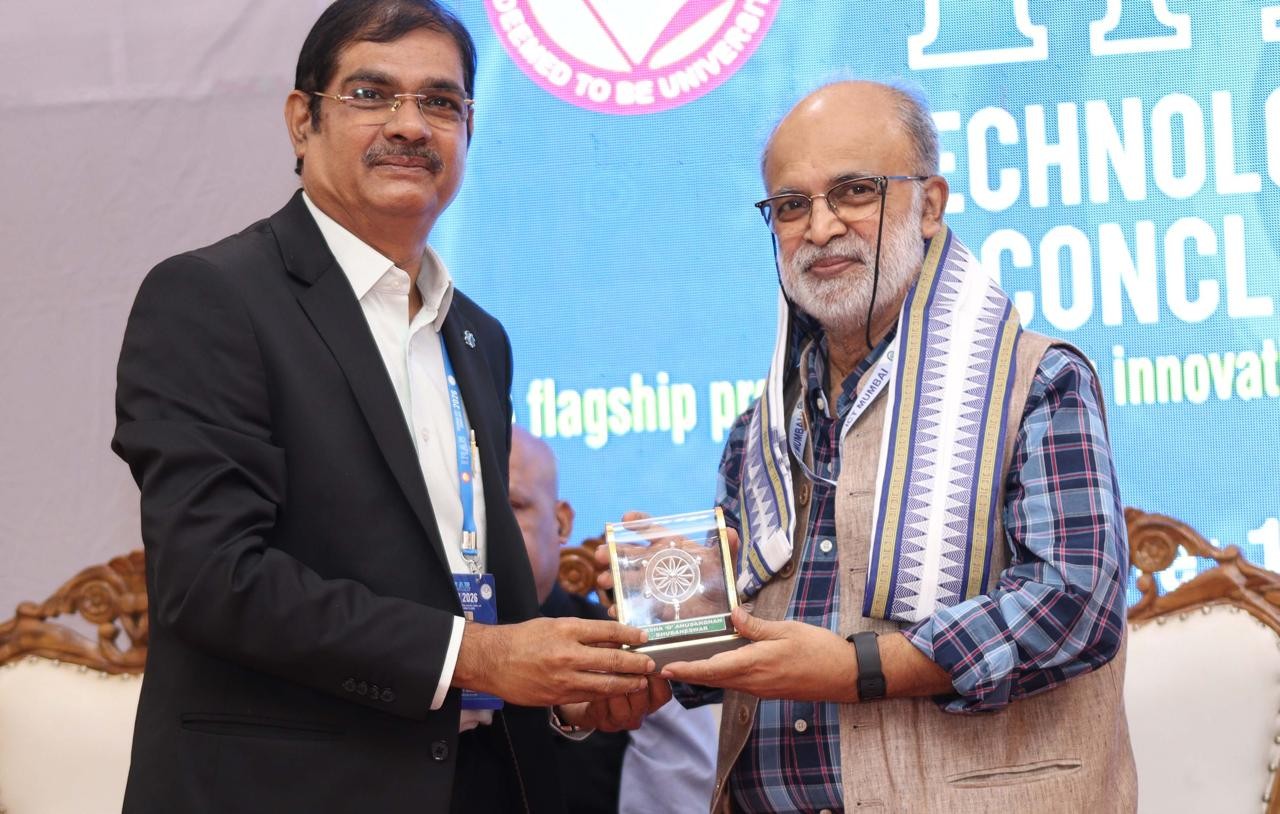 Felicitation of Prof A.B. Pandit, Former Vice President, INAE
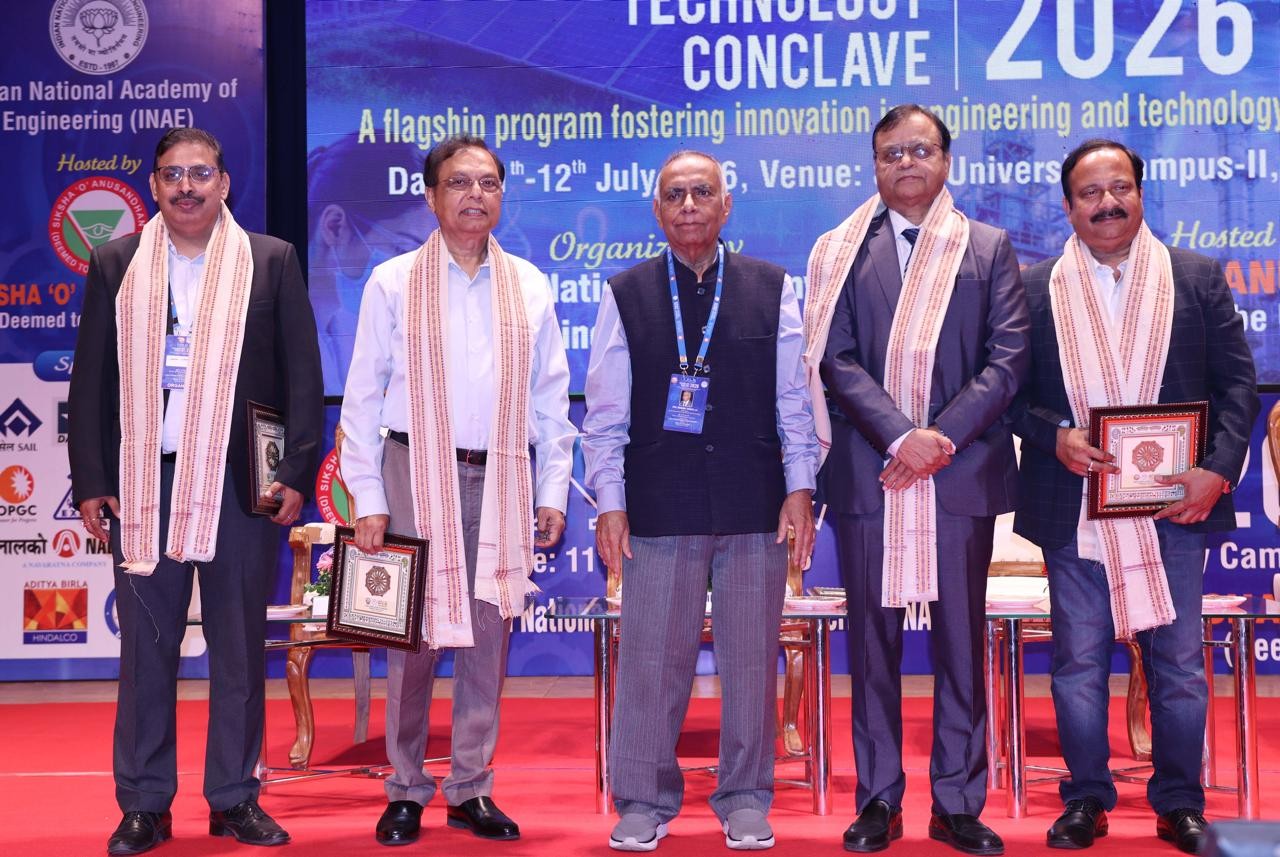 Group Photograph of Dignitaries with Prof Damodar Acharya (Centre)
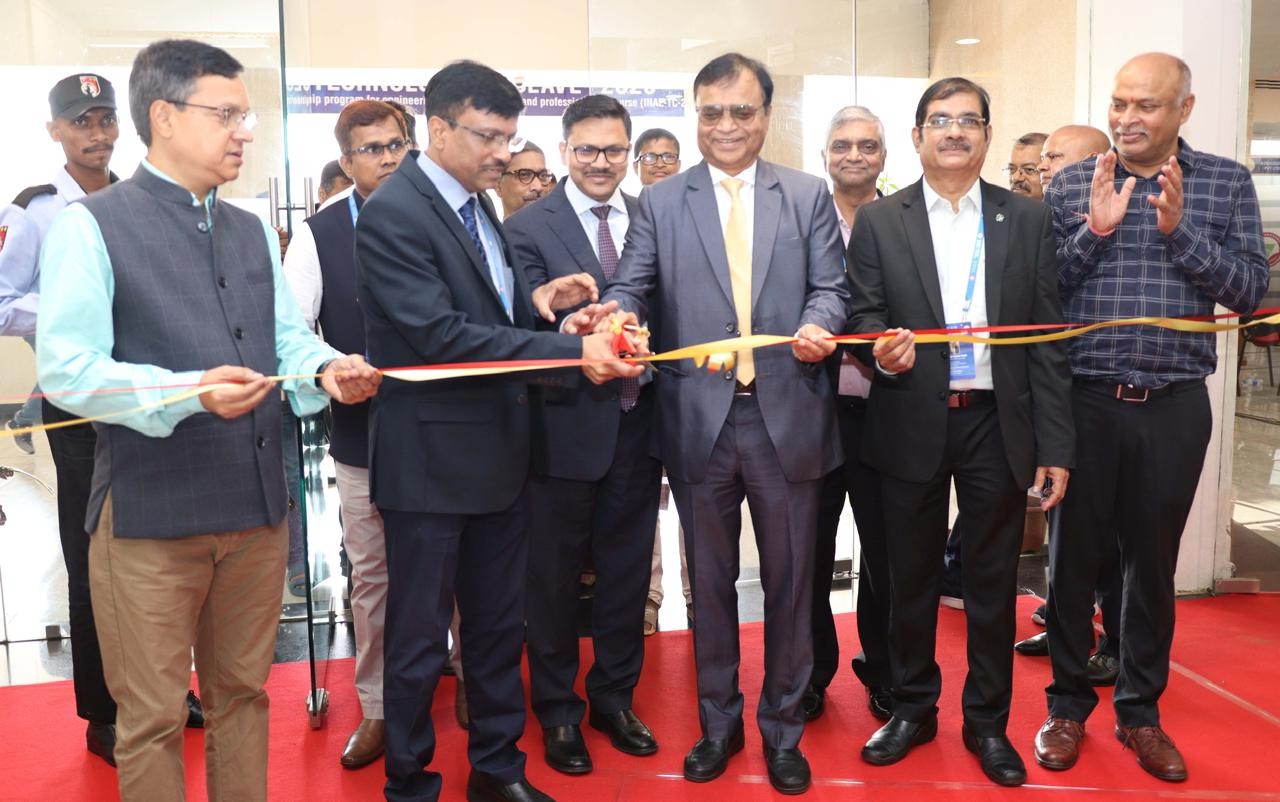 Inauguration of Poster Session
 Inauguration Session of the Startup Showcase
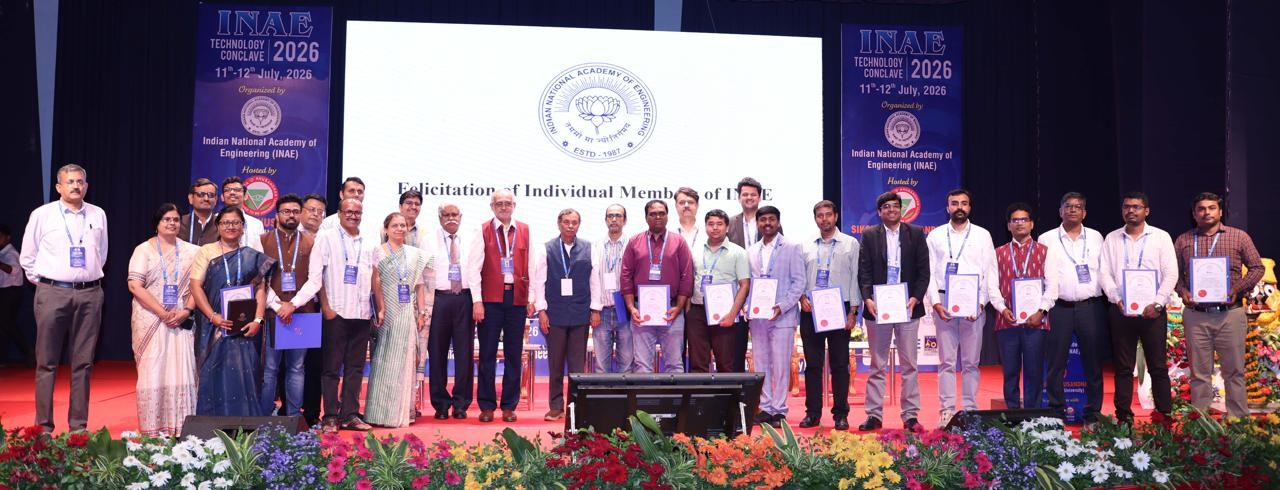 Group Photograph During Session on Felicitation of Individual Members
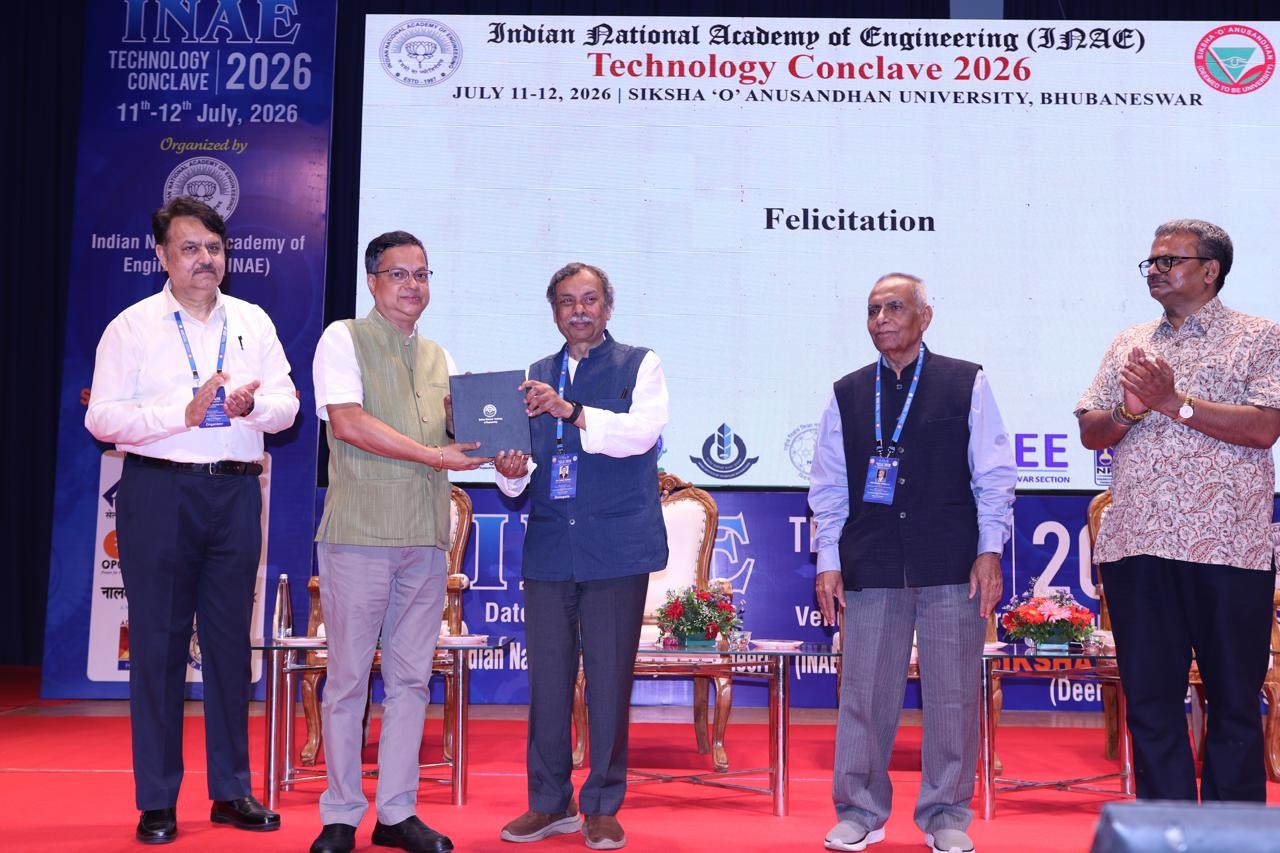 Valedictory Session
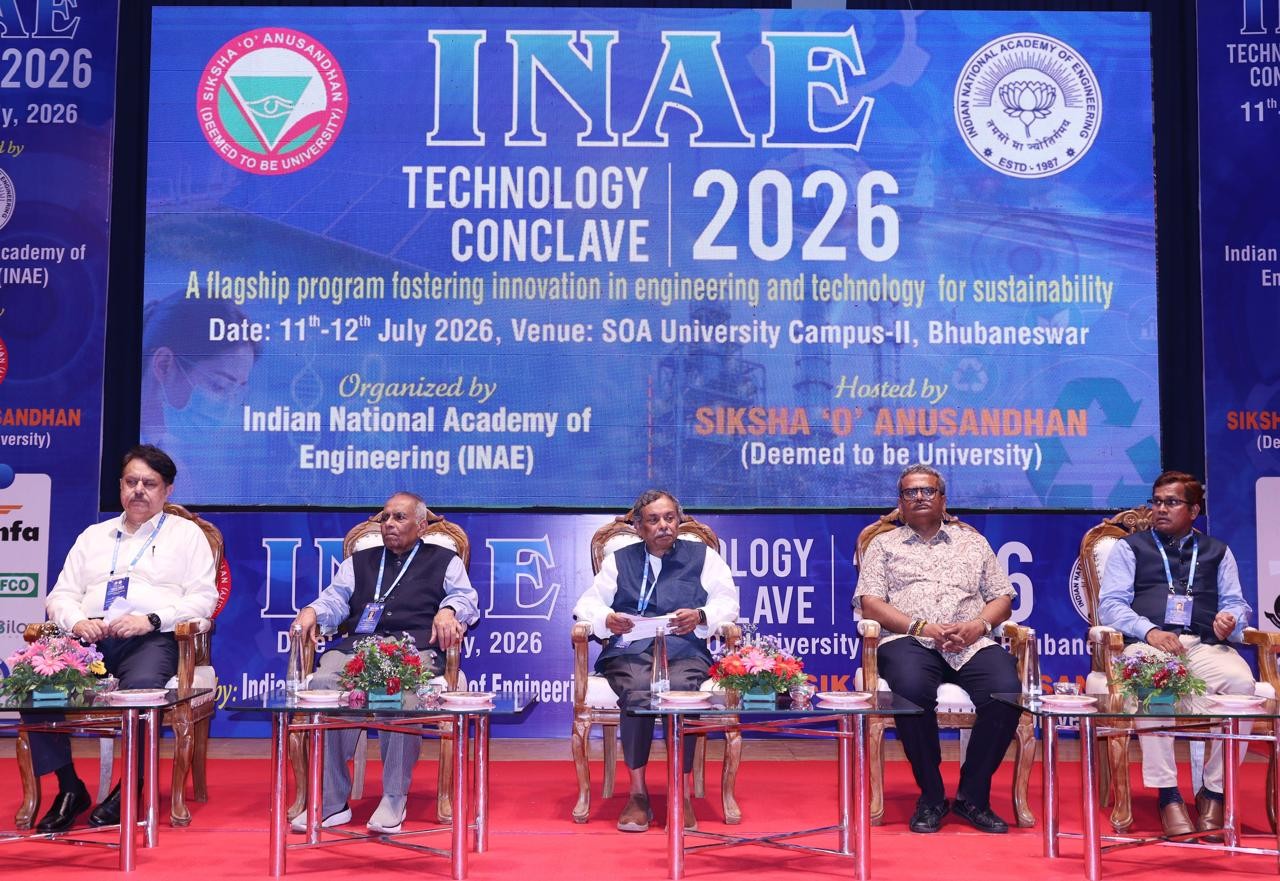 Dignitaries on Dais in Valedictory Session
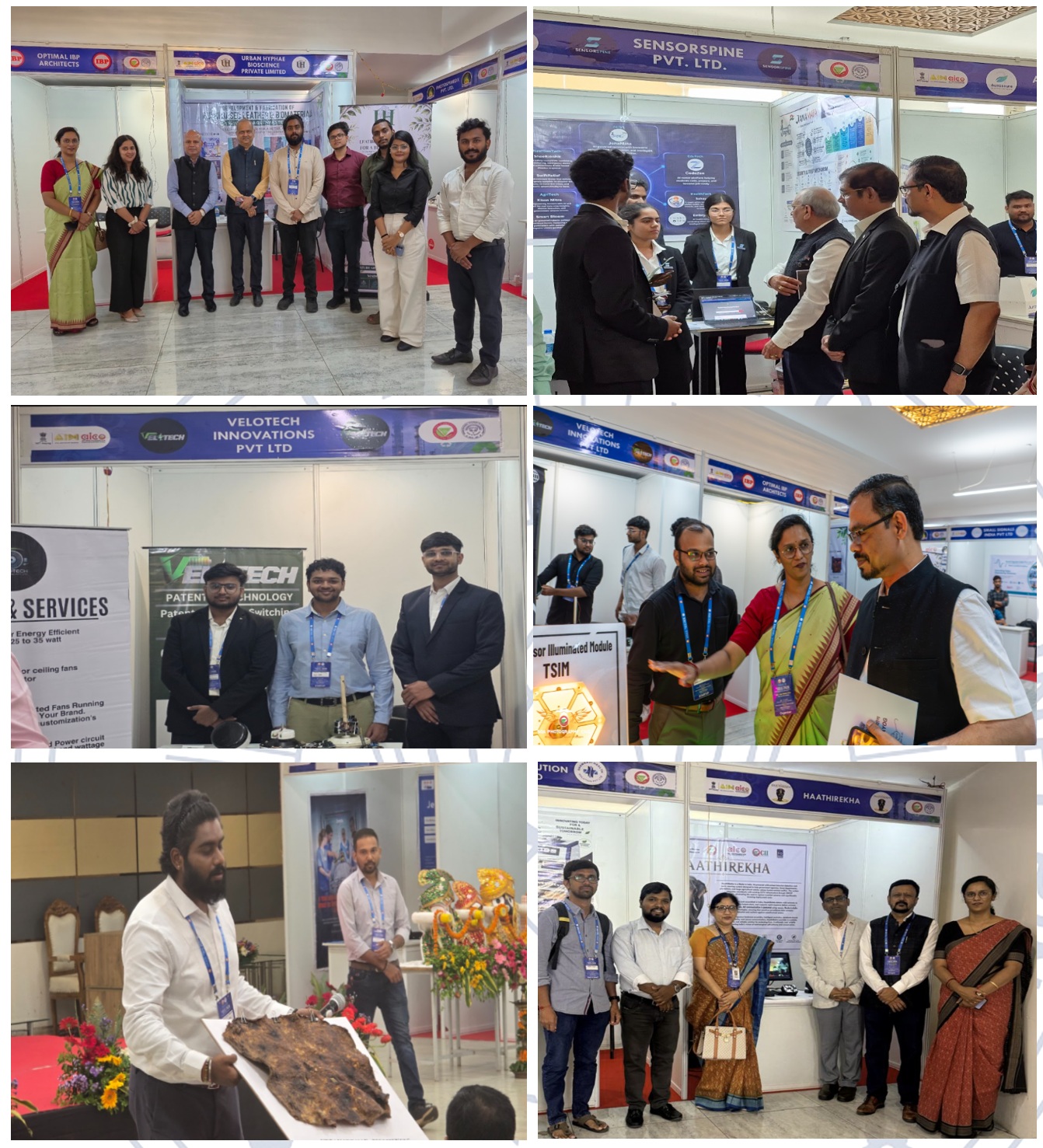 Delegates Visit to the Startup Booths & Interaction with Startups
MOU Signing
Startup Pitching Session
Centre for Engineering Education Excellence (CEEE) Program
The Centre for Engineering Education Excellence (CEEE) Programme, a flagship initiative of the Indian National Academy of Engineering (INAE), supported by the Infosys Foundation and the All India Council for Technical Education (AICTE), continued its mission during 2026–27 to strengthen the quality of engineering education in India through structured mentoring, faculty development and knowledge sharing. The program brings together distinguished faculty members and domain experts from premier Indian Institutes of Technology (IITs), to equip engineering faculty with contemporary subject knowledge, innovative teaching methodologies and effective pedagogical practices. Through this collaborative framework, the program seeks to bridge the gap between academic learning and the evolving requirements of industry while contributing to the development of skilled, industry-ready engineering graduates.
A major milestone during the reporting period was the successful implementation and widespread acceptance of the CEEE Automation Portal, which has significantly enhanced the efficiency, transparency and scalability of programme administration. The portal has been adopted across all participating CEEE Centres as the primary digital platform for managing programme activities. It facilitates end-to-end automation of key operational processes, including participant registration, course scheduling, mentor and faculty management, attendance monitoring, dissemination of course materials, submission of assignments and feedback, certificate generation, and preparation of programme reports. The portal has substantially reduced manual administrative effort, improved the accuracy and consistency of programme data, enabled real-time monitoring of programme progress, and strengthened coordination among INAE, participating IITs and affiliated institutions. Its successful deployment marks an important step towards the digital transformation of the CEEE Program and establishes a robust foundation for efficient programme management and evidence-based decision-making.
During 2026–27, the program was conducted through nine CEEE Centres located at IIT Kharagpur, IIT Bombay, IIT Madras, IIT Kanpur, IIT Delhi, IIT Guwahati, IIT Gandhinagar, IIT Hyderabad and IIT Indore. The programme covered a broad spectrum of engineering disciplines, including Computer Science and Information Technology (including Data Science); Artificial Intelligence, Data Science and Machine Learning; Electrical, Electronics and Instrumentation Engineering; Mechanical, Aerospace and Energy Engineering; Materials, Chemical and Biomedical Engineering; and Civil and Environmental Engineering.
By mid-July 2026, the offline mentoring of 29 courses has been successfully completed in accordance with the approved schedule. The overall programme has continued to provide a highly enriching and professionally rewarding learning experience for participating faculty members. Through direct interaction with eminent academicians, experienced mentors and subject experts from premier institutions, participants have strengthened their disciplinary knowledge while gaining exposure to contemporary teaching-learning methodologies and best pedagogical practices. The combination of expert-led technical sessions, structured mentoring, collaborative learning and peer interaction has encouraged participants to reflect upon and enhance their classroom practices. The hybrid design of the programme, integrating in-person engagement with online academic interactions, has further ensured sustained learning beyond the classroom and facilitated the continued exchange of knowledge among faculty members.
The CEEE Automation Portal has complemented these academic initiatives by providing a unified digital ecosystem for programme management. The availability of real-time participant data, automated workflow management, centralized documentation and analytical reporting has improved institutional coordination and enabled timely monitoring of programme outcomes. The portal has also contributed to greater transparency, accountability and standardization in programme implementation across all participating centres, thereby strengthening the overall governance framework of the CEEE Programme.
As the 2026–27 CEEE Program progresses with online mentoring scheduled across various CEEE Centres, the initiative continues to reaffirm INAE’s commitment to advancing excellence in engineering education through capacity building, academic mentoring and institutional collaboration. The successful integration of the CEEE Automation Portal with program operations further demonstrates the Academy’s commitment to leveraging digital technologies for effective programme delivery and continuous improvement. Together, these initiatives are expected to make a sustained contribution towards enhancing faculty competencies, promoting innovative pedagogy and strengthening the quality of engineering education across the country.
CEEE Program: Way Forward Meet on 19th April 2026
The CEEE Program: Way Forward Meet was organized on 19th April 2026, wherein significant gathering of academic mentors and coordinators from nine IITs at IIT Delhi deliberated to chart the roadmap for the CEEE Programme for 2026–27 and focused on strengthening collaboration, enhancing programme delivery, and aligning with emerging priorities in engineering education.
A key highlight of the event was the felicitation of the Centre and Domain Coordinators of the CEEE Programme 2025–26, in recognition of their dedication and contributions over the past year. MoUs were also exchanged with IIT Hyderabad, IIT Guwahati, IIT Gandhinagar, and IIT Indore, marking their inclusion as new centres for the CEEE Programme 2026–27.
The inaugural session featured address by Mr JD Patil, FNAE, President INAE, followed by an eminent panel of thought leaders:
- Indranil Manna – Immediate Former President, INAE & National Coordinator, CEEE Program
- TG Sitharam, FNAE –Former Chairman, AICTE
- Santanu Chaudhury, FNAE – Vice-President, INAE and Chairman, Selection and Evaluation Committee, CEEE
- BS Murty, FNAE – Director, IIT Hyderabad
Their perspectives set the tone for meaningful dialogue and forward-looking deliberations. The discussions reaffirmed a collective commitment to advancing excellence in engineering education and further strengthening the impact of the CEEE Programme in the coming year.
On the occasion, a Report for CEEE 2024-26 was formally released which can be viewed through the Dropbox link which is given below:
https://www.dropbox.com/scl/fi/2rzudspmvtg6s8ub06kgx/CEEE-2024-2026-Complete-Report-A4.pdf?rlkey=0ig8u7g1mn91vex8c8qwk56ko&st=p1bt4muf&dl=0
The selected photographs & other relevant details of the CEEE Program held on 19th April 2026 can be viewed through the Dropbox link which is given below.
In addition, please also find appended an updated Flyer of the CEEE Program for 2026-27 which can be viewed by Clicking here.
Local Chapter Activities and Webinar Series held during April to July 2026
The following Webinars/activities/meetings/Technical Lectures were conducted during April to July 2026 by INAE Local Chapters.
INAE Mumbai Chapter
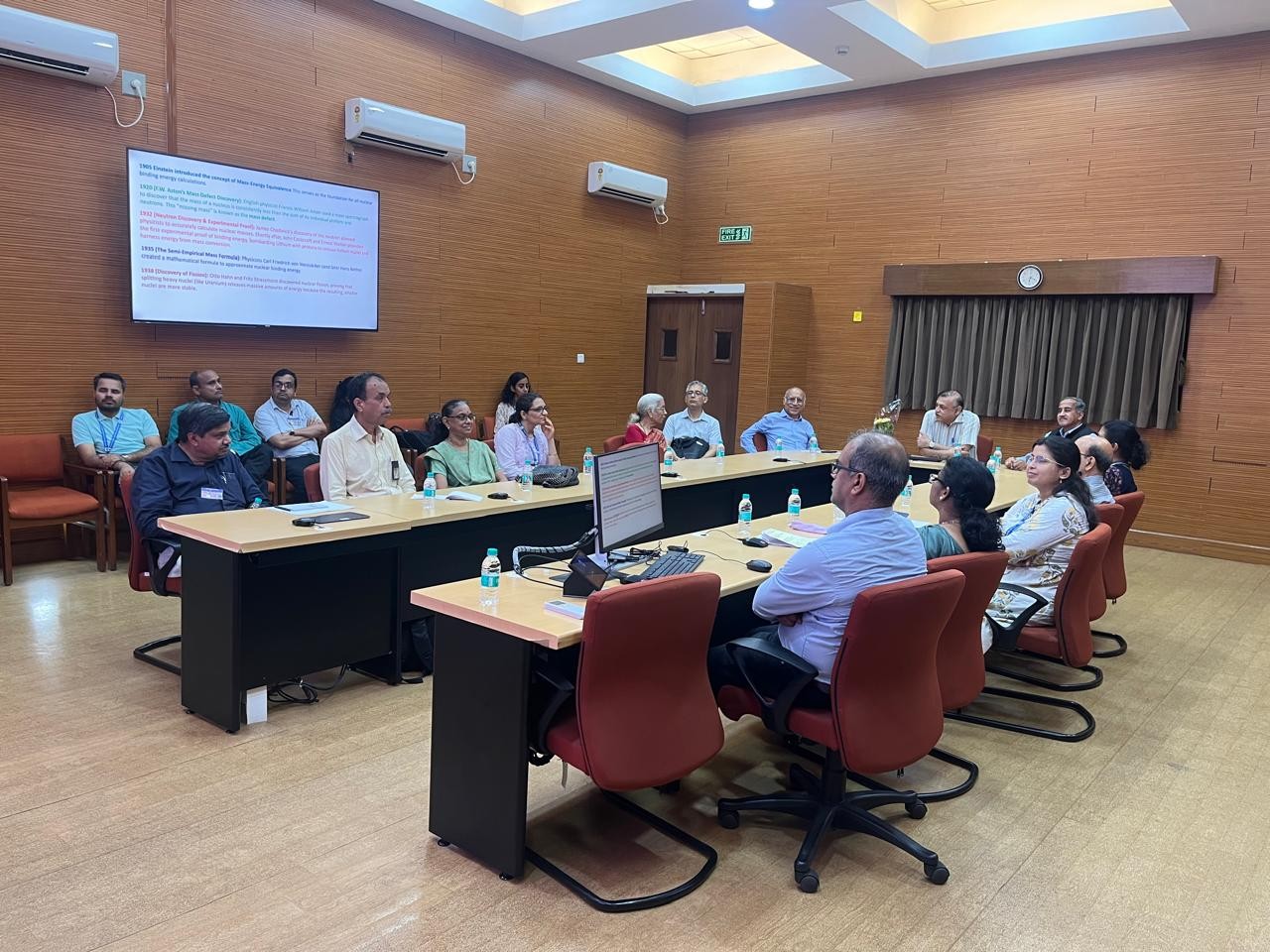
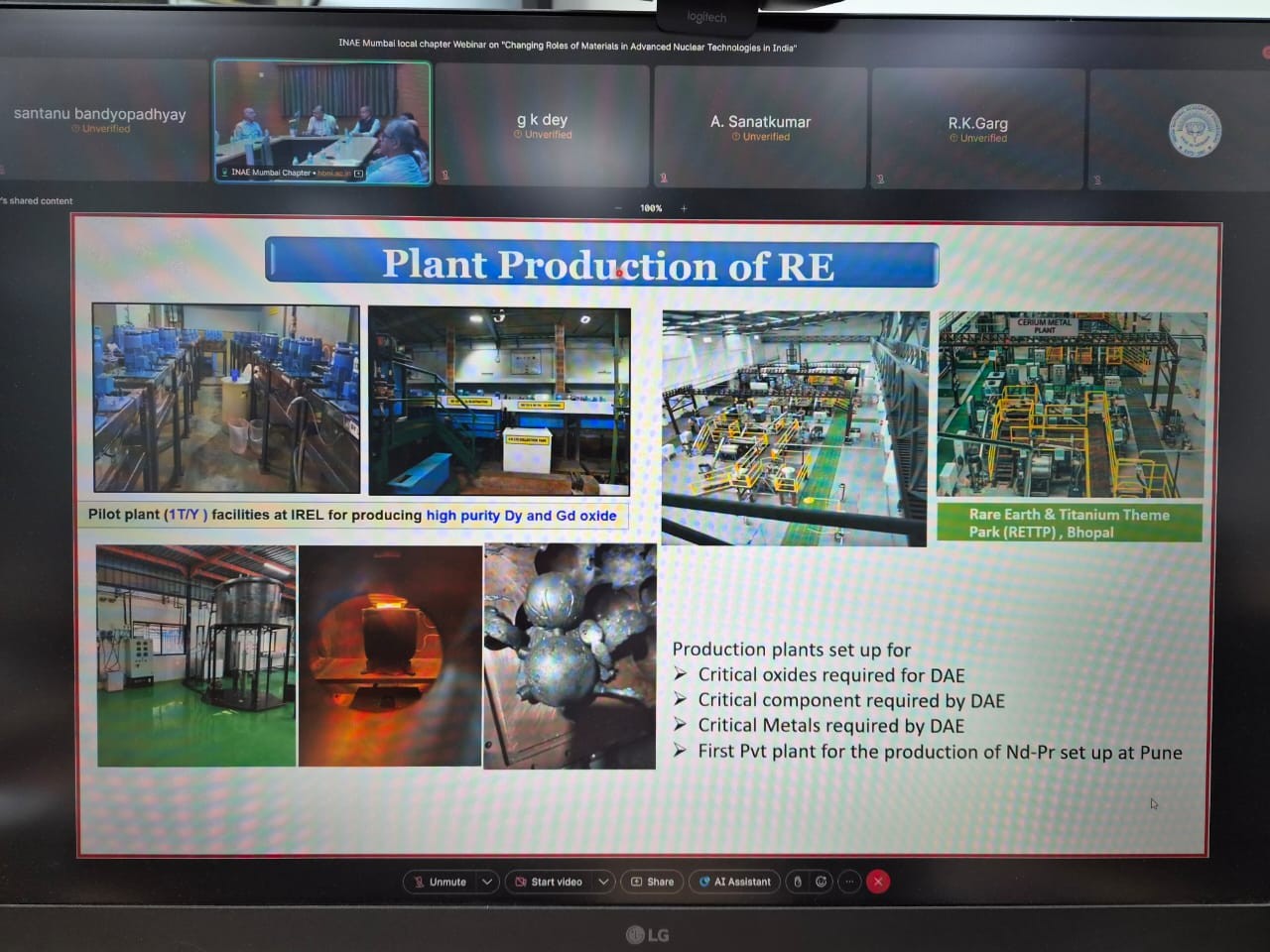
Webinar on “Changing Roles of Materials in Advanced Nuclear Technologies in India” held on June 5, 2026
INAE Mumbai Chapter organized a Webinar on “Changing Roles of Materials in Advanced Nuclear Technologies in India”, by Dr. Raghvendra Tewari, Former Director, Materials Group, Bhabha Atomic Research Centre, at Anusakthinagar on 5th June 2026 from 1800-19:00 hours in hybrid mode.
The programme started with welcoming the speaker and distinguished audience by Dr. Gopika Vinod, Secretary, INAE Mumbai Chapter. Sh A. K. Balasubrahmanian, Chair INAE Mumbai Chapter & Chairman AERB gave opening remarks, highlighting rapid commercialization of new technologies for the processing and fabrications of metals or alloys. Dr. Poulami Chakraborty introduced the speaker.
The lecture on “Changing Roles of Materials in Advanced Nuclear Technologies in India” began with a historical overview of the inception of India’s nuclear energy programme under the visionary leadership of Dr. Homi J. Bhabha. The speaker described the establishment of key institutions such as Indian Rare Earths Limited (IREL), highlighting the acquisition of monazite-bearing coastal sands and the development of indigenous capabilities for the extraction and processing of strategic nuclear materials. The lecture traced the evolution of materials research in India, emphasizing its pivotal role in achieving self-reliance across the nuclear fuel cycle and reactor technologies.
The technical session highlighted the development of zirconium alloys for fuel cladding/pressure tube in pressurized heavy water reactors, bainitic and advanced steels for reactor structural components, nickel-based alloys for high-temperature molten salt reactors, silicon carbide and SiC-based composites for accident-tolerant fuel systems and advanced reactor applications, and rare-earth materials for strategic nuclear technologies. Recent advances in uranium extraction and processing technologies were also discussed, illustrating the importance of indigenous materials and process development throughout the nuclear fuel cycle. The speaker further emphasized the role of advanced alloy design, corrosion-resistant materials, radiation-tolerant materials, and modern characterization techniques in enhancing the safety, efficiency, and longevity of present and future nuclear systems. The lecture effectively demonstrated how sustained advances in materials science continue to underpin India’s progress in advanced heavy water reactors, gas cooled reactors, molten salt reactors, including various non-nuclear technologies and societal applications, while reinforcing the nation’s commitment to technological self-reliance.
The talk was attended by a large number of officers from DAE fraternity, as well as many online participants from diverse background. Dr. Umasankari Kannan, FNAE attended in person and various INAE Fellows viz Mr. Sanatkumar, FNAE and Dr. G. K. Dey, FNAE joined online. There was online participation of around 20 persons. Dr. R. B. Grover summarised the importance of topic and appreciated the spectrum of topics covered by speaker. The talk was followed by interactive session with audience and responding to all the queries raised in the chatroom. Meeting concluded with vote of thanks proposed by Prof. Santanu Bandopadhyay, Treasurer, INAE Mumbai Chapter.
Photographs from the event are given below
Webinar on “Integrated Life-Cycle Cost Analysis: A Strategic Enabler for Vision Zero India”, held on July 4, 2026
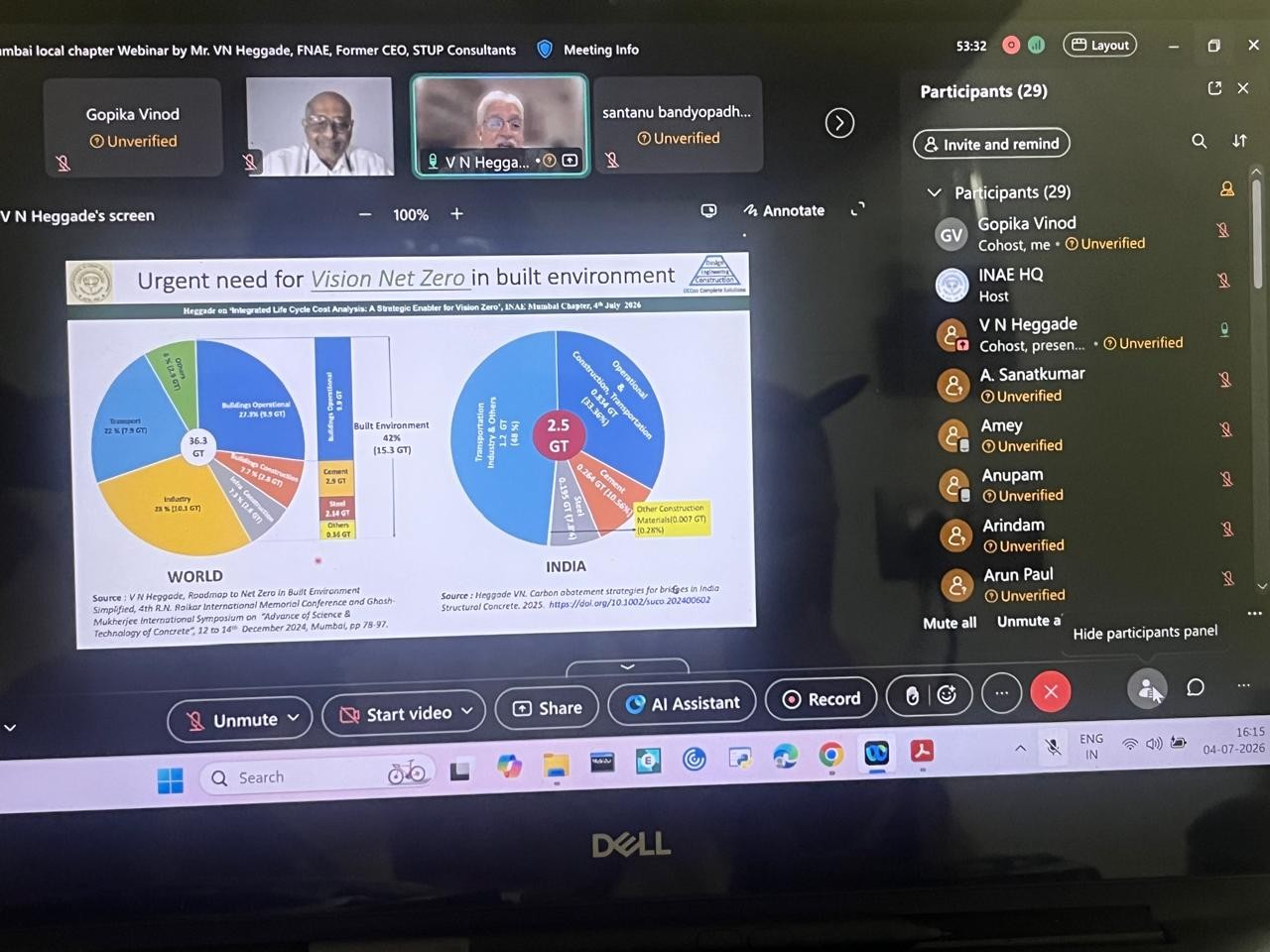
INAE Mumbai Chapter organized a Webinar on “Integrated Life-Cycle Cost Analysis: A Strategic Enabler for Vision Zero India”, by Mr. V.N. Heggade, Former Chief Executive Officer (CEO) of STUP Consultants & former Executive Director of Gammon, at DESE Seminar Room, 2nd floor, DESE Building, IIT Bombay campus in hybrid mode on July 4th, 2026, from 4.00 pm onwards. The program started with welcoming the speaker and distinguished audience by Dr. Gopika Vinod, Secretary, INAE Mumbai Chapter. Prof. Jayesh Bellare, Chair INAE Mumbai Chapter gave opening remarks, highlighting importance of sustainability and need for Net zero. Dr. Poulami Chakraborty and Dr Gopika Vinod introduced the speaker.
Talk presented the framework of integrated life cycle cost model, which includes economic cost and carbon costs. Quantitative model was proposed incorporating green procurement policies, Private Public Partnership model, sustainable financing aspects long with performance benchmarking, case studies. Talk also covered mitigation strategies for reducing carbon footprints, design efficiency strategies for concrete structures, policy frameworks.
The talk was attended by a large number of faculty from civil engineering fraternity along with many online participants from diverse background. Several INAE Fellows- Dr. R. B. Grover, FNAE; Dr. Umasankari Kannan, FNAE; Mr. Sanatkumar, FNAE; Dr. R. K. Singh, FNAE and Dr. B. K. Dutta, FNAE joined online. There was online participation of around 30 persons. The talk was followed by interactive session with audience and responding to all the queries raised in the chatroom. Meeting concluded with vote of thanks proposed by Prof. Santanu Bandopadhyay, Treasurer, INAE Mumbai Chapter.
Photographs from the event are given below
INAE Bhubaneswar Chapter
- The 77th lecture of the INAE Distinguished Lecture Series was organized by INAE Bhubaneswar Chapter, jointly with SOA University, CSIR-IMMT Bhubaneswar, IIT Bhubaneswar, NISER Bhubaneswar and IEEE Bhubaneswar Sub-section and delivered by Tapan K Gandhi, Head of Centre for Biomedical Engineering, IIT Delhi and AIIMS New Delhi on “AI-Driven Visual Neuroscience for Early Diagnosis and Adaptive Rehabilitation & Management of Visual Disorders” on April 11, 2026 at Convention Center, Ground Floor, Campus-2, .Ghatikia, Bhubaneswar (in Physical Mode).
Key Points: Principles of computational visual neuroscience, with a focus on object perception and recognition, and their application in developing tools for the early diagnosis of visual disorders to help alleviate blindness. The talk highlighted AI-enabled diagnostic systems for the early detection of visual impairments, along with adaptive, personalized rehabilitation strategies grounded in neuroplasticity and digital therapeutics. By integrating computational models, clinical insights, and scalable technologies, this work aims to deliver accessible and cost-effective vision care solutions, particularly for resource-constrained settings, ultimately improving functional vision, enhancing quality of life, and contributing to blindness alleviation in India.
Bio -Data: Dr Tapan K Gandhi is Head of Centre for Biomedical Engineering, IIT Delhi and AIIMS New Delhi. He is Professor in the Dept. of Electrical Engineering, Cadence Chair Professor of AI and Automation, Associate Faculty in School of AI, IIT Delhi. Dr Gandhi has done his PhD in Biomedical Engineering, followed by 3 years as Postdoctoral Associate at MIT, USA. He is awarded the first INSPIRE Faculty in India in the engineering & technology category of the Department of Science & Technology, Govt. of India. His research expertise spans from Innovation in Healthcare Technology, Digital Health, Brain imaging, Cognitive Computing, Artificial intelligence to Responsible Gaming. He has published papers in top ranking journals like Nature, Science, PNAS, Current Biology, PloS Biology, IEEE Transactions. He has more than 300 publications in international journals and conference proceedings. His research work is not only published in top-notch journals but also appeared in many popular presses including TIME magazine, the Boston Globe, the New York Times, MIT News, Harvard News, Wall Street Journal and also in the SCIENCE Magazine. Dr Gandhi’s work was selected as cover page in SCIENCE Magazine in 2015. Dr Gandhi’s lab is involved in various Govt. funded, international projects, and Industry consultancy. He is mentoring a few Startups. He is serving as expert member (Task Force) in various research and strategic committees in Govt. of India including expert member under the National One Health Mission (The apex body in India) to formulate Technology enhanced integrated surveillance and outbreak investigation.
Dr Gandhi holds the prestigious Abdul Kalam Technology Innovation National Fellowship. He is elected Fellow of National Academy of Engineering (FNAE), Elected Fellow of National Academy of Sciences, India (FNASc.) and also elected Fellow of International Artificial Intelligence Industry Alliance (AIIA). Dr Gandhi holds Adjunct Professorship in the Dept. of Electronics, IIT(ISM) Dhanbad and also is appointed as Honorary Advisor to Armed Forces Centre for Computational Medicine, (AFMC), Pune, India.
No. of Participants: 400
E-mail : Tapan.Kumar.Gandhi@ee.iitd.ac.in
- The 78th lecture of the INAE Distinguished Lecture Series was organized by INAE Bhubaneswar Chapter, jointly with SOA University, CSIR-IMMT Bhubaneswar, IIT Bhubaneswar, NISER Bhubaneswar and IEEE Bhubaneswar Sub-section and delivered by Santanu Chaudhury, Professor & Dean, School of Advanced Computing, Ashoka University ON “Causal AI : Emerging Perspectives and Applications” on April 11, 2026 between 4.30 PM to 6.00 PM at Convention Center, Ground Floor, Campus-2, Ghatikia, Bhubaneswar (in Physical Mode)
Key Points: Artificial intelligence systems have achieved remarkable success in pattern recognition and prediction, yet most modern AI models primarily learn correlations rather than true cause–effect relationships. Causal AI seeks to address this limitation by integrating principles from causal inference, statistics, and machine learning to enable systems that can reason about interventions, counterfactuals, and decision-making under uncertainty. This talk provided a review of causal AI. It illustrated use of Causal AI in Computer Vision problems.
Bio-Data: Prof Santanu Chaudhury did his B.Tech (1984) in Electronics and Electrical Communication Engg and Ph.D (1989) in Computer Science and Engg. from I.I.T, Kharagpur. Presently, he is Dean and Professor in the School of Advanced Computing at Ashoka University. He retired from the position of Professor in the department of Electrical Engineering., IIT Delhi on January 31st, 2026. He had been Director, IIT Jodhpur and Director CSIR-Central Electronics Research Institute. He was also Dean, Undergraduate Studies at IIT Delhi. He held several Chair Professor positions at IIT Delhi.
He was awarded INSA Medal for Young Scientists in 1993. He is a Fellow of Indian National Academy of Engineering (INAE), The National Academy of Sciences (NASI) and International Association of Pattern Recognition (IAPR). He is also a recipient of Distinguished Alumni Award of IIT Kharagpur. He has over 350 publications in reputed Journals and conferences and 15 patents with technologies commercialised by global industries. His areas of interests are Computer Vision, Artificial Intelligence, Digital Heritage, AR-VR &Multi-sensory media.
No. of Participants: 420
You tube Link: https://www.youtube.com/live/sjJ9tXUVeWw?si=Q0Q6xu4CYjjdZ2aI
INAE Kharagpur Chapter
INAE Kharagpur Chapter formally launched its Lecture Series by Eminent Researchers on June 1, 2026, at the S. N. Bose Auditorium, IIT Kharagpur. The inaugural event was conducted in physical mode and witnessed enthusiastic participation from faculty members, researchers and students. The inaugural lecture was delivered by Prof. Sushmita Mitra, Professor and Former Head of the Machine Intelligence Unit, Indian Statistical Institute (ISI), Kolkata, on the topic “Harnessing Artificial Intelligence for Healthcare”. In her insightful presentation, Prof. Mitra highlighted the transformative role of Artificial Intelligence (AI) in modern healthcare, emphasizing the use of machine learning and deep learning techniques for disease diagnosis, medical image analysis, survival prediction, and clinical decision support. The inaugural lecture was followed by a special session on the “INAE Individual Membership Program”, presided over by Dr. Tinku Acharya, Founder and CEO of Videonetics Technology Private Limited. Dr. Acharya provided valuable insights into the objectives of INAE, the significance of individual membership, and the nomination process.
The program along with the two lectures are available on the following Google Drive link
https://drive.google.com/drive/folders/12D1u8lan7exbbXR4gbPcQ4svne9VPJEy?usp=sharing
INAE Hyderabad Chapter
One- Day Seminar on “Quantum Sensors for Defence Applications” on July 16, 2026
DRDO in association with Sensors Research Society and INAE Hyderabad Chapter organized one day Seminar on “Quantum Sensors for Defence Applications” on Thursday, 16th July 2026 from 1130 hrs. (IST) onwards at DRDL Seminar Hall, Kanchanbagh, Hyderabad in hybrid mode. Dr. V K Saraswat, FNAE, Former Member, Niti Aayog, Former Secretary DD R&D, DG DRDO and SA to RM was the Chief Guest at the said event who delivered the Plenary Address, besides addresses, delivered by various other eminent speakers. The Welcome Address was delivered by Dr. Jaganath Nayak, FNAE DS & DG (MSS) followed by a briefing on “Ongoing QT initiatives through DIACOEs & Opportunities” by Dr. N. Ranjana, OS, Director, DFTM, DRDO HQs. The next feature was Addressed by Directors – RCI, DRDL, ASL, DSP, DLRL & CHESS. The Plenary Address by Dr. V K Saraswat, FNAE was an important feature of the program and captivated the august audience. The post lunch session commenced with talk on “Overview of Quantum Technologies” by Dr. Sardar Santu, Director, DYSL-QT followed by lectures on “Rydberg Atom based Sensing and its Defence Applications” by Prof. Ashok Mohapatra, NISER, Bhubaneshwar; “Quantum Clocks” by Prof. Subhadeep De, IUCAA, Pune and “Magnetic Field based Navigation” by Shri. Mallikarjuna Sarma, Founder, QuBeats. The seminar ended with the Closing Remarks by Director, DRDL and Director, DFTM. The seminar had good participation and was well appreciated by the august audience.
INAE Bangalore Chapter
This year, Prof. Roddam Narasimha Memorial Lecture was delivered by Prof. O N Ramesh, Indian Institute of Science Bangalore at 11:30 AM on 20th July 2026 (Monday) at SR Valluri Auditorium, NAL, Bangalore to be held in a hybrid mode. The title of the lecture was “Transition, Turbulence and All That…..”. The speaker highlighted that late Prof Roddam Narasimha, FNAE had made lasting contributions to a wide range of problems in fluid mechanics and aerodynamics. The talk focussed on one particular thread through his work on transition and turbulence. Beginning with turbulent spots and transition, the speaker discussed intermittency, concentrated breakdown, bursting and episodic descriptions of turbulence and explored some of the connection between them. The underlying theme is a simple one: that turbulence may often be understood by focusing on significant events rather than on average quantities alone. The lecture was not intended as a historical reviewe as opined by the speaker but rather a personal perspective on a set of ideas that continue to be relevant to current turbulence research.
About the Speaker:
Prof. O N Ramesh obtained his B.Sc. (Physics) from Loyola College, University of Madras, and his M.E. (Mechanical Engineering) and Ph.D. (Aerospace Engineering) from the Indian Institute of Science, Bengaluru. Following Postdoctoral research at the Engineering Department, University of Cambridge, UK, he joined the Department of Aerospace Engineering at IISc, where he has been on the faculty since 2000. His research interests include laminar-turbulent transition, turbulence, separated flows, and turbomachinery aerodynamics.
INAE Forums
The following are the updates on activities carried out by INAE Forums during the period April to July 2026.
INAE Forum on Civil Infrastructure
The INAE Forum on Civil Infrastructure, chaired by Prof Prem Krishna, former Vice President, INAE consisting of domain experts is presently undertaking a study on issues related to civil infrastructure in India and to deliberate on the preparation of a comprehensive report. Meetings were held to review the progress of the study which were attended by members of the Forum along with invited experts, and detailed discussions were held on the structure and content of the proposed report. Emphasis was placed on integrating technical aspects with broader considerations relating to policy, regulatory frameworks, and societal engagement in infrastructure development. In order to enrich the report with relevant and updated information, members were requested to interact with institutions and experts working in related fields. Inputs were sought from organizations dealing with buildings, transportation, sustainability, and construction technologies. Discussions were also held on establishing relationships between projected material requirements, costs, and the associated carbon footprint of infrastructure development, particularly in cement, steel, and other construction materials, as well as the need to consider emerging sustainability concerns such as embodied carbon and environmental impact. The Forum emphasized that the scale and unique context of the Indian infrastructure scenario must be carefully taken into account.
The recommendations emerging from the study are expected to be prioritized, with those considered most critical for implementation in the next five to ten years receiving the highest priority. The Forum considered the possibility of preparing case studies related to infrastructure projects, such as buildings and bridges, which could illustrate practical approaches to reducing carbon footprints and improving sustainability in the built environment. The report is under preparation and shall be finalized shortly. The Forum is nearing completion of its report and held rigorous deliberations with experts on April 10, 2026; June 10, 2026, July 10-11, 2026 and July 31, 2026 to finalize the report on “Sustainability of Civil Infrastructure. During the meetings it was reported that a good number of Case Studies have been received and their finalisation is in progress. The members were briefed regarding the status of the INAE – CAETS linkage concerning the ongoing study on sustainability. It was brought out by him that a brief presentation was made about this study at CAETS 2025 Annual Meeting in September 2025 and a brief updated version will be expected to be presented at CAETS 2026, again in September 2026. The said report by the Forum is in advanced stage of finalization.
New Proposals for Forums
During the Governing Council meeting on March 21, 2026 the concept of INAE Forums was reviewed. The genesis of this initiative is certain INAE Forums had earlier brought out pertinent reports including technology roadmaps on topical issues however, most had completed/exceeded their tenure and therefore, proposals for new Forums are being invited with slightly revised guidelines and format as approved by the Governing Council during the meeting. The objective of the forums is development of a policy document on selected engineering theme or domain to help the country (government, funding agencies, educational institutions, research organizations, industry and users) formulate a policy, strategy and roadmap for immediate or distant future. Proposals for constituting of INAE Forums on topics of engineering and technological interest to society were invited on the revised guidelines and format by the last date of July 15, 2026. The proposals received are being selected and approved during the forthcoming Governing Council Meeting on September 9, 2026. Besides the above, the two newly constituted Forums on Nuclear Energy and Critical Minerals have commenced the tasks accordingly.
INAE Schemes
Mentoring of Engineering Students by INAE Fellows/Young Associates
Meritorious 3rd / 4th year B.E./ B.Tech/ B.Sc (Engg.) students from engineering colleges/ institutions recognized by AICTE/Ministry of Education (MoE) securing minimum first-class marks or equivalent CGPA only are eligible for mentoring. Applications for the year 2026–27 under the scheme “Mentoring of Engineering Students by INAE Fellows/Young Associates” were invited during February 5, 2026. The last date for receipt of nominations was extended to May 3, 2026. A total of 56 nominations were received and were approved by 159th Governing Council meeting held on 30th June 2026 (List enclosed as Annexure I can be viewed by clicking here….).
INAE Chair Professorships and Distinguished Professorship Technologists
The applications for the year 2026–27 under the INAE Chair Professorships and INAE Distinguished Professorship for Technologists schemes were invited on 4 June 2026. The last date for receipt of applications/nominations is September 30, 2026. Further details can be viewed on INAE website www.inae.in at the links https://www.inae.in/research-innovation/inae-chair-professorship/ and https://www.inae.in/research-innovation/inae-distinguished-professors-technologists/
International Affairs
CAETS Energy Community
The CAETS Energy Community is undertaking a global study titled “Towards Reliable Low-Carbon Energy for All: Assessment of Risks and Opportunities,” co-chaired by Dr. Ajay Mathur, FNAE and Mr. Pradeep Chaturvedi, Vice President, INAE. The study aims to assess pathways for achieving reliable, affordable, and sustainable low-carbon energy while examining the associated risks and opportunities across different regions.
The CAETS Energy Community Meeting held on 27 April 2026 deliberated on the draft concept note, focusing on the scope, objectives, and broad framework of the proposed study. Following the meeting, the concept note was finalized and circulated to CAETS Member Academies and domain experts for comments and inputs. Subsequently, a meeting of the key members of the CAETS Energy Community was held on 12 June 2026, during which the inputs received were reviewed and the methodology, operational framework, and broad outline of the report were finalized, including the reporting structure, expected deliverables, and mechanisms for collaboration among participating academies.
The interim draft of the study will be presented during the CAETS 2026 Annual Meeting in Munich, Germany, with the final report scheduled for release at the CAETS 2027 Annual Meeting in Rotterdam, Netherlands.
CAETS Engineering Education Working Group (EEWG)
The CAETS Engineering Education Working Group (EEWG), co-chaired by Prof. Indranil Manna, Immediate Former President, INAE and Prof. Ed Lazowska, serves as a platform for member academies to exchange perspectives, identify emerging challenges, and develop recommendations for strengthening engineering education in response to evolving technological and societal needs. Building upon discussions held during previous Working Group meetings and the CAETS 2025 Annual Meeting in Brisbane, the EEWG reviewed a preliminary compilation document capturing the key observations and recommendations that have emerged from its deliberations on engineering education.
During the 12th online meeting held on 2 May 2026, members discussed the structure and content of the compilation, emphasizing the need to enrich the document with relevant statistical information, comparative perspectives, and illustrative examples from different countries while acknowledging the challenges of obtaining comparable international data. The Working Group also reviewed the AI White Paper prepared under its auspices and deliberated on emerging developments in artificial intelligence, including their implications for engineering education and the importance of ethical considerations in the adoption of AI technologies.
Based on the discussions and inputs received from members, the compilation document and the AI White Paper are being further refined. Members have been invited to provide additional comments and country-specific inputs to strengthen the publications. The Working Group also deliberated on its future course of action, including mechanisms for sustaining collaboration among member academies and continuing engineering education initiatives within the CAETS framework.
Visit to INAE Office
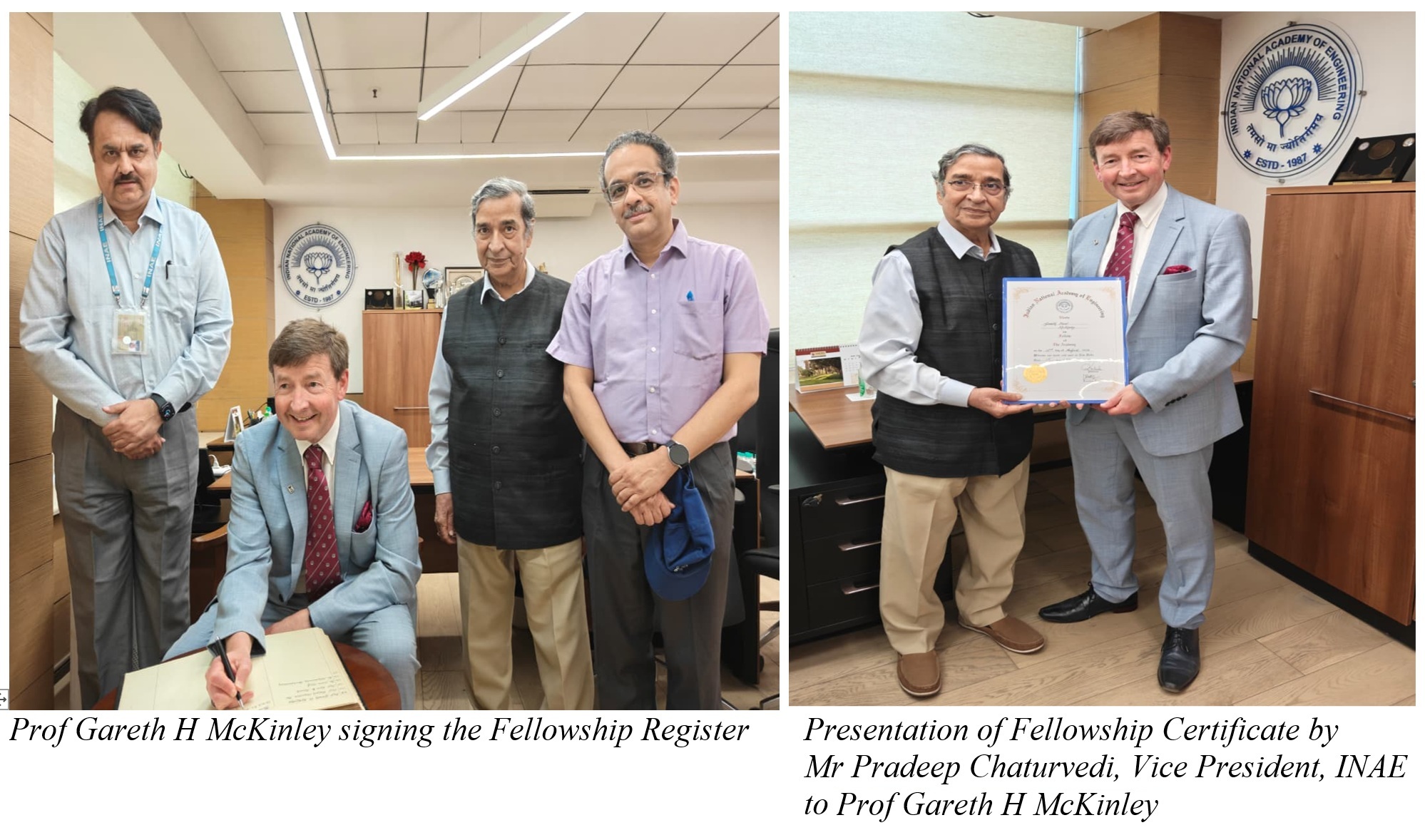
Prof. Gareth H McKinley, School of Engineering Professor of Teaching Innovation’ Dept. Mechanical Engineering, MIT, Cambridge, USA who was elected as a Foreign Fellow of INAE during the year 2025 visited INAE Office, New Delhi on May 21, 2026 and signed the Fellowship Register in presence of Mr Pradeep Chaturvedi, Vice President, INAE; Prof YM Joshi, FNAE, Professor, IIT Kanpur and Prof Abhijit R. Abhyankar, FNAE, Professor, IIT Delhi.
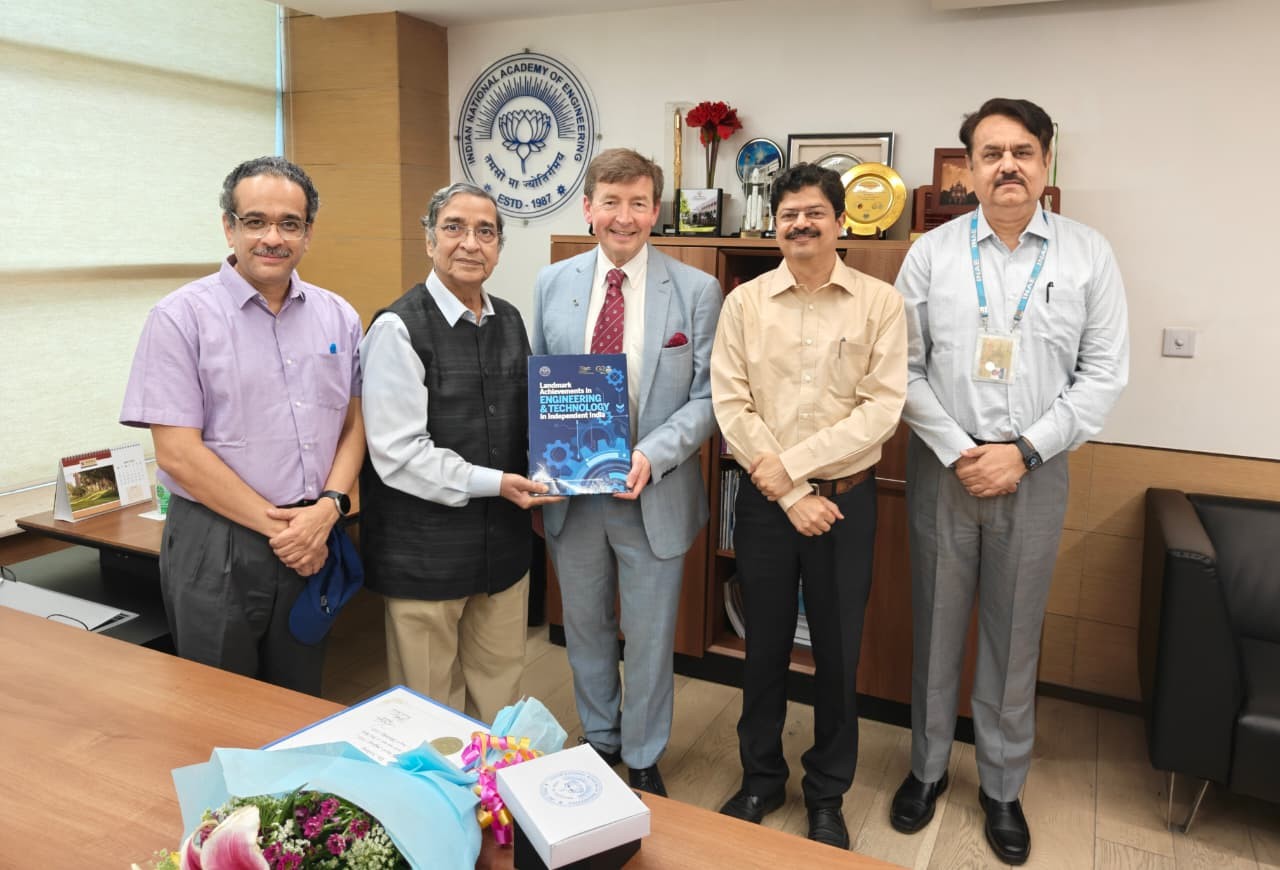 (Left to Right) Prof YM Joshi, FNAE; Mr Pradeep Chaturvedi, Vice President, INAE; Prof Gareth H McKinley; Prof Abhijit R. Abhyankar, FNAE and Lt Col Shobhit Rai (Retd) Deputy Executive Director, INAE
INAE Awards
INAE Young Engineer Award 2026
Nominations had been invited for the INAE Young Engineer Award 2026 in January 2026 (which had been reinstated last year) with the last date of application as March 2026 which was extended to April 15, 2026 as per practice each year. All INAE Young Awardees shall become INAE Young Associates on conferment of the award. This year also, like last year there was a phenomenal response to the call for nominations for INAE Young Engineer Award 2026 with receipt of 226 valid nominations as against 223 in the year 2025 and 110 in the year 2024. On similar lines as last year, a three-stage selection process was followed. During the first stage, the screening was carried out by the Sectional Committee Members online followed by the second stage wherein the Sectional Committees during their first meetings held from 15th to 29th May 2026 shortlisted 58 nominees for making presentations before the Selection Committee for INAE Young Engineer Award 2026 in the third stage, during meetings held on June 22nd to 24th, 2026 and recommended 30 nominees which were approved by the Governing Council. The names of nominees selected for conferment of INAE Young Engineer Award 2026 have since been uploaded on INAE website and can be viewed at the link https://www.inae.in/inae-young-engineer-award/
INAE Young Innovator & Entrepreneur Award 2026
The INAE young Innovator & Entrepreneur Award is instituted to encourage and recognize innovation and entrepreneurship among Young Engineers. The nominations for INAE Young Innovator & Entrepreneur Award for the year 2026 were invited during February 5, 2026. The extended last date for seeking nominations was May 15, 2026. The selection process for the subject award is carried out in two stages. In the first stage, the nominations received are scrutinized and shortlisted through evaluation and award of marks on the basis of the approved selection criteria. In the second stage, the shortlisted candidates are invited to make presentations on their work before the Selection Committee for detailed assessment and final recommendation.
A total of 34 valid nominations were received. All eligible nominations were subsequently forwarded to the esteemed members of the Selection Committee for detailed evaluation. Each nomination was assessed in accordance with the prescribed evaluation criteria and awarded a score out of a maximum of 15 marks. Based on the evaluation scores received, the Selection Committee, at its meeting held on 9 June 2026, shortlisted eleven (11) nominees for the next stage of the selection process. The shortlisted nominees were invited to make presentations on their work before the Selection Committee on 2 July 2026 and 3 July 2026. The presentations were evaluated in accordance with the criteria specified therein. Based on the comprehensive evaluation of the nominations and the presentations made by the shortlisted nominees, the Selection Committee finalized its recommendations. The names of the selected nominees will be placed before the INAE Governing Council for its consideration, approval, and subsequent conferment of the INAE Young Innovator & Entrepreneur Award 2026.
INAE Innovative Student Projects Award 2026
Indian National Academy of Engineering (INAE) instituted this award to recognize innovative and creative projects undertaken by engineering students at the Bachelor’s and Master’s levels, as well as theses of research scholars at the Doctoral level. The award aims to encourage young talent by providing early recognition and national-level visibility for outstanding engineering innovations and research contributions. Following its temporary suspension during 2022–23, the award has been reinstated in 2025–26. Accordingly, nominations have been invited for eligible projects and theses completed during the academic years 2022–23, 2023–24, 2024–25, and 2025–26, thereby ensuring that deserving work undertaken during the intervening period receives due consideration. The call for nominations for the INAE Innovative Student Projects Award 2026 was announced on 14 April 2026, and the last date for receipt of nominations was 31 July 2026.
INAE Publications
Transactions of Indian National Academy of Engineering – An International Journal of Engineering and Technology”
INAE is currently publishing a Journal named “Transactions of Indian National Academy of Engineering – International Journal of Engineering and Technology” published by M/s Springer which was earlier named INAE Letters. Transactions of INAE – Volume 11, Issue 2 June 2026 was published through Springer Publishers during the period April to July 2026. Further details are on Springer website at the link https://link.springer.com/journal/41403
INAE Membership
The INAE Individual Membership category was established to broaden the Academy’s engagement with the engineering community by recognizing accomplished professionals from industry, R&D, academia, engineering services, entrepreneurship, and government/private organizations. Through a structured and approved selection process, Individual Membership is conferred on mid-career and senior engineering professionals who demonstrate significant potential and are on the path to achieving the distinction of INAE Fellowship. The Membership category is subscription-based and operates on an annual renewal cycle.
The need for focused and innovative strategies to substantially expand the membership base has been undertaken and following action are noteworthy:
- INAE Technology Conclave 2026: The Technology Conclave 2026 was conducted at SOA University, Bhubaneswar (11–12 July 2026), for enhancing awareness of INAE and attracting new members.
- Enhanced Fellow Engagement:Fellows are encouraged to recommend at least five distinguished engineering professionals each for Individual Membership and to actively facilitate Institutional and Corporate Memberships to strengthen INAE’s national engineering network.
- Membership Growth and Institutional Support: INAE acknowledges with gratitude the generous support received from leading corporates and institutions, including HAL, Infosys Foundation, and several premier academic and research organizations. These partnerships reflect strong confidence in INAE’s mission and contribute significantly to its long-term financial sustainability.
The Academy currently comprises:
-
- 38 Institutional Members(30 Diamond, 2 Ruby, and 6 Coral).
- 310 Individual Members(196 Senior Members and 114 Associate Members).
INAE also gratefully acknowledges the generous contribution made by Larsen & Toubro to the INAE Corpus Fund.
Strengthening the INAE Corpus Fund
The INAE has also appealed to the Fellowship to support the Academy’s transition towards long-term financial sustainability through voluntary contributions to the INAE Corpus Fund. This phase presents an important opportunity to strengthen INAE’s institutional capacity and expand its impact in advancing engineering for national development. Contributions to the Corpus Fund are regarded as a collective responsibility of the Fellowship and a strategic investment in the Academy’s future.
INAE leadership had appealed to the Fellowship for contributions to the INAE Corpus Fund, emphasizing the importance of collective support during the transition to financial autonomy. Contributions are seen as a shared responsibility of the entire Fellowship.
In recognition of donors, INAE has a Wall of Donors on its website at the link https://www.inae.in/wall-of-donors/

Tax Benefits:
Donations qualify for 50% tax deduction under Section 80G (for those under the old tax regime), with receipts and certificates issued within a quarter.
INAE expresses deep gratitude to all supporters and continues to welcome contributions from Fellows, Young Associates, Awardees, and Corporate partners, which are essential to ensuring INAE’s long-term self-reliance and mission continuity.
Important Meetings held during April 1, 2026 to July 31, 2026
| April 10, 2026 | Meeting of INAE Forum on Civil Infrastructure held at New Delhi in hybrid mode |
| April 18, 2026 | Apex Committee Meeting held at New Delhi in hybrid mode |
| April 19, 2026 | Meeting on CEEE Program: Way Forward |
| April 24, 2026 | Meeting of the SC VIII on Publication of Technology Review/ Forecasting/Gap analysis Reports for 2026 held over Webex |
| April 27, 2026 | First Online meeting of CAETS Energy Community |
| April 30, 2026 | Meeting of Conveners with Vice-President (fellowship & Awards), INAE regarding nominations for Fellowship 2026 |
| May 2, 2026 | 12th Meeting of CAETS Engineering Education Working Group (EEWG) held online |
| May 15th to June 1st, 2026 | First meetings of 10 Sectional Committees to shortlist nominees for Fellowship and Young Engineer Award 2026 |
| June 2, 2026 | Online Meeting of PEC domain experts – Green Manufacturing Technologies under India Taiwan Science & Technology Cooperation |
| June 3, 2026 | Online Meeting of PEC domain experts – Artificial Intelligence, IoT, Big Data, Cyber Security under India Taiwan Science & Technology Cooperation |
| June 4, 2026 | Online Meeting of PEC domain experts – Healthcare including Functional genomics, Drug development and biomedical devices, Agricultural Engg. under India Taiwan Science & Technology Cooperation |
| June 5, 2026 | Online Meeting of PEC domain experts – Green Energy Technology, Renewable Energy (Solar and Bio)/ Clean Energy under India Taiwan Science & Technology Cooperation |
| June 8, 2026 | Online Meeting of PEC domain experts – Semiconductor & Communication under India Taiwan Science & Technology Cooperation |
| June 9, 2026 | 1st Shortlisting Meeting of INAE Young Innovator & Entrepreneur Award 2026 |
| June 10, 2026 | Meeting of INAE Forum on Civil Infrastructure |
| June 19, 2026 | 47th Finance Committee Meeting of INAE |
| June 22, 23 & 24, 2026 | Presentations by shortlisted nominees for INAE Young Engineer Award 2026 before Selection Committee |
| June 30, 2026 | 159th Governing Council Meeting of INAE held at New Delhi in hybrid mode |
| July 2, 2026 | Second stage Meeting of INAE Young Innovator & Entrepreneur Award 2026 |
| July 10, 2026 | Finalization of Report -INAE Forum for Civil infrastructure |
| July 13 to July 24, 2026 | Second meetings of 10 Sectional Committees to recommend nominees for Fellowship |
| July 31, 2026 | Meeting of INAE Forum on Civil Infrastructure |
| July 31, 2026 | CAETS Energy Community Online Meeting |
International/National Conferences/Seminars being organized by IITs/other Institutions
To view a list of International/ National Conferences/Seminars being held in the month of September, October and November 2026 , click here….
Honours and Awards (covering the period April to July 2026)
| 1 | Professor Ganapati D. Yadav, FNAE, Former Vice-Chancellor of the Institute of Chemical Technology (ICT), Mumbai; Bhatnagar Fellow; National Science Chair; Padma Shri awardee, and Chairman of BOG, LITU, Nagpur was selected as the 2026 P.V. Danckwerts Memorial Lecturer. He will deliver his lecture titled “Engineering Science Repurposed: Catalysis, Circularity, Sustainability, and Molecular Pathways to a Net-Negative Future” on November 9, 2026, at the AIChE Annual Meeting in Minneapolis, USA which is widely regarded as one of the highest recognitions in chemical engineering internationally. Further strengthening his global standing, he has been elected International Fellow of the Canadian Academy of Engineering, becoming the first Indian citizen to receive this honour and will be formally inducted at Edmonton, Canada, on June 1, 2026. Further details can be viewed at the link https://share.google/U4J529XAcxJQtUlp9 |
| 2 | Prof Manindra Agrawal, FNAE, Director, IT Kanpur has been elected a Fellow of the Royal Society, one of the world’s most prestigious scientific honours. The recognition places him among an elite group of scientists whose work has shaped modern knowledge, including figures such as Isaac Newton and Albert Einstein. Prof Agrawal received the honour for his pioneering contributions to theoretical computer science, especially the AKS primality test, a breakthrough that changed the way mathematicians think about prime numbers. Further details can be viewed at the link https://timesofindia.indiatimes.com/science/meet-manindra-agrawal-iit-kanpur-director-elected-fellow-of-the-prestigious-royal-society-joining-the-ranks-of-einstein-and-newton/articleshow/131228216.cms |
| 3 | Prof Ulrich L. Rohde, a Foreign Fellow of INAE became a member of the team of MIT and an honorary member of the Bavarian Academy of Science and Humanities in Munich where Albert Einstein and Heisenberg were members. |
| 4 | Several distinguished Fellows of INAE have been awarded the prestigious National ANRF – J C Bose Grant – 2026 including Prof. Deepankar Choudhury, IIT Bombay; Prof Surjya Kanta Pal, IIT Kharagpur; Prof Sivaji Chakravorti, Vice President, INAE, Jadavpur University; Prof V Ramgopal Rao, Birla Institute of Technology & Science; Prof Hirendra Nath Ghosh, NISER, Bhubaneswar; Prof Samit K Ray, IIT Kharagpur; Prof Bidyadhar Subudhi, NIT Warangal; Prof Suddasatwa Basu, IIT Delhi; Prof T Pradeep, IIT Madras; Prof Jitendra Sangwai, IIT Madras; Prof Kirti Chandra Sahu, IIT Hyderabad; Prof. Sushmita Mitra, ISI Kolkata; Prof Sudip Misra, IIT Kharagpur and Prof Yogesh Singh Chauhan, IIT Kanpur. |
| 5 | Prof Gareth H McKinley, a Foreign Fellow of INAE and Paul A. Samuelson Professor of Economics, Emeritus, Department of Mechanical Engineering, Massachusetts Institute of Technology, Cambridge has been elected Member of The National Academy of Sciences announced in recognition of his distinguished and continuing achievements in original research. |
| 6 | Dr Manmath Kumar Badapanda, FNAE, Adjunct Professor, IIT (ISM), Dhanbad and formerly Scientific Officer-H, Raja Ramanna Centre for Advanced Technology, Indore has been awarded the prestigious DAE Raja Ramanna Chair. This distinguished honour recognizes his outstanding contribution & exceptional achievements in the field of advanced power converters, scientific mentorship and nation building. |
News of Fellows (covering the period April to July 2026)
| 1 | Prof. Umesh V. Waghmare, FNAE, President of Jawaharlal Nehru Centre for Advanced Scientific Research (JNCASR), Bengaluru, has taken over as Secretary, Department of Science & Technology (DST). Further details can be viewed at the link https://www.biospectrumindia.com/news/66/28068/prof-umesh-v-waghmare-takes-charge-as-new-india-dst-secretary.html |
| 2 | Prof Abhay Karandikar, FNAE, Former Secretary DST has been appointed as Full Time member Niti Aayog. Further details can be viewed at the link https://indianexpress.com/article/india/niti-aayog-new-members-aiims-dst-ashok-lahiri-vice-chairperson-10655579/ |
| 3 | Dr. R. Sundaravadivelu FNAE. Emeritus Professor (Retd), IIT Madras; Chairperson, Bureau of Indian Standards Sectional Committee (CED 47) Ports, Harbours and Offshore Installations & Director, Prof. R. Sundaravadivelu Advisory Services Pvt Ltd has authored a book on “Port and Harbour Structures” published by Taylor & Francis Books. |
| 4 | Dr. Jagannath Nayak, FNAE, Director, Former Associate Dean, Electro- Optic Instrument Research Academy (ELOIRA) & Project Director, Fiber Optics Gyro, Centre for High Energy Systems & Science (CHESS), DRDO, Hyderabad has taken over as Director General of Missiles & Strategic Systems (MSS) at the Defence Research and Development Organisation (DRDO). |
| 5 | Captain Mohan Ram, VSM, IN (Retired) FNAE, Former Consultant, TVS Motor Company Ltd., Hosur (Tamil Nadu), has authored a book “A Builder’s Navy- The Long Road to Self-sufficiency in Warship Design” which has been released. The publishers are Sabre & Quill, New Delhi. It is also available from Amazon and Flipkart. The book traces the remarkable growth of the Indian Navy’s design capability from a zero base to design of aircraft carriers and nuclear submarines. |

